HomeMCPWorkbenchSkills
HomeWorkbenchNotificationsMe
llms.txt · MCP GuidePrivacy Policy · Terms of Service · Supportv1.8.3
  1. Home
  2. /Reaction

Diveratryl ether → 2,5-Dimethoxybenzyl ether

HRID 651542
Print

Reaction equation

HRID 651542 reaction equation
CC1CCCC(C)(C)C=1/C=C/C(/C)=C/C=C/C(/C)=C/[CH2:18][OH:19].[CH3:22][O:23][C:24]1[CH:31]=[CH:30][C:29]([O:32][CH3:33])=[CH:28][C:25]=1[CH2:26]Br.COC1C=C(C=CC=1OC)C[O:40][CH2:41][C:42]1[CH:47]=[CH:46][C:45](OC)=[C:44]([O:50][CH3:51])[CH:43]=1.CCCCCC.C(OCC)(=O)C>C(Cl)(Cl)Cl.C(O)C.C(Cl)(Cl)Cl.CCCCCC>[CH3:22][O:23][C:24]1[CH:31]=[CH:30][C:29]([O:32][CH3:33])=[CH:28][C:25]=1[CH2:26][O:40][CH2:41][C:42]1[CH:43]=[C:44]([O:50][CH3:51])[CH:45]=[CH:46][C:47]=1[O:19][CH3:18]
ParticipantsProcedureWorkupSources & evidenceReaction notes

Participants

8

Reactant 4

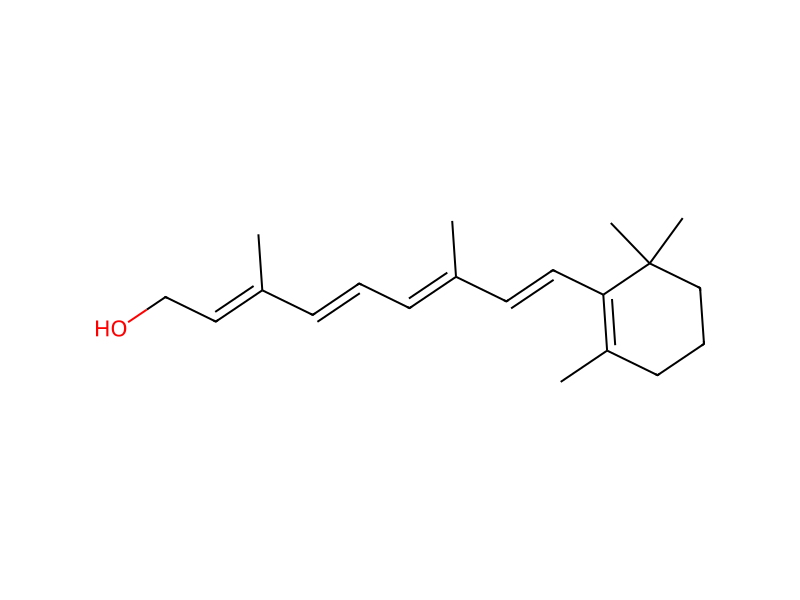
HCID 285108Diveratryl etherHCID 445354RetinolHCID 5920212-(Bromomethyl)-1,4-dimethoxybenzeneHCID 21226206Ethyl acetate hexane

Product 1

HCID 217087322,5-Dimethoxybenzyl ether

Reagents, catalysts & solvents 3

HCID 702
Ethanol
Solvent
2×
HCID 6212ChloroformSolvent2×
HCID 21585165Chloroform hexaneSolvent

Procedure

Retinyl 2,5-Dimethoxybenzyl Ether (3b) was prepared from retinol and 2,5-dimethoxybenzyl bromide according to the procedure for 3a. The crude product was subjected to chromatography in chloroform on a column of silica gel 60. Successive chromatographic purifications of eluted portions were performed on columns of silica gel 60 with chloroform, 7:3 hexane-ethyl acetate, or 1:1 chloroform-hexane as eluting solvents. The progress of the purification of the original crude product and of fractions from the successive chromatographic operations was monitored by TLC and HPLC. The purified specimens from each chromatographic procedure were combined in ethanol, and the ethanol solution was concentrated in vacuo to a yellow syrup: yield, 16%; HPLC, 100%; MS m/z 436 (M), 285 (C20H29O), 269 (C20H29),255 (C19H17),151 (2,5-dimethoxybenzyl); UV λmax326 um (ε 51 600),225 nm (ε 12 600), ε calculated for C29H40O3.C2H5OH; 1H NMR (CDCl3) δ 6.99 (bs, 1H, H6′), 6.80 (d, 1H, H3′, J3′,4′=8.1 Hz), 6.77 (dd, 1H, H4′, J4′,6′=1.5 Hz), 6.59 (dd, 1H, H11, J10,11=11.0 Hz, J11,12=15.1 Hz), 6.30 (d, 1H, H12), 6.16 (bd, 1H, H8, J7,8=16.1 Hz), 6.10 (d, 1H, H7), 6.09 (d, 1H, H10), 5.71 (t, 1H, H14), 4.54 (s, 1H, H21), 4.23 (d, 2H, H15, J14,15=6.7 Hz), 3.79 (s, 3H, OCH3), 3.77 (s, 3H, OCH3), 2.01 (t, 2H, H4), 1.95 (d, 3H, H19, J10,19=0.7 Hz), 1.85 (d, 3H, H20, J14,20=0.8 Hz), 1.71 (s, 3H, H18),1.65-1.57 (m, 2H, H3), 1.48-144 (m, 2H, H2), 1.02 (s, 6H, H16, H17). Anal. Calcd. for C29H40O3.C2H5OH: C, 77.15; H, 9.61. Found: C, 77.16; H, 9.23.

Workup

  1. washas eluting solvents
  2. customThe progress of the purification of the original crude product
  3. concentrationthe ethanol solution was concentrated in vacuo to a yellow syrup
  4. customyield

Sources & evidence

ORD record
ord-352a63fca03643e592610918a90c441b
Source dataset
uspto-grants-2001_08
DOI
10.6084/m9.figshare.5104873.v1
Patent number
US06281250B1

Reaction notes

On this pageParticipantsProcedureWorkupSources & evidenceReaction notes