Reaction equation

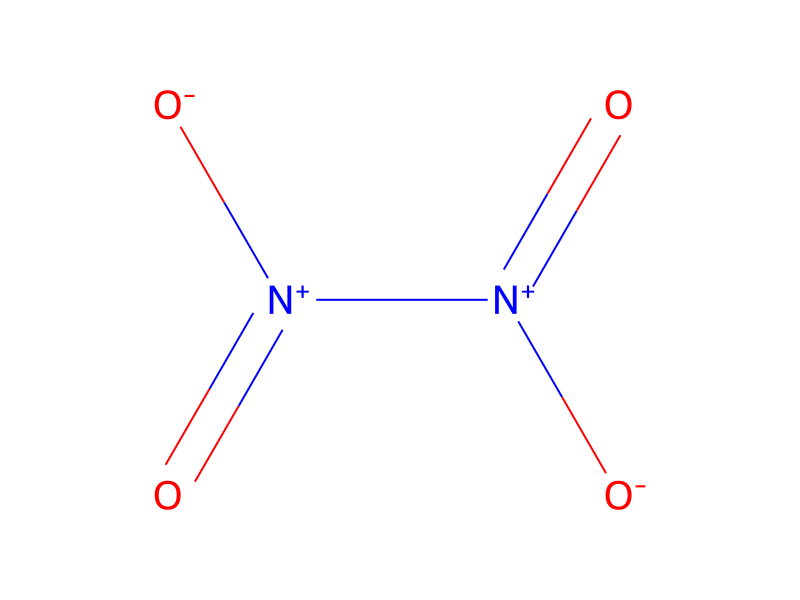
[C:1]1([C:7]2[C:8]3[CH:19]=[C:18]([C:20]([OH:22])=[O:21])[C:17]4[C:12](=[CH:13][CH:14]=[CH:15][CH:16]=4)[C:9]=3[O:10][CH:11]=2)[CH:6]=[CH:5][CH:4]=[CH:3][CH:2]=1.[N+:23]([O-:28])([N+]([O-])=O)=[O:24]>C(Cl)(Cl)Cl>[N+:23]([C:11]1[O:10][C:9]2[C:12]3[C:17]([C:18]([C:20]([OH:22])=[O:21])=[CH:19][C:8]=2[C:7]=1[C:1]1[CH:2]=[CH:3][CH:4]=[CH:5][CH:6]=1)=[CH:16][CH:15]=[CH:14][CH:13]=3)([O-:28])=[O:24]Participants
4
Reactant 2

Product 1

Reagents, catalysts & solvents 1

Conditions
- Temperature
- 20 °C
Procedure
The product of Step A is dissolved partially in 125 ml. of hot chloroform, and 1 g. of dinitrogen tetraoxide is added. The mixture is stirred at 20° C. for about 1 day. The mixture is evaporated to provide a residue which is triturated with isopropyl alcohol. The residue is separated by filtration and recrystallized from acetic acid to provide light yellow crystals of 2-nitro-3-phenylnaphtho-[1,2-b]furan-5-carboxylic acid, m.p. 286°-288° c. (dec.).
Workup
- customThe mixture is evaporated
- customto provide a residue which
- customis triturated with isopropyl alcohol
- customThe residue is separated by filtration
- customrecrystallized from acetic acid
Sources & evidence
- ORD record
- ord-6729330bbb84464e967b2f906950945c
- Source dataset
- uspto-grants-1978_12
- Patent number
- US04128659
Linked notes
Loading…