Reaction equation

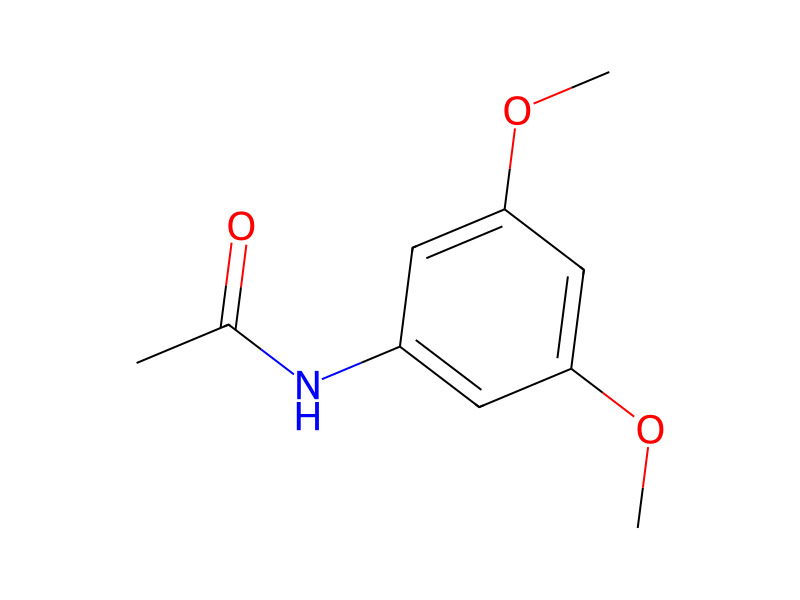
NC1C=CC(C)=C(NC2O[C:11]([C:14]3[CH:21]=[CH:20][C:17]([C:18]#[N:19])=[CH:16][CH:15]=3)=[CH:12][N:13]=2)C=1.[CH3:23][O:24][C:25]1[CH:26]=[C:27]([NH:33][C:34](=[O:36])C)[CH:28]=[C:29]([O:31][CH3:32])[CH:30]=1.NC1C=CC(C)=C(NC(=O)C)C=1>>[CH3:23][O:24][C:25]1[CH:26]=[C:27]([NH:33][C:34]2[O:36][C:11]([C:14]3[CH:21]=[CH:20][C:17]([C:18]#[N:19])=[CH:16][CH:15]=3)=[CH:12][N:13]=2)[CH:28]=[C:29]([O:31][CH3:32])[CH:30]=1Participants
4



Procedure
The same procedure outlined above in the preparation of 4-[2-(5-Amino-2-methyl-phenylamino)-oxazol-5-yl]-benzonitrile was used. However N-(3,5-dimethoxyphenyl)-acetamide was used instead N-(5-amino-2-methyl-phenyl)-acetamide. Yield=85%.
Sources & evidence
- ORD record
- ord-97f4d324d02c4d80b084fbac4c70776d
- Source dataset
- uspto-grants-2011_12
- Patent number
- US08080669B2
Linked notes
Loading…