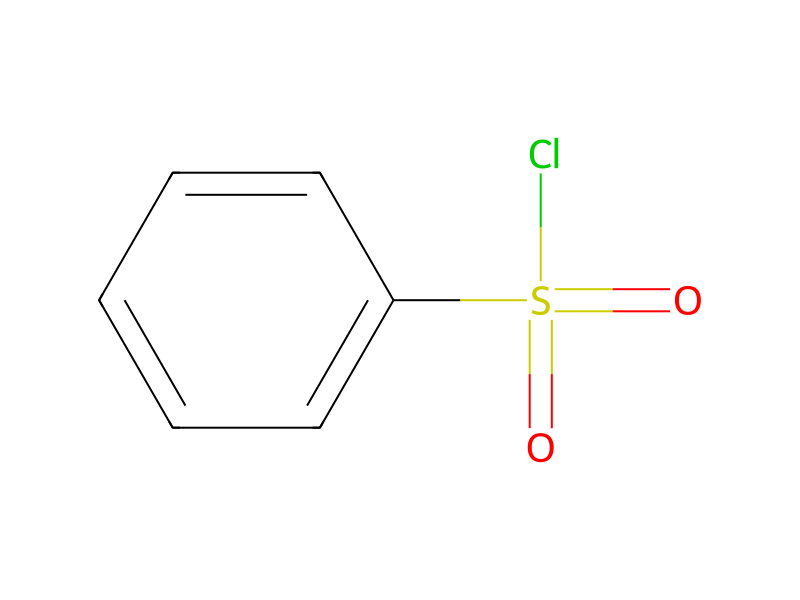
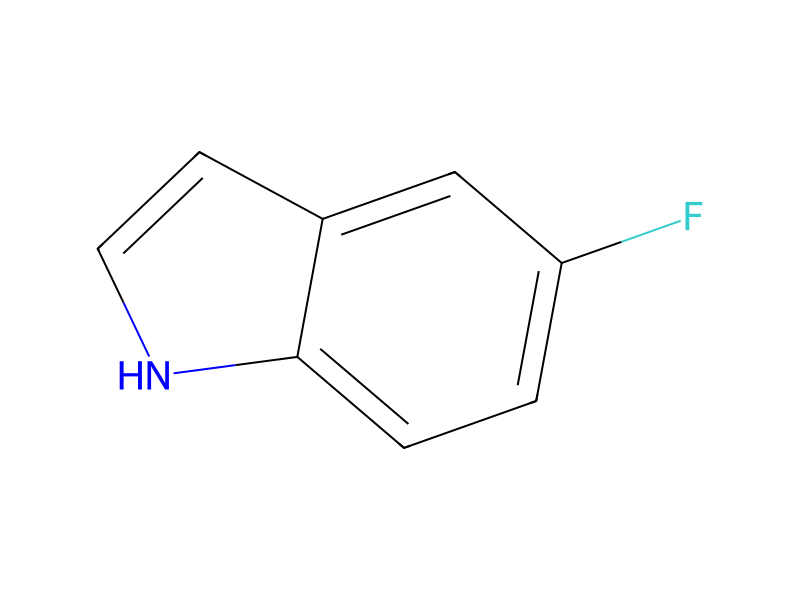
[F:1][C:2]1[CH:3]=[C:4]2[C:8](=[CH:9][CH:10]=1)[NH:7][CH:6]=[CH:5]2.[OH-].[Na+].[C:13]1([S:19](Cl)(=[O:21])=[O:20])[CH:18]=[CH:17][CH:16]=[CH:15][CH:14]=1>S([O-])(O)(=O)=O.C([N+](CCCC)(CCCC)CCCC)CCC.C1(C)C=CC=CC=1>[C:13]1([S:19]([N:7]2[C:8]3[C:4](=[CH:3][C:2]([F:1])=[CH:10][CH:9]=3)[CH:5]=[CH:6]2)(=[O:21])=[O:20])[CH:18]=[CH:17][CH:16]=[CH:15][CH:14]=1To a 0° C. solution of 5-fluoroindole (10 g, 74 mmol) and tetrabutyl ammonium hydrogen sulfate (3.8 g, 11 mmol) in 200 mL of toluene was added 200 mL 50% aqueous NaOH, followed by addition of benzene sulfonylchloride (14 mL, 111 mmol). The reaction mixture was allowed to warm to room temperature overnight. The reaction mixture was extracted with ethyl acetate and washed with 1 M HCl, aqueous sodium bicarbonate, water and brine. The organic layer was dried over magnesium sulfate, filtered and concentrated in vacuo. The remaining residue was recrystallized from ethyl acetate and hexanes to afford 19 g (96% yield) of 1-benzenesulfonyl-5-fluoro-1H-indole as a white crystalline solid.