Reaction equation

C(C1OC1)Cl.B(F)(F)F.[CH3:10][CH2:11][O:12][CH2:13][CH3:14].[F:15][B-:16]([F:19])([F:18])[F:17].[CH2:20]([O+:22]([CH2:25][CH3:26])[CH2:23][CH3:24])[CH3:21].[CH3:27][N:28]1C=C[CH:31]=[CH:30][C:29]1=O>CCOCC.C(Cl)Cl>[F:15][B-:16]([F:19])([F:18])[F:17].[CH2:20]([O+:22]([CH2:25][CH3:26])[CH2:23][CH3:24])[CH3:21].[F:15][B-:16]([F:19])([F:18])[F:17].[CH2:11]([O:12][C:13]1[CH:14]=[CH:31][CH:30]=[CH:29][N+:28]=1[CH3:27])[CH3:10]Participants
8
Reactant 4

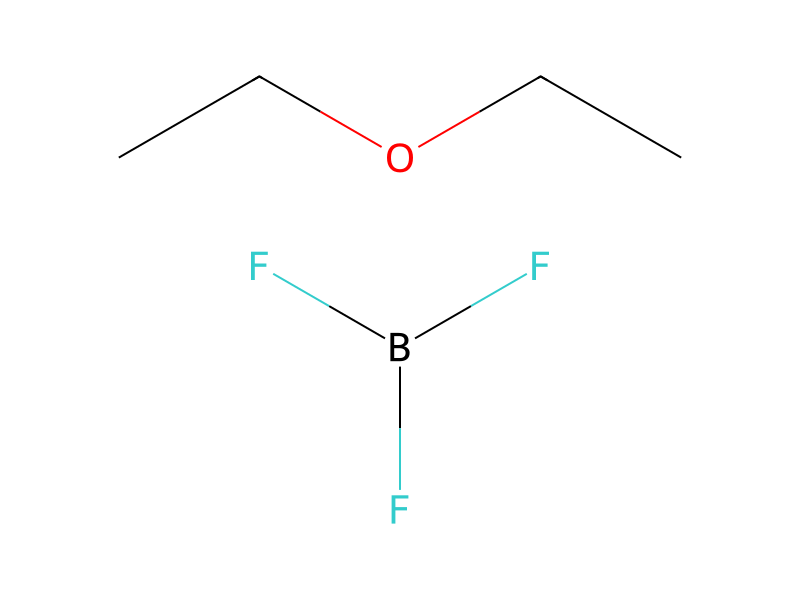


Product 2

Reagents, catalysts & solvents 2


Procedure
Triethyloxonium fluoroborate is prepared from 3.70 g (0.040 mole) of epichlorohydrin in 14 ml of ether and 7.58 g (0.054 mole) of boron trifluoride etherate in 6 ml of ether. The resulting solid triethyloxonium tetrafluoroborate is dissolved in 20 ml of dry methylene chloride and treated under nitrogen with 4.36 g (0.040 mole) of 1-methyl-2-pyridone in 15 ml of methylene chloride. The reaction mixture is stirred under nitrogen at room temperature overnight (about 16 hours). The solvent is evaporated at room temperature, in vacuo and the quaternary salt obtained is recrystallized from methanol-ether (1:1) to give 8.0 g (71%) of 2-ethoxy-1-methylpyridinium fluoroborate, m.p. 58°-60° C.
Workup
- customThe solvent is evaporated at room temperature, in vacuo
- customthe quaternary salt obtained
- customis recrystallized from methanol-ether (1:1)
Sources & evidence
- ORD record
- ord-184a5348c3a84a9f84afde24a9c1123e
- Source dataset
- uspto-grants-1982_08
- Patent number
- US04345083
Linked notes
Loading…