Reaction equation

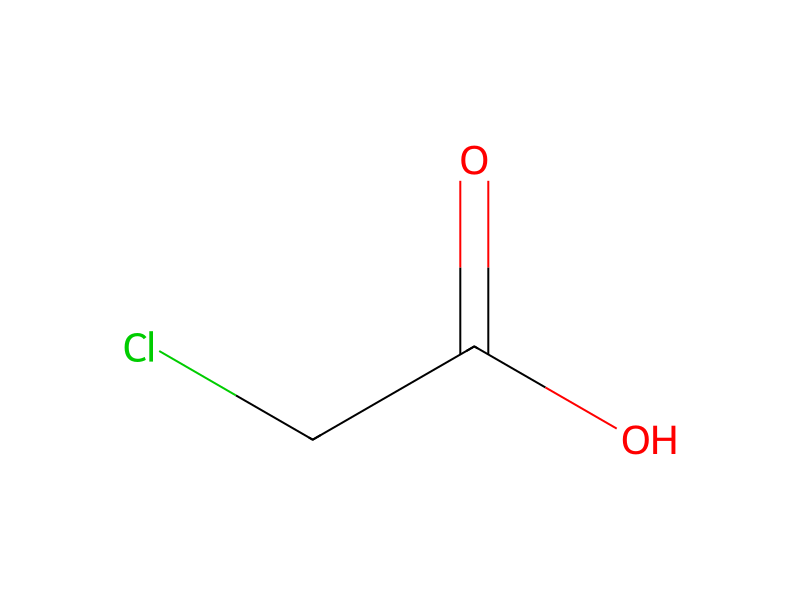
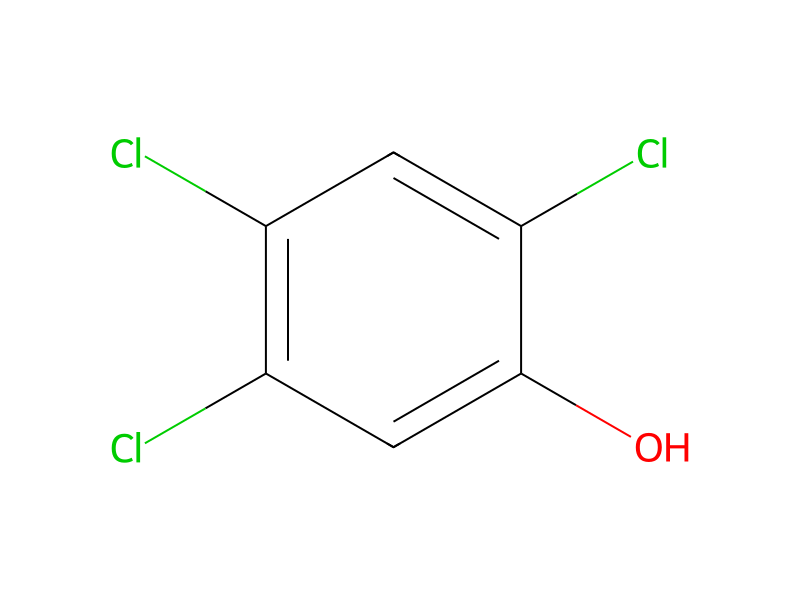
ClC1C(Cl)=CC2OC3C=C(Cl)C(Cl)=CC=3OC=2C=1.[Cl:19][C:20]1[CH:25]=[C:24]([Cl:26])[C:23]([Cl:27])=[CH:22][C:21]=1[OH:28].Cl[CH2:30][C:31]([OH:33])=[O:32]>>[Cl:19][C:20]1[CH:25]=[C:24]([Cl:26])[C:23]([Cl:27])=[CH:22][C:21]=1[O:28][CH2:30][C:31]([OH:33])=[O:32]Participants


Procedure
The above objects have been achieved by the synthesis of 2,4,5-trichlorophenoxyacetic acid and its intermediate, 2,4,5-trichlorophenol, which are free from contamination with 2,3,7,8-tetrachloro-dibenzo-p-dioxin (TCDD). The synthesis involves the nitration of 1,2,4-trichlorobenzene to form 1,2,4-trichloro-5-nitrobenzene, which is reduced (usually with hydrogen) to produce 2,4,5-trichloroaniline. The 2,4,5-trichloroaniline is reacted with sulfuric acid and a nitrite to form 2,4,5-trichlorobenzenediazonium sulfate, which is reacted with water and distilled to produce 2,4,5-trichlorophenol which is analytically free of TCDD. The 2,4,5-trichlorophenol is reacted with monochloroacetic acid in the presence of aqueous base, followed by acidification, to produce 2,4,5-trichlorophenoxyacetic acid which also is analytically free of TCDD.
Sources & evidence
- ORD record
- ord-fba6f8598a6943259c880685fa46ed63
- Source dataset
- uspto-grants-1982_08
- Patent number
- US04346248
Linked notes
Loading…