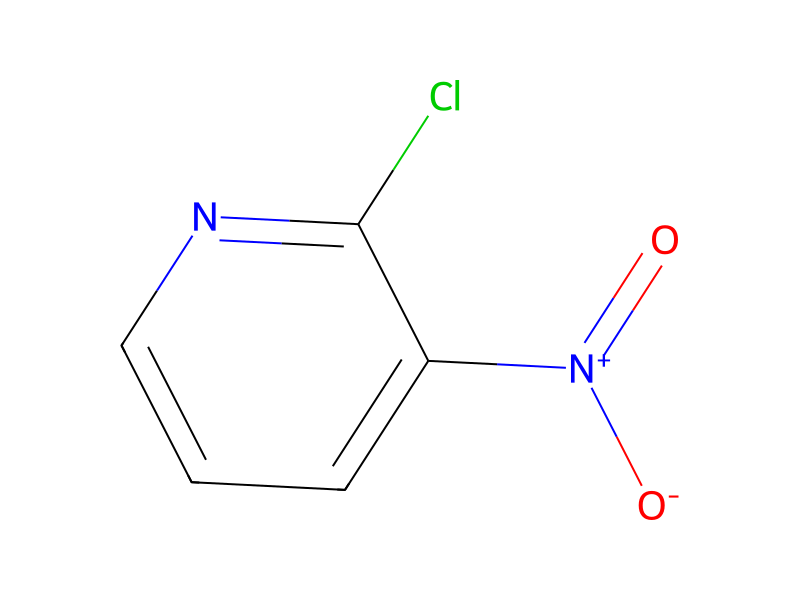
[S:1]1[C:5]2[CH:6]=[CH:7][CH:8]=[CH:9][C:4]=2[N:3]=[C:2]1[NH:10][C@H:11]1[CH2:14][C@H:13]([NH2:15])[CH2:12]1.C(=O)([O-])[O-].[Cs+].[Cs+].Cl[C:23]1[C:28]([N+:29]([O-:31])=[O:30])=[CH:27][CH:26]=[CH:25][N:24]=1>CS(C)=O>[S:1]1[C:5]2[CH:6]=[CH:7][CH:8]=[CH:9][C:4]=2[N:3]=[C:2]1[NH:10][C@H:11]1[CH2:12][C@H:13]([NH:15][C:23]2[C:28]([N+:29]([O-:31])=[O:30])=[CH:27][CH:26]=[CH:25][N:24]=2)[CH2:14]1The crude amine from step 1, cesium carbonate (2.500 g, 1.535 mmol), 2-chloro-3-nitropyridine (394 mg, 2.488 mmol), and dry dimethylsulfoxide (5 mL) were added and the reaction mixture was stirred at 120° C. for 2 hours. The reaction was cooled and partitioned between water (100 mL), saturated sodium bicarbonate (20 mL) and ethyl acetate. The organic phase was dried with magnesium sulfate and evaporated to dryness under reduced pressure. Purification using silica chromatography (dichloromethane to ethyl acetate gradient) gave the desired trans-N1-(benzo[d]thiazol-2-yl)-N3-(3-nitropyridin-2-yl)cyclobutane-1,3-diamine (580 mg, 1.699 mmol, 75% yield) as light-yellow solid.