Reaction equation
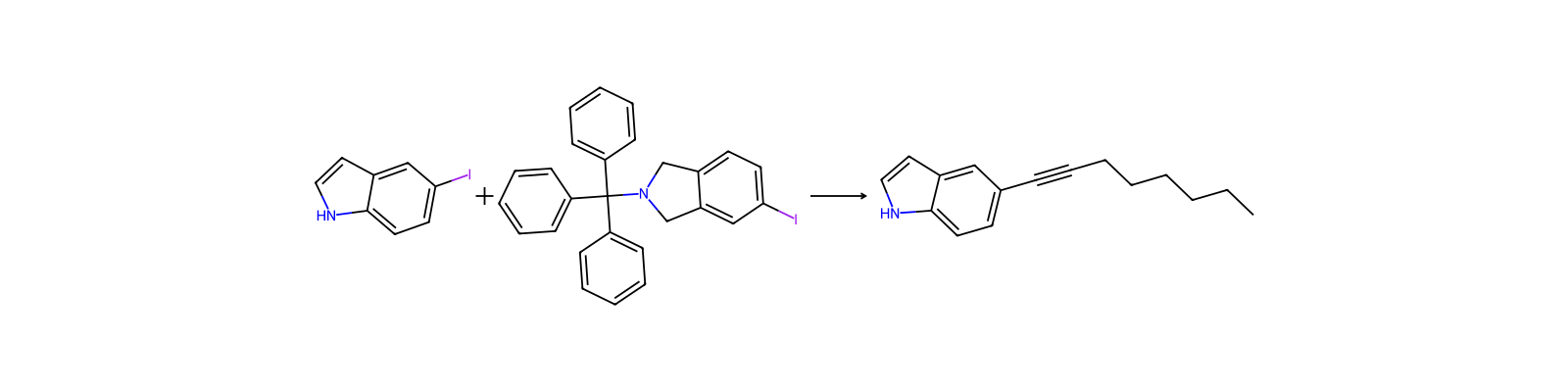
I[C:2]1[CH:3]=[C:4]2[C:8](=[CH:9][CH:10]=1)[NH:7][CH:6]=[CH:5]2.I[C:12]1[CH:13]=[C:14]2[C:18](=[CH:19][CH:20]=1)[CH2:17]N(C(C1C=CC=CC=1)(C1C=CC=CC=1)C1C=CC=CC=1)[CH2:15]2>>[C:15]([C:2]1[CH:3]=[C:4]2[C:8](=[CH:9][CH:10]=1)[NH:7][CH:6]=[CH:5]2)#[C:14][CH2:13][CH2:12][CH2:20][CH2:19][CH2:18][CH3:17]Participants
3

Procedure
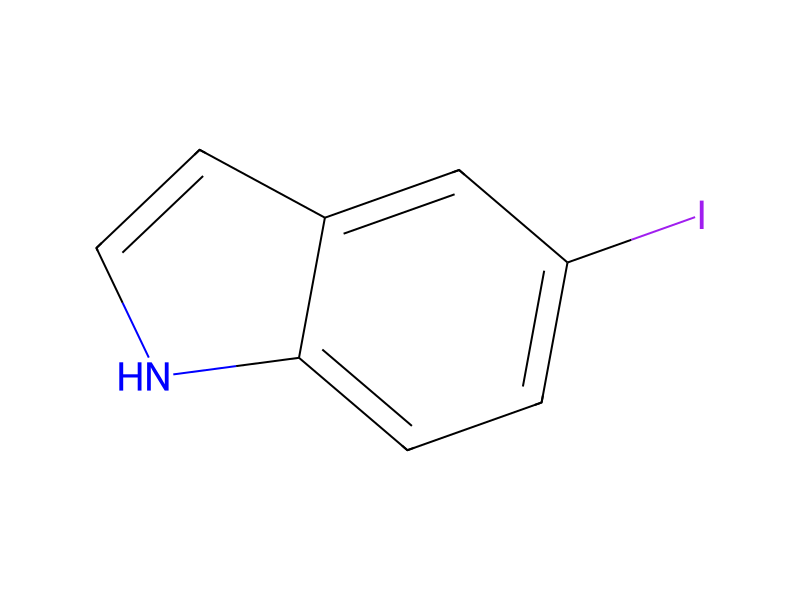
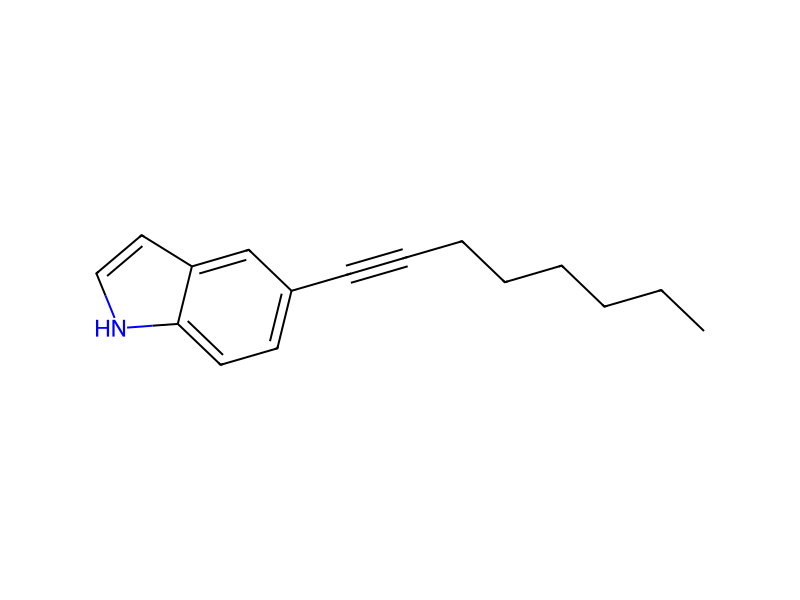
When 5-iodo-1H-indole was substituted for 5-iodo-2-tritylisoindoline in Example 2, Step D, the identical process afforded the title compound in 36% yield. 1H-NMR (CDCl3) 0.9 (tr, 3H, J=6.9 Hz); 1.31 (m, 6H); 1.46 (m, 2H); 1.6 (m, 2H); 2.41 (tr, 2H, J=7.1 Hz); 6.49 (m, 1H); 7.14-7.31 (m, 3H); 7.71 (s, 1H); 8.13 (broad s, 1H).
Sources & evidence
- ORD record
- ord-2dff5ecba5e14ad7b9d30b9545ad7987
- Source dataset
- uspto-grants-2015_11
- Patent number
- US09181182B2
Linked notes
Loading…