Glyceryl 1,3-Dilaurate → Vinyl laurate
HRID 718561
Reaction equation

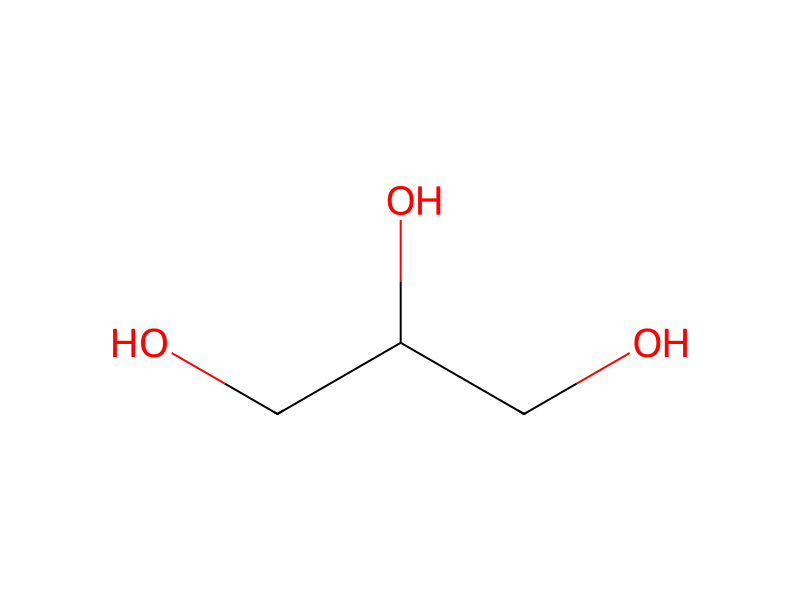
[CH3:1][CH2:2][CH2:3][CH2:4][CH2:5][CH2:6][CH2:7][CH2:8][CH2:9][CH2:10][CH2:11][C:12]([O:14][CH2:15][CH:16](O)COC(CCCCCCCCCCC)=O)=[O:13]>OCC(CO)O>[CH:15]([O:14][C:12](=[O:13])[CH2:11][CH2:10][CH2:9][CH2:8][CH2:7][CH2:6][CH2:5][CH2:4][CH2:3][CH2:2][CH3:1])=[CH2:16]Participants
3
Reactant 1

Product 1

Reagents, catalysts & solvents 1
Procedure
1,3 DLa was easily purified and recovered by crystallization in dry methanol at room temperature (RT) or in hexane at −20° C. (purity >98%). When lauric acid (La) was used as an acyl-donor, solvent was added to dissolve the FFA. Though the method as described in J. Am. Oil Chem. Soc., 1992, 69:955-960, allowed faster reaction rate with high yield of 1,3-DLa (65%), the highest yield (78%) of 1,3-DLa obtained from esterification between glycerol and lauric acid vinyl ester (LaVE) at 0° C. in a solvent-free condition catalyzed by CAL-B after 24 h, as illustrated in FIG. 14. FIG. 14 summarizes data of various synthesis of 1,3-dilaurin. Method1=esterification of glycerol and lauric acid in n-hexane at 0° C. catalyzed by CAL-B; Method2=esterification of glycerol and lauric acid vinyl ester in a solvent-free condition at 0° C. catalyzed by CAL-B; Method3 (Schneider's method)=esterification of glycerol (immobilized on silica gel) and lauric acid vinyl ester in MTBE at room temperature catalyzed by Lipozyme RM IM™ (Eurzyme, Dublin, Ireland). (DG=1,3-dilaurin, MG=1-monolaurin). LaVE, as acyl donor, allowed higher yield and faster reaction with less amount of MG than La.