HomeMCPWorkbenchSkills
HomeWorkbenchNotificationsMe
llms.txt · MCP GuidePrivacy Policy · Terms of Service · Supportv1.8.0
  1. Home
  2. /Reaction

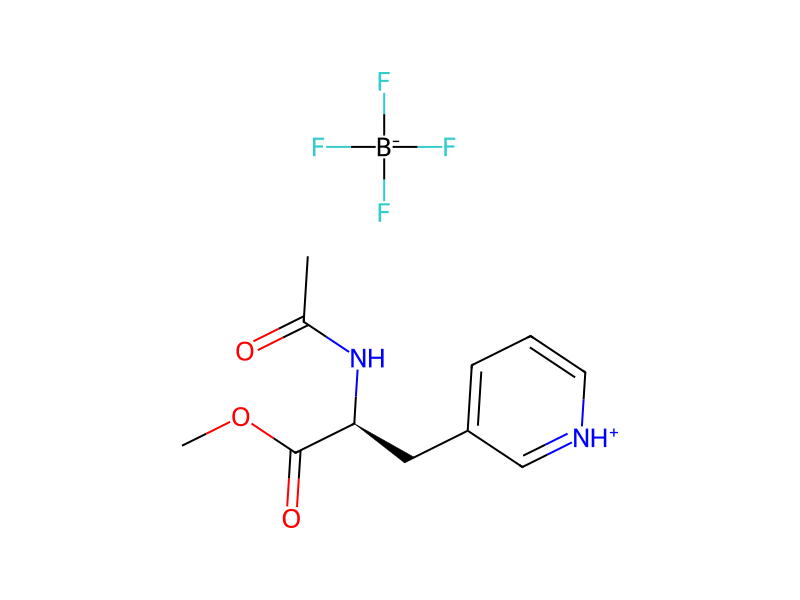
Oxygen → (S)-3-(2-Acetylamino-2-methoxycarbonylethyl)pyridinium Tetrafluoroborate

HRID 7204
Notes
Print preview

Reaction equation

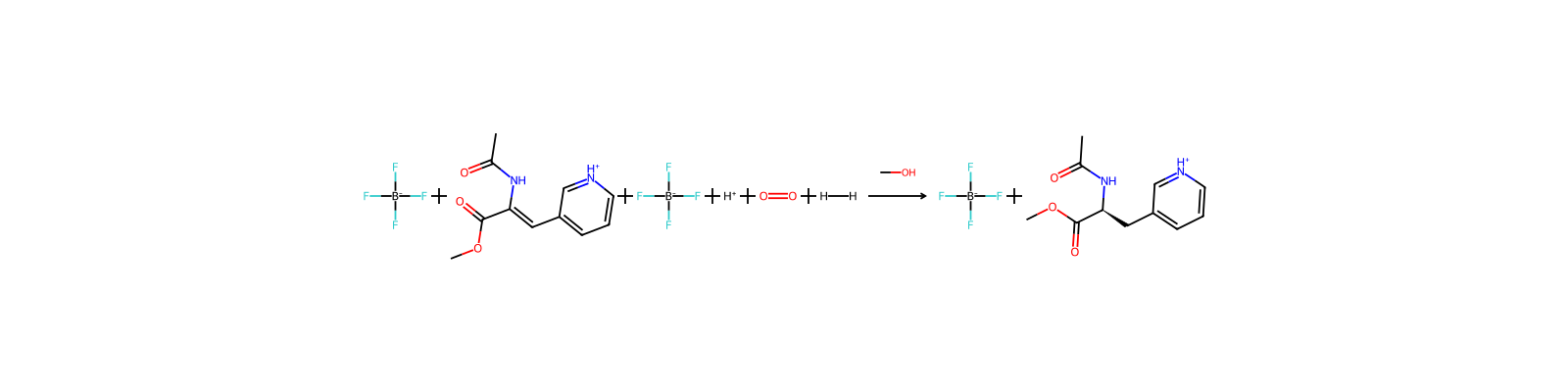
HRID 7204 reaction equation
[F:1][B-:2]([F:5])([F:4])[F:3].[C:6]([NH:9][C:10]([C:18]([O:20][CH3:21])=[O:19])=[CH:11][C:12]1[CH:13]=[NH+:14][CH:15]=[CH:16][CH:17]=1)(=[O:8])[CH3:7].F[B-](F)(F)F.[H+].O=O.[H][H]>CO>[F:1][B-:2]([F:5])([F:4])[F:3].[C:6]([NH:9][C@H:10]([C:18]([O:20][CH3:21])=[O:19])[CH2:11][C:12]1[CH:13]=[NH+:14][CH:15]=[CH:16][CH:17]=1)(=[O:8])[CH3:7]
ParticipantsConditionsProcedureWorkupSources & evidenceReaction notes

Participants

6

Reactant 4

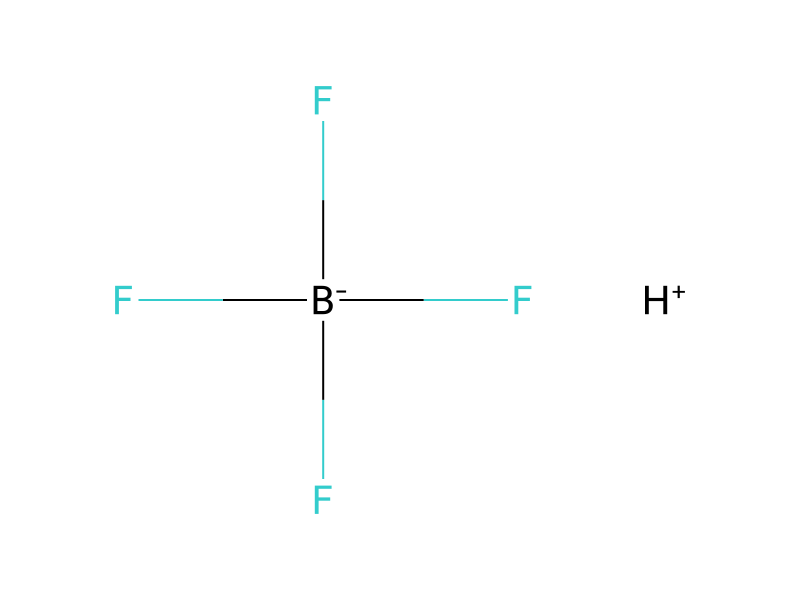
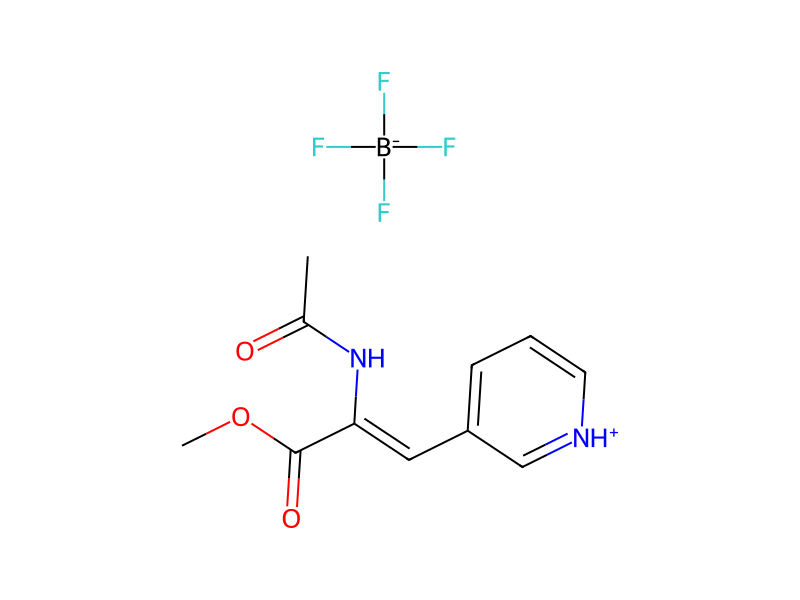
HCID 977OxygenHCID 28118Tetrafluoroboric acidHCID 865837833-(2-Acetylamino-2-methoxycarbonylvinyl)pyridinium TetrafluoroborateHCID 178418361HCID 178418361, compound2×

Product 1

HCID 86583784(S)-3-(2-Acetylamino-2-methoxycarbonylethyl)pyridinium TetrafluoroborateYield 99.1%

Reagents, catalysts & solvents

1
HCID 887MethanolSolvent2×

Conditions

Temperature
40 °C

Procedure

In an autoclave, 3-(2-acetylamino-2-methoxycarbonylvinyl)pyridinium tetrafluoroborate (10.3 kg, 33.44 mol) was dissolved in methanol (120.0 l). Tetrafluoroboric acid solution (50% in water, 1.018 kg, 5.8 mol) was added, and the autoclave was closed and carefully inertized using nitrogen. The catalyst solution was prepared by treating methanol (3.0 l) in an ultrasonic bath for 15 min while introducing argon. With exclusion of air, the methanol degassed in this manner was admixed with (+)-phenyl-CAPP (12.5 g, 20.83 mmol) and [Rh(COD)Cl]2 (5.0 g, 10.10 mmol), and the yellow-orange catalyst solution was sonicated under argon for 30 min. With exclusion of oxygen, the catalyst solution was introduced into the autoclave. Within a period of 1 h, the contents of the autoclave was heated to 40° C. In each case about 3 bar of hydrogen were applied three times, and the autoclave was vented immediately again. 1.5 bar of hydrogen were then applied, and the mixture was hydrogenated at 50° C., with vigorous stirring. After 7 h, the hydrogenation stopped. The HPLC analysis of a sample taken showed that, at this point in time, 99.1% of the title compound was present, and GC analysis (30 m fused silica capillary column Chirasil Val, isothermic 160° C., injector 220° C., detector (FID) 260° C., carrier gas 0.8 bar of hydrogen, tret [(R) enantiomer] 12.64 min, tret [(S) enantiomer] 13.64 min) showed that the enantiomeric purity was 86% ee of (S) isomer. The autoclave was flushed with nitrogen and, using nitrogen, the contents of the autoclave were pressed through a Seitz filter into a vessel, where the filtrate was stored at +5° C. under nitrogen.

Workup

  1. customthe autoclave was closed
  2. customThe catalyst solution was prepared
  3. additionwhile introducing argon
  4. customWith exclusion of air, the methanol degassed in this manner
  5. customthe yellow-orange catalyst solution was sonicated under argon for 30 min
  6. customwas hydrogenated at 50° C., with vigorous stirring
  7. waitAfter 7 h

Sources & evidence

ORD record
ord-65376431cfba44e2ae28147dc8a8cf44
Source dataset
uspto-grants-2006_08
DOI
10.6084/m9.figshare.5104873.v1
Patent number
US07084250B2

Reaction notes

Loading…

On this pageParticipantsConditionsProcedureWorkupSources & evidenceReaction notes