Pyridine → Fmoc-l-tryptophanyl fluoride
Reaction equation
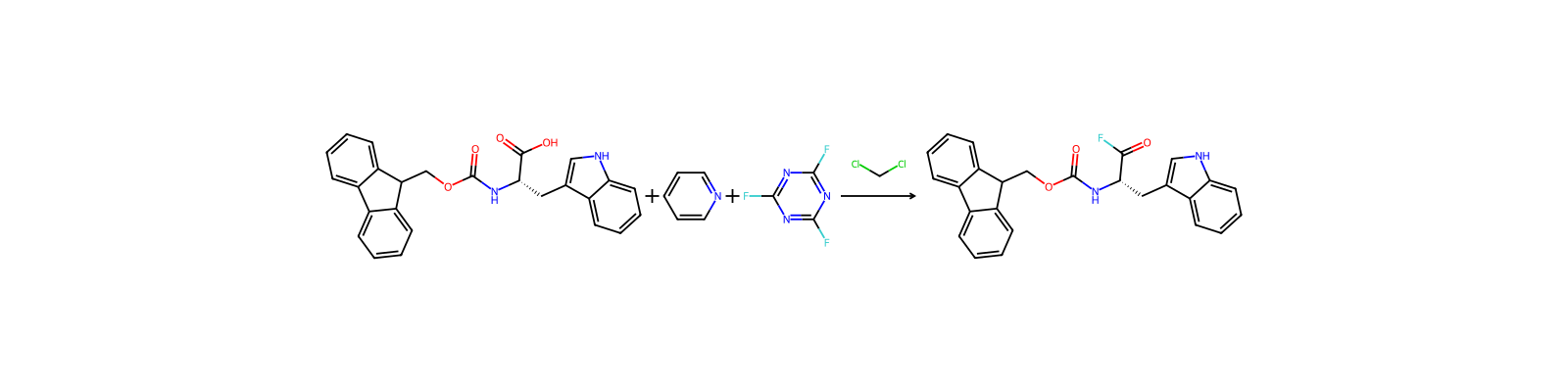
[C:1]([NH:18][C@H:19]([C:30]([OH:32])=O)[CH2:20][C:21]1[C:29]2[C:24](=[CH:25][CH:26]=[CH:27][CH:28]=2)[NH:23][CH:22]=1)([O:3][CH2:4][CH:5]1[C:17]2[C:12](=[CH:13][CH:14]=[CH:15][CH:16]=2)[C:11]2[C:6]1=[CH:7][CH:8]=[CH:9][CH:10]=2)=[O:2].N1C=CC=CC=1.N1C(F)=NC(F)=NC=1[F:41]>ClCCl>[C:1]([NH:18][C@H:19]([C:30]([F:41])=[O:32])[CH2:20][C:21]1[C:29]2[C:24](=[CH:25][CH:26]=[CH:27][CH:28]=2)[NH:23][CH:22]=1)([O:3][CH2:4][CH:5]1[C:17]2[C:12](=[CH:13][CH:14]=[CH:15][CH:16]=2)[C:11]2[C:6]1=[CH:7][CH:8]=[CH:9][CH:10]=2)=[O:2]Participants
5
Reactant 3

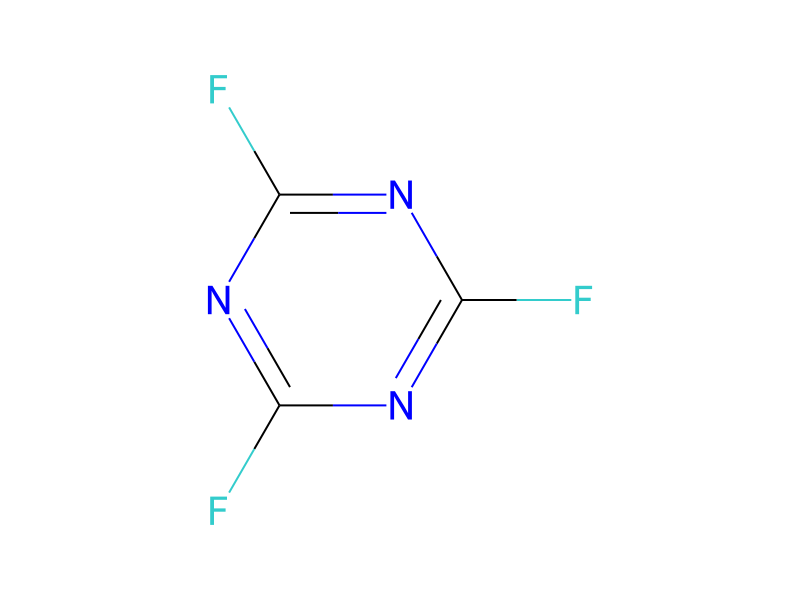

Product 1

Reagents, catalysts & solvents 1

Procedure
FMOC-L-Tryptophan (5 g, 11.72 mmol) (Bachem) was dissolved in dichloromethane (60 mL). Pyridine (0.95 mL, 11.72 mmol) (Aldrich) and cyanuric fluoride (1.58 g, 11.72 mmol) (Aldrich) were successively added at room temperature and the mixture was stirred for 6.5 hours. Ice cold water (100 mL) was added and the resulting slurry was filtered. The filtrate was poured into a separatory funnel and the layers were separated. The organic layer was dried over anhydrous sodium sulfate, filtered and concentrated under reduced pressure to afford FMOC-L-tryptophanyl fluoride as a beige powder. (Yield 4.36 g, 87%).