HomeMCPWorkbenchSkills
HomeWorkbenchNotificationsMe
llms.txt · MCP GuidePrivacy Policy · Terms of Service · Supportv1.8.0
  1. Home
  2. /Reaction

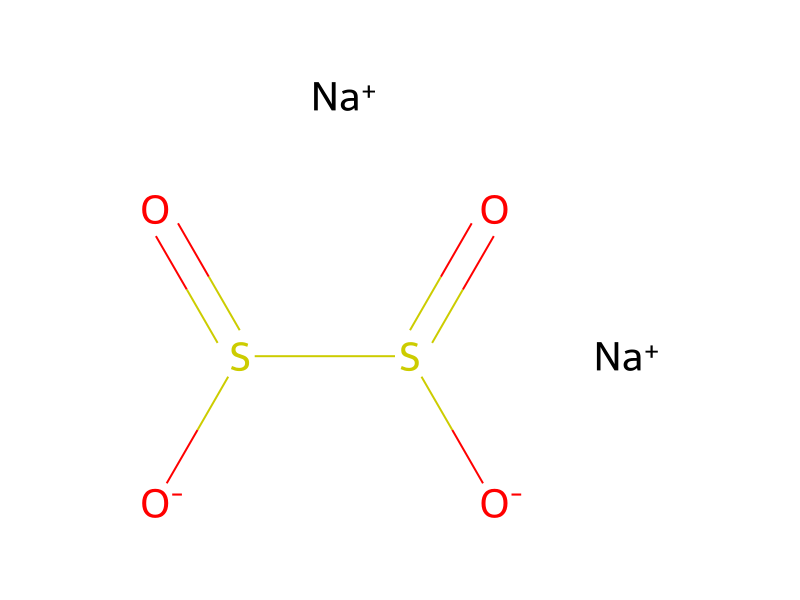
Sodium Dithionite → 2-Amino-6-bromo-4-fluorophenol

HRID 723309
Notes
Print preview

Reaction equation

HRID 723309 reaction equation
S(S([O-])=O)([O-])=O.[Na+].[Na+].[Br:9][C:10]1[C:15]([OH:16])=[C:14]([N+:17]([O-])=O)[CH:13]=[C:12]([F:20])[CH:11]=1>O.C(O)C>[NH2:17][C:14]1[CH:13]=[C:12]([F:20])[CH:11]=[C:10]([Br:9])[C:15]=1[OH:16]
ParticipantsProcedureWorkupSources & evidenceReaction notes

Participants

5

Reactant 2

HCID 24489Sodium DithioniteHCID 27733842-Bromo-4-fluoro-6-nitrophenol

Product 1

HCID 27376392-Amino-6-bromo-4-fluorophenolYield 49%

Reagents, catalysts & solvents 2

HCID 702EthanolSolventHCID 962WaterSolvent2×

Procedure

Sodium dithionite (58 g, 335 mmol) was dissolved in warm water (300 mL) and was added slowly to a solution of 6-bromo-4-fluoro-2-nitrophenol (11.8 g, 50 mmol) in 250 mL of ethanol heated on a steam bath. The reaction mixture turned from deep orange to light yellow. The suspension is diluted with water till a clear yellow solution was obtained. Partial concentration on a rotary evaporator induced crystallization. The mixture was then cooled to room temperature and crystals formed. Filtration and drying afforded the title compound as a white solid (5.04 g, 49% yield). MS 207 (M+H)+

Workup

  1. temperatureheated on a steam bath
  2. customwas obtained
  3. concentrationPartial concentration
  4. customon a rotary evaporator
  5. customcrystallization
  6. customcrystals formed
  7. filtrationFiltration
  8. customdrying

Sources & evidence

ORD record
ord-0449394341f545848f18449387ffaa84
Source dataset
uspto-grants-2006_11
DOI
10.6084/m9.figshare.5104873.v1
Patent number
US07141562B2

Reaction notes

Loading…

On this pageParticipantsProcedureWorkupSources & evidenceReaction notes