Reaction equation

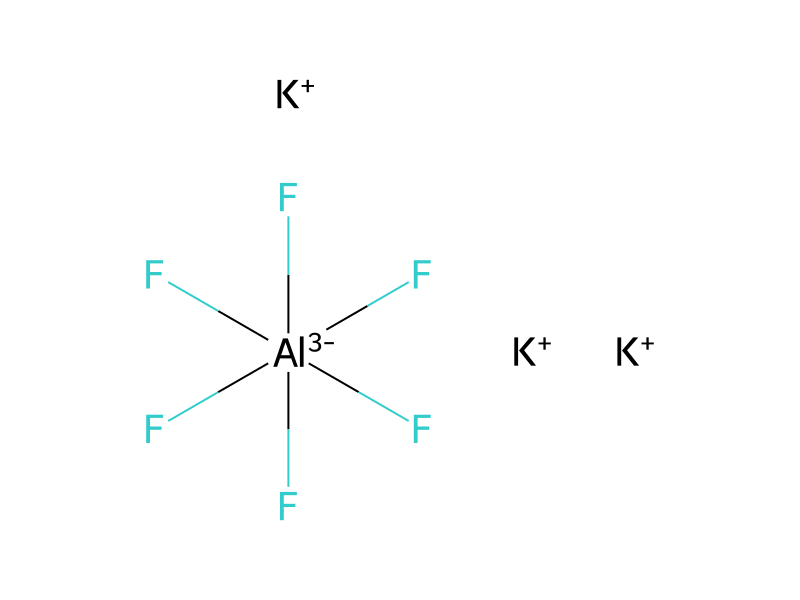
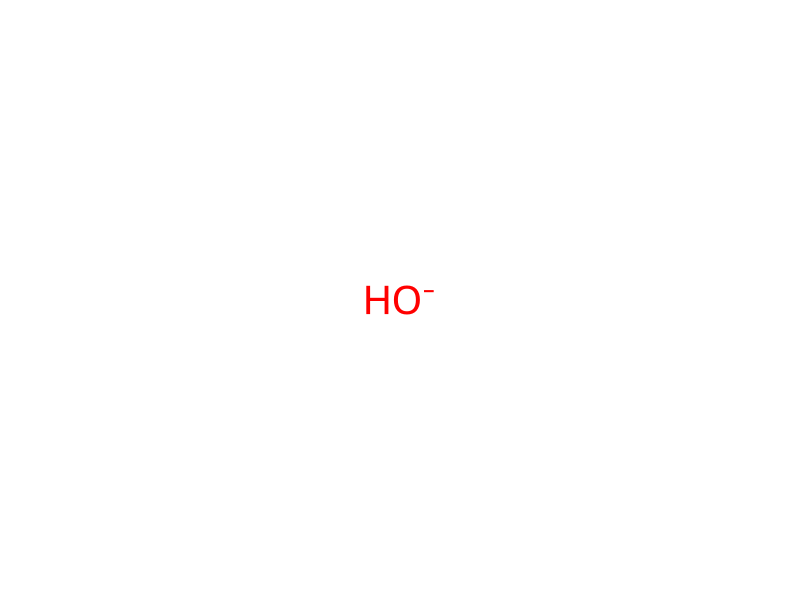
ClC(C(O)C1C=CC=C([N+]([O-])=[O:13])C=1)(Cl)Cl.[F-].[K+:17].[F-].[F:19][Al-3:20]([F:25])([F:24])([F:23])([F:22])[F:21].[K+].[K+].[K+]>C(Cl)(Cl)Cl>[F:19][Al-3:20]([F:25])([F:24])([F:23])([F:22])[F:21].[K+:17].[K+:17].[K+:17].[OH-:13]Participants




Procedure
In this invention we describe the preparation of trichloromethyl-3-nitrobenzyl alcohol in high yield with no detectable Cannizzaro product and demonstrate the generality of the method for the condensation of chloroform with other aldehydes and ketones. Initially, potassium fluoride supported on alumina was the base of choice for this condensation since the fluoride base would prevent the Cannizzaro side reaction. Characterization by infrared and Raman spectroscopy of this supported base showed the presence of potassium hexafluoroaluminate rather than potassium fluoride. Aqueous potassium fluoride had reacted with alumina to produce potassium hexafluoroaluminate and hydroxide. This observation prompted the use of potassium hydroxide supported on Super-Cel as the base to give TMBA in 93% isolated yield. The method described herein avoids the preparation and variable activity of the supported hydroxide base. A mixture of chloroform (2.25 equivalents) and 3-nitrobenzaldehyde (one equivalent) in dimethylformamide (DMF) at 0° C. was treated with a methanolic solution of potassium hydroxide (0.7 equivalents). After work-up, the desired alcohol TMBA was obtained in 98% yield and crystallized from toluene/hexane to give analytically pure trichloromethyl-3-nitrobenzyl alcohol in 90% yield.
Workup
- customin high yield with no detectable Cannizzaro product
- customthe Cannizzaro side reaction
Sources & evidence
- ORD record
- ord-51709c4cdff046e5884d4c848d368368
- Source dataset
- uspto-grants-1986_07
- Patent number
- US04603227
Linked notes
Loading…