HomeMCPSkillsWorkbenchOpenChem
HomeWorkbenchNotificationsMe
llms.txt · skill.md · MCP GuidePrivacy Policy · Terms of Service · Supportv1.8.4
  1. Home
  2. /Reaction

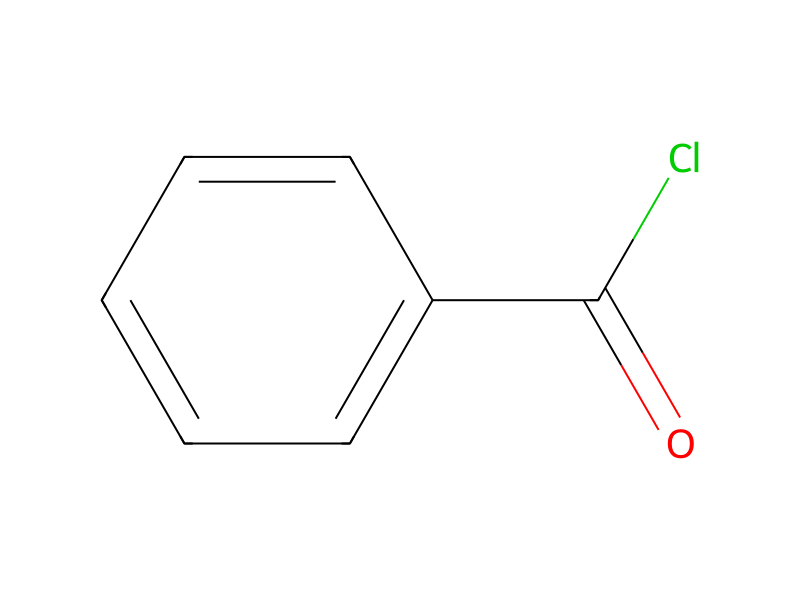
Benzoyl chloride → N1-[4-(4-amino-2-butyl-1H-imidazo[4,5-c]quinolin-1-yl)butyl]benzamide

HRID 746494
Print

Reaction equation

[NH2:1][CH2:2][CH2:3][CH2:4][CH2:5][N:6]1[C:18]2[C:17]3[CH:16]=[CH:15][CH:14]=[CH:13][C:12]=3[N:11]=[C:10]([NH2:19])[C:9]=2[N:8]=[C:7]1[CH2:20][CH2:21][CH2:22][CH3:23].[C:24](Cl)(=[O:31])[C:25]1[CH:30]=[CH:29][CH:28]=[CH:27][CH:26]=1>N1C=CC=CC=1>[NH2:19][C:10]1[C:9]2[N:8]=[C:7]([CH2:20][CH2:21][CH2:22][CH3:23])[N:6]([CH2:5][CH2:4][CH2:3][CH2:2][NH:1][C:24](=[O:31])[C:25]3[CH:30]=[CH:29][CH:28]=[CH:27][CH:26]=3)[C:18]=2[C:17]2[CH:16]=[CH:15][CH:14]=[CH:13][C:12]=2[N:11]=1
ParticipantsConditionsProcedureWorkupSources & evidenceReaction notes

Participants

4

Reactant 2

HCID 7412Benzoyl chlorideHCID 155382261-(4-Aminobutyl)-2-butyl-1H-imidazo[4,5-c]quinolin-4-amine

Product 1

HCID 9909787N1-[4-(4-amino-2-butyl-1H-imidazo[4,5-c]quinolin-1-yl)butyl]benzamide

Reagents, catalysts & solvents 1

HCID 1049PyridineSolvent

Conditions

Temperature
50 °C

Procedure

1-(4-Aminobutyl)-2-butyl-1H-imidazo[4,5-c]quinolin-4-amine (0.5 g, 1.6 mmol) was combined with pyridine (50 mL) and heated to 50° C. Benzoyl chloride (0.22 g, 1.6 mmol) was added via a pipette. After 1 hour analysis by HPLC indicated that all of the starting material was gone and that several products had formed. The reaction mixture was concentrated under vacuum. The residue was combined with dichloromethane and aqueous sodium bicarbonate. The organic layer was separated and then concentrated under vacuum. The residue was dissolved in dichloromethane and placed on a silica gel column. The column was eluted with 5% methanol in dichloromethane and then with 10% methanol in dichloromethane. The 10% methanol in dichloromethane fractions were combined and concentrated under vacuum to provide N1-[4-(4-amino-2-butyl-1H-imidazo[4,5-c]quinolin-1-yl)butyl]benzamide as a solid, m.p. 174-175° C. 1H NMR (500 MHz, DMSO-d6) δ 8.48 (t, J=6.0 Hz, 1-H), 8.00 (d, J=8.0 Hz, 1H), 7.78 (d, J=8.0 Hz, 2H), 7.60 (d, J=8.0 Hz, 1H), 7.50 (t, J=8.0 Hz, 1H), 7.43 (t, J=8.0 Hz, 2H), 7.39 (t, J=8.0 Hz, 1H), 7.18 (t, J=8.0 Hz, 1H), 6.50 (broad s, 2H), 4.54 (t, J=7.0 Hz, 2H), 3.32 (m, 2H), 2.91 (t, J=7.0 Hz, 2H), 1.86(quintet, J=7.0 Hz, 2H), 1.77 (quintet, J=7.0 Hz, 2H), 1.70 (quintet, J=7.0 Hz, 2H), 1.41 (sextet, J=7.0 Hz, 2H), 0.91 (t, J=7.0 Hz, 3H); MS (CI) m/e 416 (M+H).

Workup

  1. customhad formed
  2. concentrationThe reaction mixture was concentrated under vacuum
  3. customThe organic layer was separated
  4. concentrationconcentrated under vacuum
  5. dissolutionThe residue was dissolved in dichloromethane
  6. washThe column was eluted with 5% methanol in dichloromethane
  7. concentrationconcentrated under vacuum

Sources & evidence

ORD record
ord-484d7b950f7240adbc3ec579728949b6
Source dataset
uspto-grants-2008_07
DOI
10.6084/m9.figshare.5104873.v1
Patent number
US07393859B2

Reaction notes

On this pageParticipantsConditionsProcedureWorkupSources & evidenceReaction notes