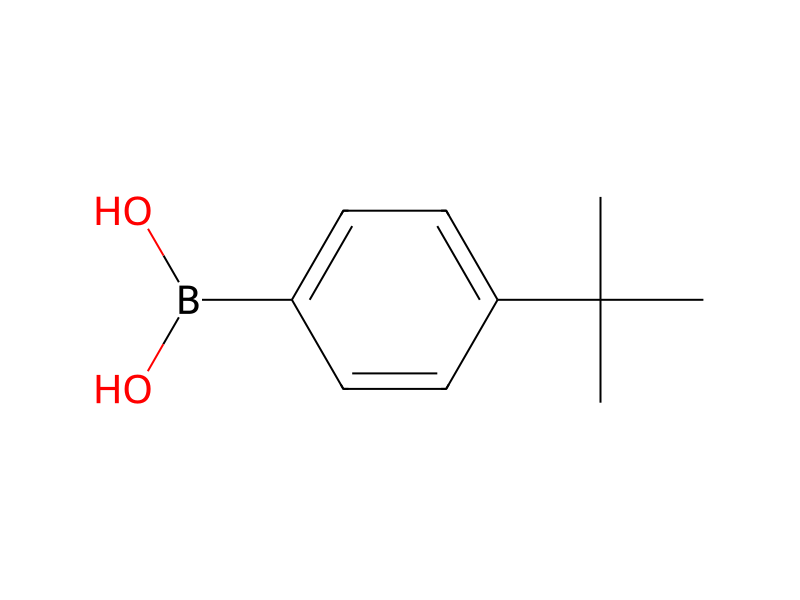
[Cl:1][C:2]1[NH:3][C:4]2[C:9]([C:10]=1[CH:11]=[O:12])=[CH:8][CH:7]=[CH:6][CH:5]=2.[C:13]([C:17]1[CH:22]=[CH:21][C:20](B(O)O)=[CH:19][CH:18]=1)([CH3:16])([CH3:15])[CH3:14].N1C=CC=CC=1>ClCCl.C([O-])(=O)C.[Cu+2].C([O-])(=O)C>[C:13]([C:17]1[CH:22]=[CH:21][C:20]([N:3]2[C:4]3[C:9](=[CH:8][CH:7]=[CH:6][CH:5]=3)[C:10]([CH:11]=[O:12])=[C:2]2[Cl:1])=[CH:19][CH:18]=1)([CH3:16])([CH3:15])[CH3:14]A mixture of 2-chloro-1H-indole-3-carboxaldehyde (2.2 g, 12.25 mmol), 4-t-butylphenylboronic acid (4.36 g, 24.49 mmol), copper acetate (4.45 g, 24.50 mmol), 4A molecular sieve (2.5 g), pyridine (3.0 mL) and dichloromethane (40 mL) is stirred overnight at room temperature. The reaction mixture is diluted with dichloromethane (100 mL), washed with water (50 mL), with 3N aqueous hydrochloric acid (10 mL), the precipitate removed by filtration and the dichloromethane layer is washed again with water (50 mL), aq sodium bicarbonate, with brine, dried and filtered. The filtrate is concentrated to give a solid. The crude is crystallized from dichloromethane-methanol to afford 1-(4-tert-butylphenyl)-2-chloro-1H-indole-3-carboxaldehyde (3.09 g, 81% yield) as a yellow solid. TLC (silica gel, 20% ethyl acetate/heptane) Rf 0.50; ESI/MS 312 (M+H), RT 4.32 min; NMR: 10.12 (1H, s); 8.20 (1H, d, J=6 Hz); 7.71 (2H, d); 7.53 (2H, d); 7.38 (2H, m); 7.11 (1H, d); 1.38 (9H, s).