HomeMCPSkillsWorkbenchOpenChem
HomeWorkbenchNotificationsMe
llms.txt · skill.md · MCP GuidePrivacy Policy · Terms of Service · Supportv1.8.6
  1. Home
  2. /Reaction

Sodium Carbonate → 3'-Methylene-2',3',6,7,8,9-hexahydrospiro[imidazo[1,5-a]azepine-5,1'-indene]-5'-carbonitrile

HRID 76906
Print

Reaction equation

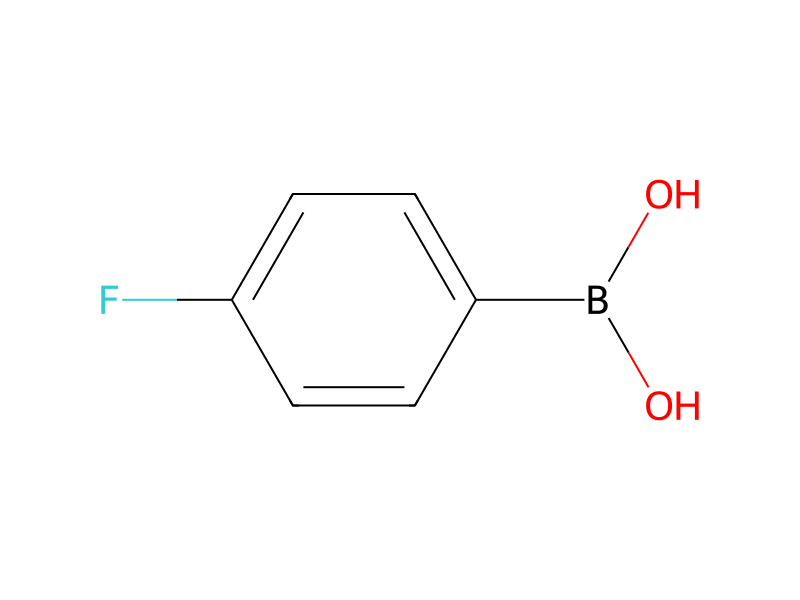
[CH2:1]([C:4]1([C:14]2[CH:21]=[CH:20][C:17]([C:18]#[N:19])=[CH:16][C:15]=2Br)[N:10]2[CH:11]=[N:12][CH:13]=[C:9]2[CH2:8][CH2:7][CH2:6][CH2:5]1)[CH:2]=[CH2:3].C(=O)([O-])[O-].[Na+].[Na+].FC1C=CC(B(O)O)=CC=1>[Pd].C1(P(C2C=CC=CC=2)C2C=CC=CC=2)C=CC=CC=1.C1(P(C2C=CC=CC=2)C2C=CC=CC=2)C=CC=CC=1.C1(P(C2C=CC=CC=2)C2C=CC=CC=2)C=CC=CC=1.C1(P(C2C=CC=CC=2)C2C=CC=CC=2)C=CC=CC=1.COCCOC>[CH2:3]=[C:2]1[C:21]2[C:14](=[CH:15][CH:16]=[C:17]([C:18]#[N:19])[CH:20]=2)[C:4]2([N:10]3[CH:11]=[N:12][CH:13]=[C:9]3[CH2:8][CH2:7][CH2:6][CH2:5]2)[CH2:1]1
ParticipantsConditionsProcedureWorkupSources & evidenceReaction notes

Participants

6

Reactant 3

HCID 10340Sodium CarbonateHCID 2856454-Fluorophenylboronic acidHCID 588270494-(5-allyl-6,7,8,9-tetrahydro-5H-imidazo[1,5-a]azepin-5-yl)-3-bromobenzonitrile

Product 1

HCID 588270643'-Methylene-2',3',6,7,8,9-hexahydrospiro[imidazo[1,5-a]azepine-5,1'-indene]-5'-carbonitrile

Reagents, catalysts & solvents 2

HCID 11979704
Tetrakis(triphenylphosphine)palladium
Catalyst
HCID 80711,2-DimethoxyethaneSolvent

Conditions

Temperature
130 °C

Procedure

To 4-(5-allyl-6,7,8,9-tetrahydro-5H-imidazo[1,5-a]azepin-5-yl)-3-bromobenzonitrile (0.275 g, 0.76 mmol) is added DME (3.0 mL). To this solution is added aqueous 2M sodium carbonate (1.5 ml, 3.0 mmol) followed by 4-fluorophenylboronic acid (0.269 g, 1.92 mmol). This mixture is transferred to a microwave safe vial Tetrakis(triphenylphosphine) palladium(0) (0.04 g, 0.034 mmol) is added, and the vessel sealed. The mixture is stirred briefly (30 seconds) and place in a microwave for 25 minutes at 130° C. The vial is allowed to cool and unsealed. The mixture is extracted with ethyl acetate and washed with saturated aqueous sodium bicarbonate. The separated organic layer is concentrated in vacuo. The resulting material is subjected to two sequential chromatography procedures (1: Silica gel, 1:50 to 1:25 methanol:methylene chloride. 2: Reverse phase HPLC, gradient 10-95% % Acetonitrile:Water, pH2, over 8 minutes) to give the product. MS (ESI) m/z 276 (M+11); 1H NMR (400 MHz, CDCl3) δ ppm 1.47-1.61 (m, 1H), 1.85-1.99 (m, 1H), 2.01-2.16 (m, 3H), 2.25-2.36 (m, 1H), 2.63 (t, 1H), 2.99 (d, J=16.4 Hz, 1H), 3.10 (dd, J=15.5, 5.7 Hz, 1H), 3.23-3.32 (m, 1H), 5.21-5.25 (m, 1H), 5.62-5.67 (m, 1H), 6.50 (s, 1H), 6.78 (s, 1H), 7.54-7.58 (m, 1H), 7.66-7.70 (m, 1H), 7.88 (s, 1H).

Workup

  1. additionis added
  2. customthe vessel sealed
  3. temperatureto cool
  4. extractionThe mixture is extracted with ethyl acetate
  5. washwashed with saturated aqueous sodium bicarbonate
  6. concentrationThe separated organic layer is concentrated in vacuo
  7. customis subjected to two sequential chromatography procedures (1: Silica gel, 1:50 to 1:25 methanol:methylene chloride. 2: Reverse phase HPLC, gradient 10-95% % Acetonitrile:Water, pH2, over 8 minutes)
  8. customto give the product

Sources & evidence

ORD record
ord-ca1babbab27444ebb106233ae63c6c75
Source dataset
uspto-grants-2014_09
DOI
10.6084/m9.figshare.5104873.v1
Patent number
US08835646B2

Reaction notes

On this pageParticipantsConditionsProcedureWorkupSources & evidenceReaction notes