Reaction equation

[NH2:1][C:2]1[C:7]([CH3:8])=[CH:6][C:5]([OH:9])=[C:4]([CH:10]([CH3:12])[CH3:11])[C:3]=1[OH:13].O[C:15]1C=C(C(C)C)C=C(O)C=1C.C1(C)CC(=O)C(C(C)C)C(=O)C1.C(OC(OCC)OCC)C.OS(O)(=O)=O>CCO.[Cl-].[Ti+4].[Cl-].[Cl-].[Cl-]>[CH:10]([C:4]1[C:3]2[O:13][CH:15]=[N:1][C:2]=2[C:7]([CH3:8])=[CH:6][C:5]=1[OH:9])([CH3:11])[CH3:12]Participants
Reactant 5

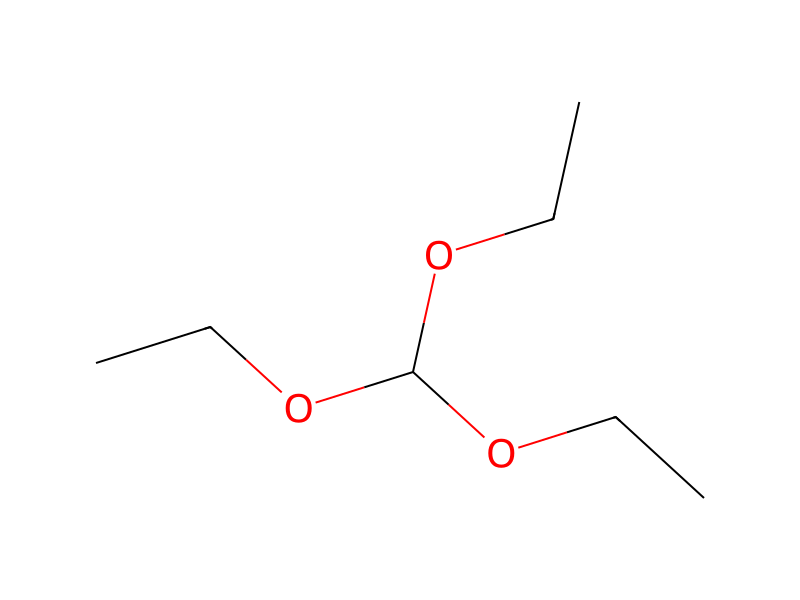


Product 1

Reagents, catalysts & solvents 2


Conditions
- Temperature
- 0 °C
Procedure
To a flask charged with 4-amino-2-isopropyl-5-methyl-benzene-1,3-diol (450 mg, 2.5 mmol) (Treibs and Albrecht, “The dihydroxycymenes. IV. Isocymorcin (3,5-dihydroxycymene) from 3,5-menthanedione by dehydrogenation and total synthesis,” Journal fuer Praktische Chemie (1961), 13, 291-305), purged with argon, and cooled to 0° C. was sequentially added triethylorthoformate (0.7 mL, 4.2 mmol), EtOH (4 mL), and a 10% v/v solution of H2SO4 in EtOH (40 μL). The reaction was allowed to warm to room temperature slowly, stirred overnight, quenched with saturated NaHCO3, and concentrated. The residue was partitioned between water and methylene chloride. The combined organic phases were dried with Na2SO4 and concentrated to provide 510 mg of 7-isopropyl-4-methyl-benzooxazol-6-ol.
Workup
- custompurged with argon
- temperatureto warm to room temperature slowly
- customquenched with saturated NaHCO3
- concentrationconcentrated
- customThe residue was partitioned between water and methylene chloride
- dry with materialThe combined organic phases were dried with Na2SO4
- concentrationconcentrated
Sources & evidence
- ORD record
- ord-99a01c0b516c4dbfbe70870eb1e10cb7
- Source dataset
- uspto-grants-2014_09
- Patent number
- US08846705B2
Linked notes
Loading…