Reaction equation

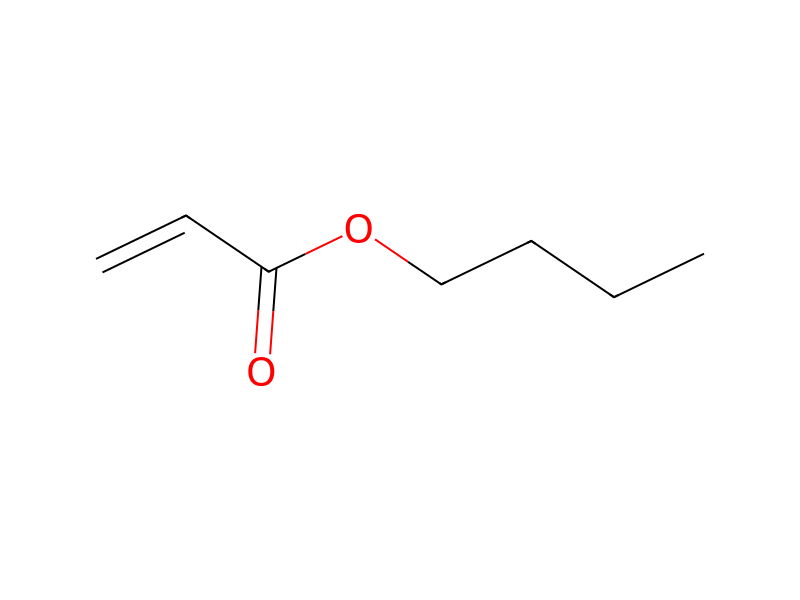
[CH2:1]=[C:2]1[CH2:7][CH2:6][O:5][C:3]1=[O:4].[C:8]([O:12][CH2:13][CH2:14][CH2:15][CH3:16])(=[O:11])[CH:9]=[CH2:10]>>[CH2:1]=[C:2]1[CH2:7][CH2:6][O:5][C:3]1=[O:4].[C:8]([O:12][CH2:13][CH2:14][CH2:15][CH3:16])(=[O:11])[CH:9]=[CH2:10].[C:3]([OH:5])(=[O:4])[CH:2]=[CH2:1]Participants
3


Procedure
Similar to Example 51, with the following exception: 3.390 g (3.46×10⁻² mol) α-methylene-γ-butyrolactone and 1.075 g (8.39×10⁻³ mol) n-butyl acrylate were used in the monomer mixture, yielding a polymer with a glass transition temperature of 145° C. Comparison to the Fox equation suggests the statistical copolymer contains approximately 11% n-butyl acrylate repeat units.
Workup
- customyielding a polymer with a glass transition temperature of 145° C
Sources & evidence
- ORD record
- ord-01b081e27a914390b17b8bb8f541974c
- Source dataset
- uspto-grants-2014_09
- Patent number
- US08846817B2
Linked notes
Loading…