Ethylene Oxide → HCID 14793571, compound
HRID 847421
Reaction equation

[CH:1]1[C:14]2[N:13]([C:15](Cl)=[O:16])[C:12]3[C:7](=[CH:8][CH:9]=[CH:10][CH:11]=3)[S:6][C:5]=2[CH:4]=[CH:3][CH:2]=1.[CH2:18]1[O:20][CH:19]1[CH2:21][OH:22].O1CC1>>[CH:1]1[C:14]2[N:13]([C:15]([O:22][CH2:21][CH:19]3[O:20][CH2:18]3)=[O:16])[C:12]3[C:7](=[CH:8][CH:9]=[CH:10][CH:11]=3)[S:6][C:5]=2[CH:4]=[CH:3][CH:2]=1Participants
4

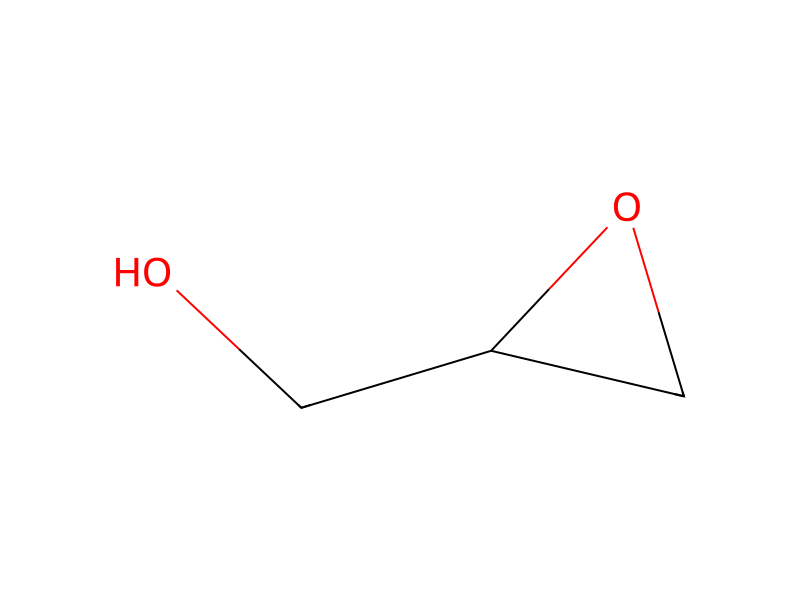


Procedure
Phenothiazine N-carbonyl chloride, 1.5 g (6 mmol) and 6 mmol of glycidol were heated in a reflux apparatus equipped with a drying tube at 90° C. for 10 hours on an oil bath. Then the reflux apparatus was converted for distillation and the excess glycidol was removed under vacuum at this temperature. The resulting brown oil solidified upon cooling and was dissolved in chloroform, treated with charcoal, dried and evaporated to dryness. Recrystallization of the resulting solid from ethanol gave the product: 1.0 g (55%), tan crystals m.p. 92°-94° C. NMR: (CDCl3) 7.3, 8H, m, phenyl; 4.5, 2H, d, d, exocyclic --CH2 --; 3.4, 1H, m, CH; 2.9, 2H, m, endocyclic --CH2 --. IR: 1710, carbonyl; 1250, 900, oxirane; 750, aromatic.