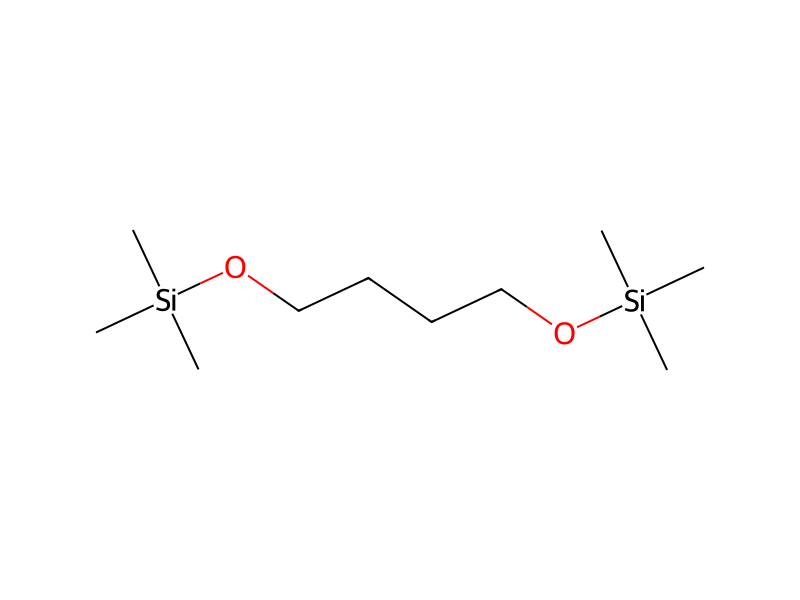
Chlorotrimethylsilane → 3,8-Dioxa-2,9-disiladecane, 2,2,9,9-tetramethyl-
HRID 847487
Reaction equation

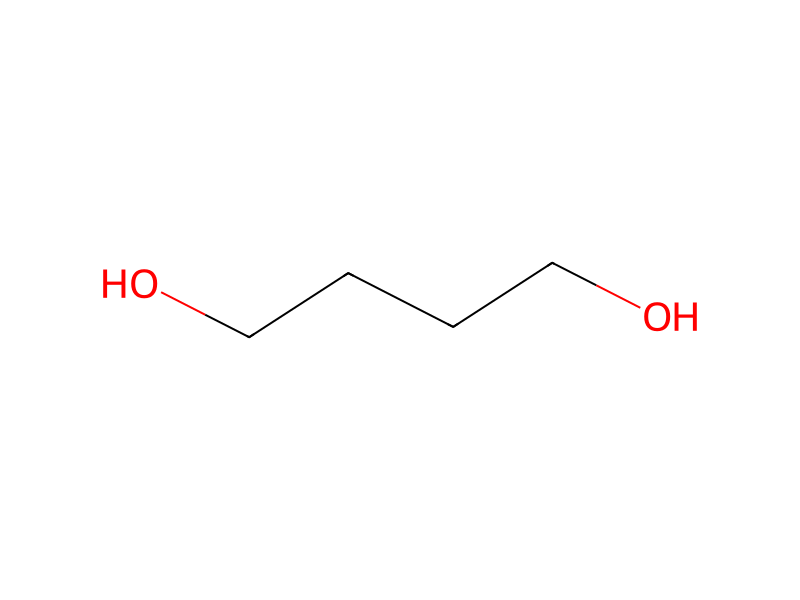
[CH2:1]([OH:6])[CH2:2][CH2:3][CH2:4][OH:5].[CH3:7][Si:8]([CH3:11])([CH3:10])Cl>[Br-].C([P+](CCCC)(CCCC)CCCCCCCCCCCCCCCC)CCC>[CH3:7][Si:8]([CH3:11])([CH3:10])[O:5][CH2:4][CH2:3][CH2:2][CH2:1][O:6][Si:8]([CH3:11])([CH3:10])[CH3:7]Participants
4
Reactant 2

Product 1
Reagents, catalysts & solvents 1

Procedure
1 mole of butane-1,4-diol, 3 moles of trimethylchlorosilane and 0.002 moles of tributyl-hexadecyl phosphonium bromide were reacted at the reflux temperature (56°-96° C.) as in Example 1. The product was worked up by fractional distillation.
Workup
- distillationThe product was worked up by fractional distillation
Sources & evidence
- ORD record
- ord-9db4bfcea3d94061a42271e73442d436
- Source dataset
- uspto-grants-1992_08
- Patent number
- US05142081