Reaction equation

[C:1]1(=[O:7])[CH2:6][CH2:5][CH2:4][CH2:3][CH2:2]1.[CH:8]1([O:14][C:15]2([O:21][CH:22]3[CH2:27]CCCC3)[CH2:20][CH2:19][CH2:18][CH2:17][CH2:16]2)[CH2:13]CCCC1.[CH:28]1([OH:34])[CH2:33][CH2:32][CH2:31][CH2:30][CH2:29]1.O(CCO)C1C=CC=CC=1.COC1(OC)CCCCC1>>[O:7]([CH2:27][CH2:22][O:21][C:15]1([O:14][CH2:8][CH2:13][O:34][C:28]2[CH:33]=[CH:32][CH:31]=[CH:30][CH:29]=2)[CH2:16][CH2:17][CH2:18][CH2:19][CH2:20]1)[C:1]1[CH:6]=[CH:5][CH:4]=[CH:3][CH:2]=1Participants
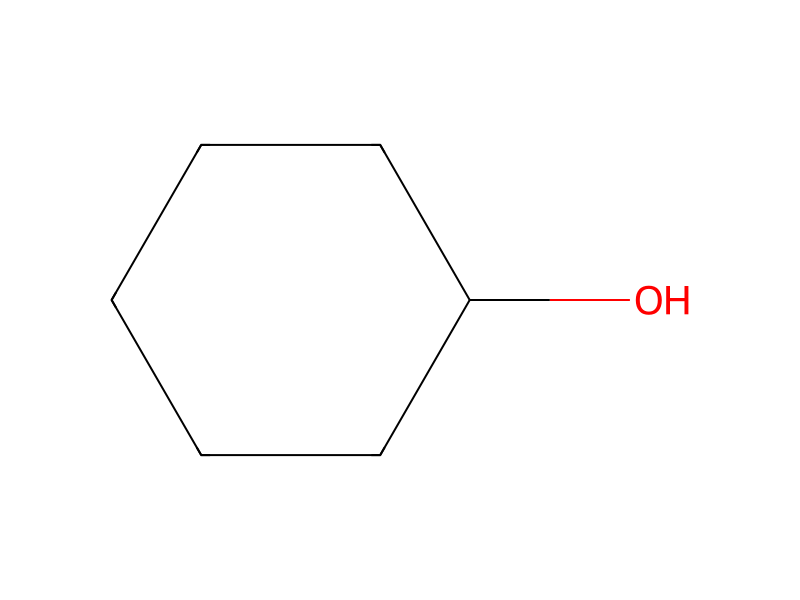


Procedure
Non-simple 1,1-dialkoxycyclohexanes are very difficult to make by reacting cyclohexanone with alcohols having long straight chains, branched chains, or aromatic groups. For example, 1,1-di(cyclohexyloxy)cyclohexane was made with a yield of 29% by reacting cyclohexanol with cyclohexanone, as described in U.S. Pat. No. 3,072,727. Non-simple 1,1-dialkoxycyclohexanes are typically made by transketalization, namely, by mixing and heating such alcohols with an already formed simple 1,1-dialkyoxycyclohexane, namely, with methoxy, ethoxy, or isopropoxy groups. For example, 2-phenoxyethanol can be mixed with 1,1-dimethoxycyclohexane to form 1,1-di(2-phenoxyethoxy)cyclohexane. This reaction is described in U.S. Pat. No. 6,165,676 and U.S. Pat. No. 6,391,512.
Workup
- additionnamely, by mixing
Sources & evidence
- ORD record
- ord-9bf3ac3fc52c443f8f0b58bb430d2229
- Source dataset
- uspto-grants-2014_09
- Patent number
- US08846981B2
Linked notes
Loading…