Thymidine → Deoxyguanosine
HRID 850266
Reaction equation

CC1C(=O)NC(=O)NC1=O.N1C=C(C)C(=O)NC1=O.N1C=CC(=O)NC1=O.[C@@H:28]1(N2C=C(C)C(=O)NC2=O)[O:35][C@H:32]([CH2:33][OH:34])[C@@H:30]([OH:31])[CH2:29]1.[NH:45]1[C:54](=[O:55])[C:53]2[NH:52][CH:51]=[N:50][C:49]=2[N:48]=[C:46]1[NH2:47]>>[C@@H:28]1([N:50]2[C:49]3[N:48]=[C:46]([NH2:47])[NH:45][C:54](=[O:55])[C:53]=3[N:52]=[CH:51]2)[O:35][C@H:32]([CH2:33][OH:34])[C@@H:30]([OH:31])[CH2:29]1Participants
5
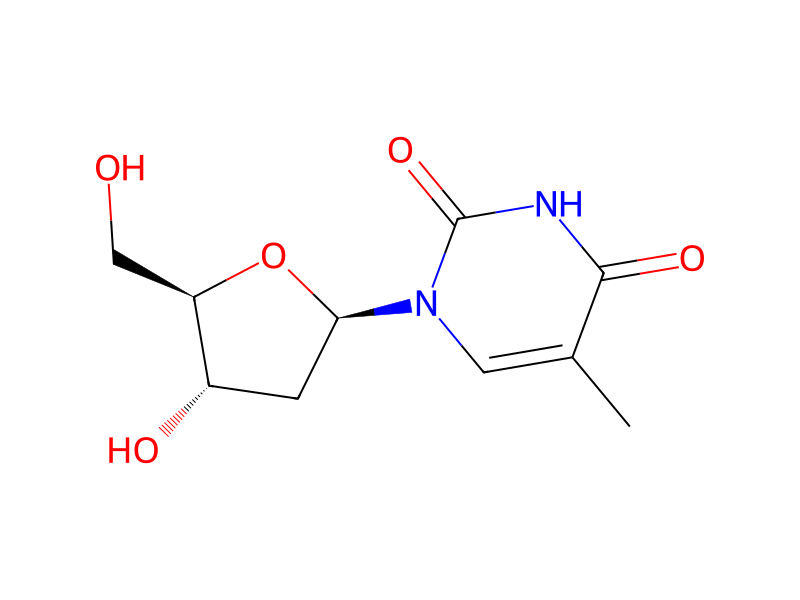


Procedure
FIG. 1 shows formation of 5-methyl barbituric acid. Since the acid is decomposed so as to disappear, it has been clarified that uracil thymine dehydrogenase and barbiturase are present in the uracil·thymine decomposing enzyme. In the case of FIG. 1, thymidine disappeared substantially completely, though the starting material guanine was found to remain only slightly. Deoxyguanosine was formed in an amount of 14.9 mM (yield of 75%). Compared with FIG. 2 covering the case where uracil·thymine decomposing enzyme solution was not present, FIG. 1 supports that the desired product of deoxyguanosine was formed in a very large amount.