Reaction equation

I([O-])(=O)(=O)=O.Cl[O-].[Na+].[O:9]=[C:10]1[CH2:17][C:14]([CH3:16])([CH3:15])[CH2:13]C(C)=[CH:11]1.[C:19](=[O:22])([O-])[O-:20].[Na+].[Na+]>C(Cl)Cl>[O:9]=[C:10]([CH3:11])[CH2:17][C:14]([CH3:16])([CH3:15])[CH2:13][C:19]([OH:20])=[O:22]Participants
Reactant 4



Product 1

Reagents, catalysts & solvents 1

Procedure
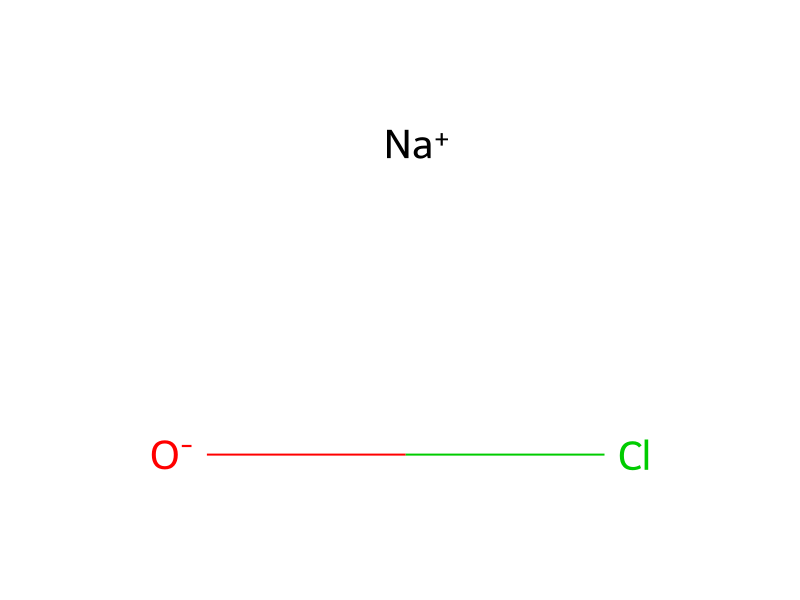
The above oxidation procedure was repeated, except that in place of periodate there was utilized sodium hypochlorite. There was added slowly about 2700 parts of an aqueous 5% sodium hypochlorite solution to a solution of 56 parts of isophorone in about 200 parts of methylene chloride. An exothermic reaction resulted causing the methylene chloride to reflux. The organic phase was analyzed shortly after the addition was complete and it was found that all of the isophorone had reacted. The aqueous layer was made basic with sodium carbonate and the reaction mixture was filtered. The aqueous phase was washed with methylene chloride and then acidified by slowly adding it to a 2 phase mixture of concentrated hydrochloric acid and methylene chloride. The organic phase was separated and the aqueous phase was extracted with several portions of fresh methylene chloride. Upon combining the various organic layers which were dried and evaporated, there was obtained 37.7 parts of 5-keto-3,3-dimethylhexanoic acid.
Workup
- customAn exothermic reaction
- customresulted
- temperatureto reflux
- additionafter the addition
- customhad reacted
- filtrationthe reaction mixture was filtered
- washThe aqueous phase was washed with methylene chloride
- additionby slowly adding it
- additionto a 2 phase mixture of concentrated hydrochloric acid and methylene chloride
- customThe organic phase was separated
- extractionthe aqueous phase was extracted with several portions of fresh methylene chloride
- customwere dried
- customevaporated
Sources & evidence
- ORD record
- ord-02e1602c1027497591c7e61a162c4136
- Source dataset
- uspto-grants-1983_05
- Patent number
- US04386222
Linked notes
Loading…