Reaction equation

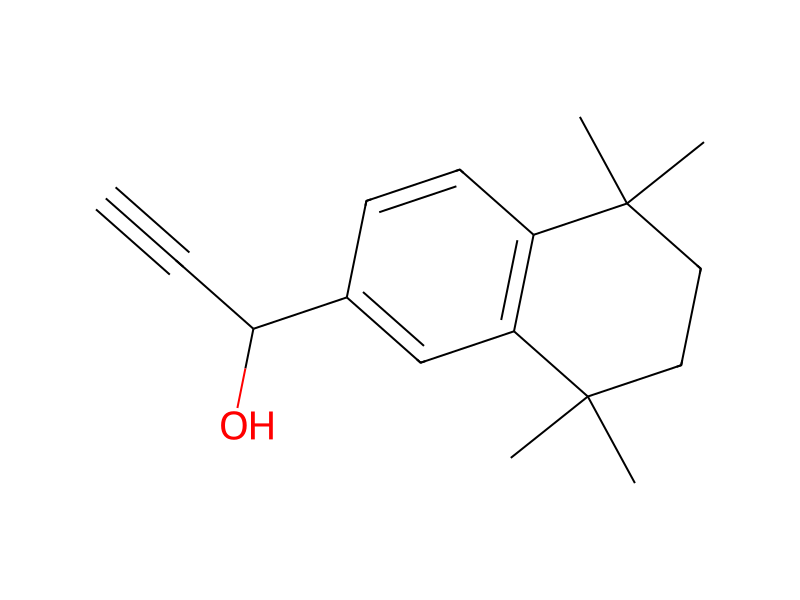
[C:1]([CH:3]([C:5]1[CH:14]=[CH:13][C:12]2[C:11]([CH3:16])([CH3:15])[CH2:10][CH2:9][C:8]([CH3:18])([CH3:17])[C:7]=2[CH:6]=1)[OH:4])#[CH:2].[CH3:19][N:20]1[CH:24]=[C:23](I)[CH:22]=[C:21]1[C:26]([O:28][CH3:29])=[O:27]>>[CH3:19][N:20]1[CH:24]=[C:23]([C:2]#[C:1][CH:3]([OH:4])[C:5]2[CH:14]=[CH:13][C:12]3[C:11]([CH3:16])([CH3:15])[CH2:10][CH2:9][C:8]([CH3:18])([CH3:17])[C:7]=3[CH:6]=2)[CH:22]=[C:21]1[C:26]([O:28][CH3:29])=[O:27]Participants
3


Procedure
Following the basic procedure of Example 11(d), by reacting 2.9 g (12 mmol) of α-ethynyl-5,6,7,8-tetrahydro-5,5,8,8-tetramethyl-2-naphthalenemethanol with 3.2 g (12.1 mmol) of methyl N-methyl-4-iodo-2-pyrrolecarboxylate, 2.8 g (61%) of the expected ester, with a melting point of 150°-152° C., were recovered by trituration in isopropyl ether.
Workup
- customwith a melting point of 150°-152° C., were recovered by trituration in isopropyl ether
Sources & evidence
- ORD record
- ord-b8c678111bc4497ca4b41d85de599c78
- Source dataset
- uspto-grants-1998_02
- Patent number
- US05716624
Linked notes
Loading…