Reaction equation

[C:1]([NH2:8])(=[O:7])[CH2:2][CH2:3][CH2:4][CH2:5][CH3:6].[Cl:9][CH2:10][C:11]([CH2:13]Cl)=O.[OH-].[Na+]>OS(O)(=O)=O>[CH2:2]([C:1]1[O:7][CH:13]=[C:11]([CH2:10][Cl:9])[N:8]=1)[CH2:3][CH2:4][CH2:5][CH3:6]Participants
5
Reactant 3
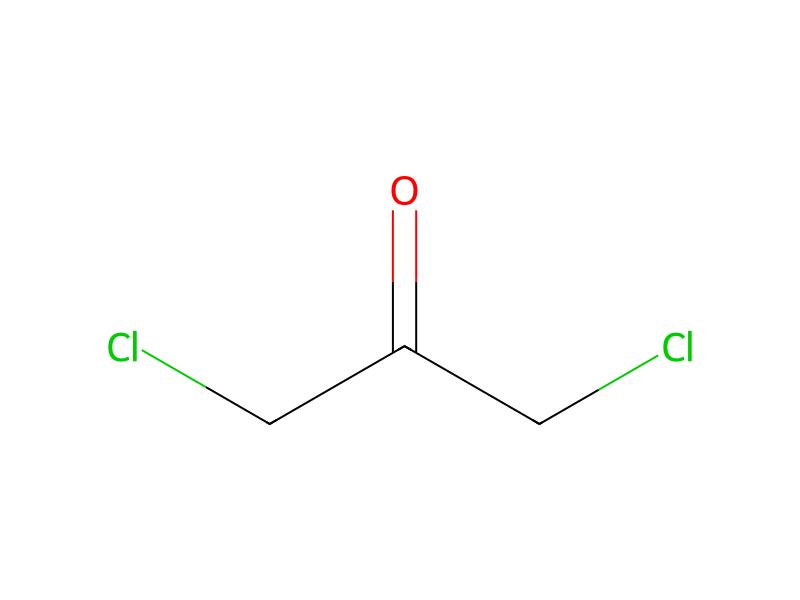


Product 1

Reagents, catalysts & solvents 1

Conditions
- Temperature
- 120 °C
Procedure
The synthesis of 3 was performed similarly to example 1 above. The solids, hexanoamide (5 g) and 1,3-dichloroacetone (5.5 g), were mixed together in a round bottomed flask and heated at 120° C. under an argon atmosphere for 2 hours. The mixture was cooled to 25° C. for 1 hour, followed by the addition of concentrated H2SO4 (50 mL). The resulting syrup was poured onto ice and the pH was adjusted to 10 with NaOH (1M). The resulting solution was extracted with CHCl3, dried (Na2SO4) and evaporated to yield a brown liquid (1.56 g). This material was chromatographed according to Still et al. (J. Org. Chem., 1978, 43, 2923) on silica gel in EtOAc to yield 3 as a yellow liquid (1.4 g).
Workup
- customThe synthesis of 3
- temperatureThe mixture was cooled to 25° C. for 1 hour
- additionThe resulting syrup was poured onto ice
- extractionThe resulting solution was extracted with CHCl3
- dry with materialdried (Na2SO4)
- customevaporated
Sources & evidence
- ORD record
- ord-fcf5a6bfb6994eb8b120d88ab3b5b5be
- Source dataset
- uspto-grants-1998_02
- Patent number
- US05719140
Linked notes
Loading…