Reaction equation

Cl[CH2:2][C:3]([NH:5][CH:6]1[CH2:8][CH2:7]1)=[O:4].[P:9]([O:16]CC)([O:13][CH2:14][CH3:15])[O:10][CH2:11][CH3:12]>>[CH2:11]([O:10][P:9]([CH2:2][C:3](=[O:4])[NH:5][CH:6]1[CH2:8][CH2:7]1)(=[O:16])[O:13][CH2:14][CH3:15])[CH3:12]Participants
3
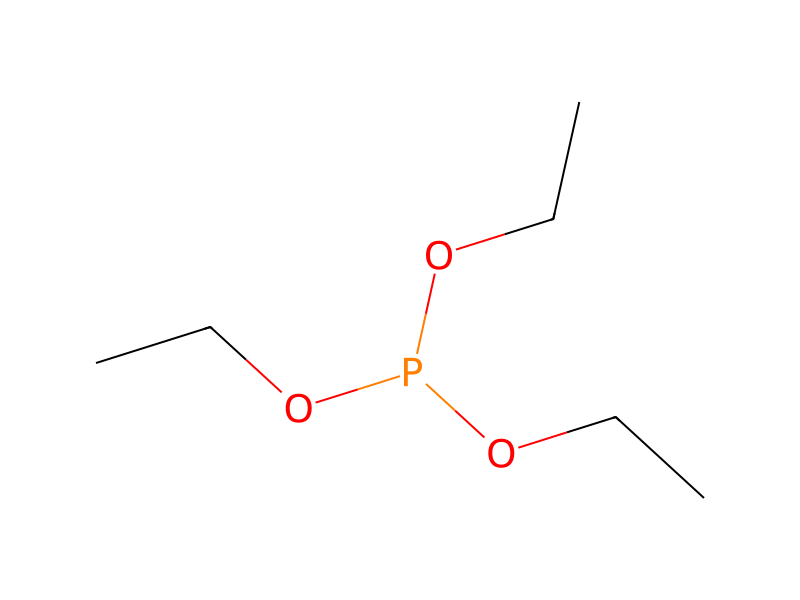


Conditions
- Temperature
- 155 °C
Procedure
2-Chloro-N-cyclopropylacetamide (20 g, 0.15 moles) was added in portions with stirring to triethyl phosphite (28 g, 0.17 moles, Aldrich) at 110° C. The solution was then heated to 155° C. for 30 minutes, cooled to 125° C., and the volatiles were removed by distillation under aspirator vacuum (15 mm Hg) at this temperature. The residual oil was stirred with pentane (200 mL) while cooling in an ice bath to induce crystallization. Filtration gave 5.2 g (14%) of diethyl((cyclopropylcarbamoyl)methyl)phosphonate as white crystals; m.p. 51°-56° C. The liquor was concentrated and cooled to give 25.3 g (71%) of a second crop; m.p. 50°-56° C. Recrystallization from dichloromethane/hexanes gave the analytical sample, m.p. 55°-57° C.
Workup
- temperaturecooled to 125° C.
- customthe volatiles were removed by distillation under aspirator vacuum (15 mm Hg) at this temperature
- temperaturewhile cooling in an ice bath
- customcrystallization
- filtrationFiltration
Sources & evidence
- ORD record
- ord-842f37fd7ead487bbd959ba2af13216c
- Source dataset
- uspto-grants-1998_02
- Patent number
- US05719186
Linked notes
Loading…