Reaction equation

[CH2:1](O)[CH2:2][CH2:3][CH2:4][OH:5].[CH2:7](O)[CH2:8][CH2:9][CH2:10][CH2:11][CH2:12][OH:13]>>[CH:4]([OH:5])([OH:13])[CH2:3][CH2:2][CH3:1].[CH:12]([OH:13])([OH:5])[CH2:11][CH2:10][CH2:9][CH2:8][CH3:7]Participants
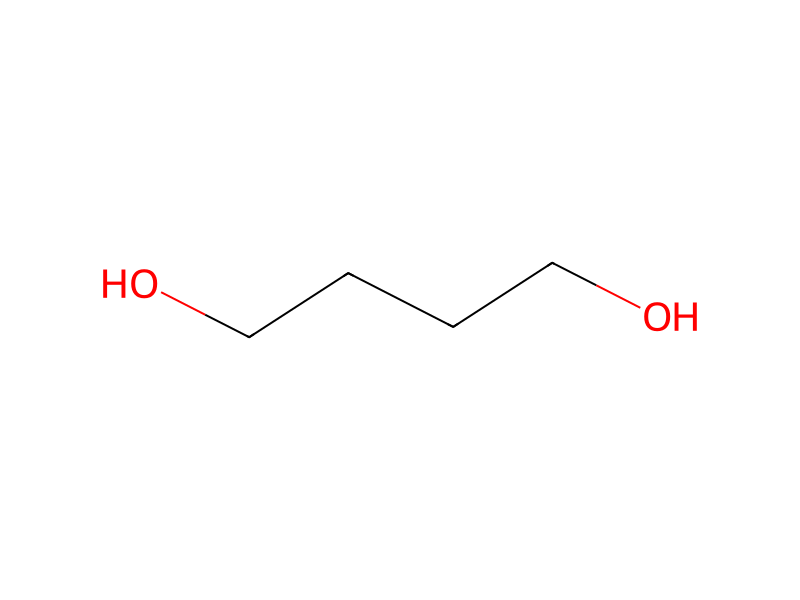


Procedure
First, dimethyl terephthalate and 1,4-butanediol (the latter in an excess of 5-60, preferably 10-45, mol are reacted with one another at from 150° to 220° C. at from 0.7 to 1.5 bar for from 30 to 90, preferably from 40 to 70, minutes, transesterification taking place and the methanol formed, together with excess butanediol and small amounts of oligomeric and polymeric compounds and residual amounts of dimethyl terephthalate, being transferred with the vapors to a column into which a liquid residue containing dihydroxy compounds, as obtained, for example, in the distillation of 1,4-butanediol or 1,6-hexanediol, is simultaneously introduced. The composition of the residue is not subject per se to any particular restriction, provided that it is in liquid form and no compounds which interfere with the separation in the column are present. This is generally the case for the residues described, which are obtained from the distillation of butanediol and hexanediol.
Workup
- additionis simultaneously introduced
- customprovided that it
- customno compounds which interfere with the separation in the column
Sources & evidence
- ORD record
- ord-f567295cc2e34eaba88e2da338511b45
- Source dataset
- uspto-grants-1996_10
- Patent number
- US05561218
Linked notes
Loading…