1,3-Diphthalimido-2-propanol → 1,3-Diphthalimido-3-oxopropane
HRID 864890
Reaction equation

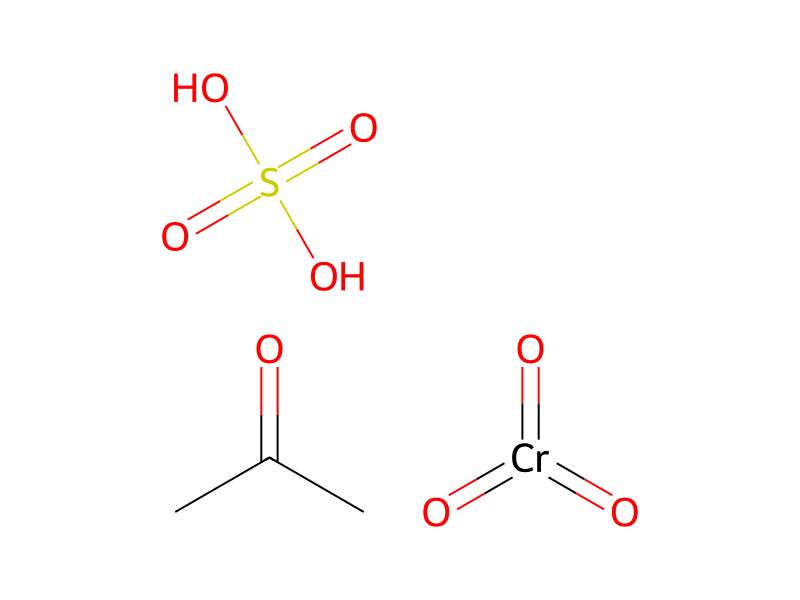
[C:1]1(=[O:26])[N:5]([CH2:6][CH:7](O)[CH2:8][N:9]2[C:13](=[O:14])[C:12]3=[CH:15][CH:16]=[CH:17][CH:18]=[C:11]3[C:10]2=[O:19])[C:4](=[O:21])[C:3]2=[CH:22][CH:23]=[CH:24][CH:25]=[C:2]12.CC(C)=[O:29].OS(O)(=O)=O.O=[Cr](=O)=O>CC(C)=O>[C:1]1(=[O:26])[N:5]([CH2:6][CH2:7][C:8]([N:9]2[C:13](=[O:14])[C:12]3=[CH:15][CH:16]=[CH:17][CH:18]=[C:11]3[C:10]2=[O:19])=[O:29])[C:4](=[O:21])[C:3]2=[CH:22][CH:23]=[CH:24][CH:25]=[C:2]12Participants
4
Reactant 2

Product 1

Reagents, catalysts & solvents 1

Procedure
To a solution of 1,3-diphthalimido-2-hydroxypropane (1.00 g., 2,86 mmol) in 80 mL of acetone was added Jones reagent (chromium trioxide and sulfuric acid) until an orange color persisted. The excess oxidant was removed by the addition of 2-isopropanol until a green color was obtained and the solvents were evaporated under reduced pressure. The residue was partitioned between methylene chloride and water and the layers were separated. The organic layer was washed with water, dried over anhydrous sodium sulfate and evaporated under reduced pressure to give 1,3-diphthalimido-3-oxopropane.