Reaction equation

[OH:1][C:2]1[CH:3]=[C:4]2[C:8](=[CH:9][CH:10]=1)[NH:7][CH:6]=[CH:5]2.CC1C=CC=C(O)C=1O.COC1C=CC=C(O)C=1O.CC1C=CC(C)=C(O)C=1O.I([O-])(=O)(=O)=O.[Na+].[OH:46][C:47]1[CH:55]=[CH:54][CH:53]=[C:52]2[C:48]=1[CH:49]=[CH:50][NH:51]2.[NH2:56][CH2:57][CH2:58][C:59]1[CH:66]=[CH:65][C:63]([OH:64])=[C:61]([OH:62])[CH:60]=1>>[OH:46][C:47]1[CH:55]=[CH:54][CH:53]=[C:52]2[C:48]=1[CH:49]=[CH:50][NH:51]2.[OH:1][C:2]1[CH:3]=[C:4]2[C:8](=[CH:9][CH:10]=1)[NH:7][CH:6]=[CH:5]2.[OH:64][C:63]1[CH:65]=[C:66]2[C:59]([CH:58]=[CH:57][NH:56]2)=[CH:60][CH:61]=1.[OH:62][C:61]1[CH:63]=[CH:65][CH:66]=[C:59]2[C:60]=1[NH:56][CH:57]=[CH:58]2Participants
Reactant 7


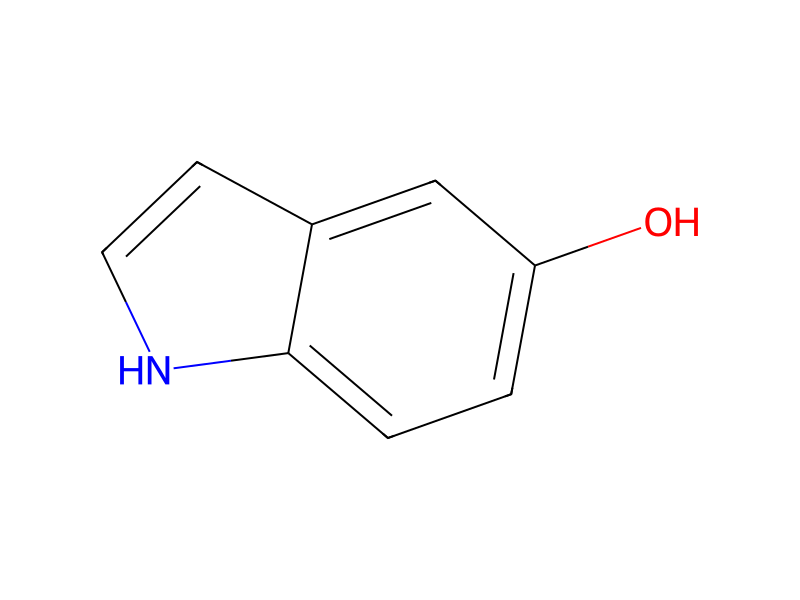


Product 4

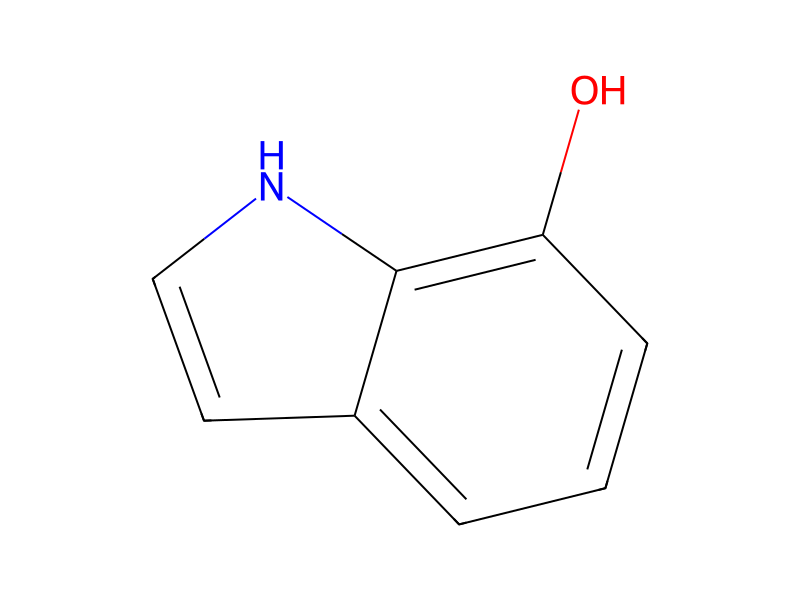
Procedure
Mixtures of 4-hydroxyindole (0.1-10%) and 5-hydroxyindole (0.1-10%), 6-hydroxyindole (0.1-10%), or 7-hydroxyindole (0.1-10%) will give a color range from black to light auburn. 5-Hydroxyindole (0.1-10%) was found to produce progressively darker browns and, eventually, black through the addition of 3-methylcatechol (0.1-10%), 3-methoxycatechol (0.1-10%), or 3,6-dimethylcatechol (0.1-10%) followed by oxidation by sodium periodate (15%). 4-Hydroxyindole (1%) was found to produce progressively lighter colors with increasing red highlights through the addition of dopamine (2-5%) when penetration of precursors was done at high pH (9.2). Therefore a range of colors from light brown to black can be obtained through combinations of 4-hydroxyindole, 5-hydroxyindole, 6-hydroxyindole, and 7-hydroxyindole with each other or various other dye precursors. Similar results were obtained in staining skin in that a range of shades from light to dark brown can be obtained through combinations of hydroxyindoles with various other dye precursors.
Workup
- customto produce progressively darker browns
- customto produce progressively lighter colors
- temperaturewith increasing red highlights
Sources & evidence
- ORD record
- ord-479fcc00a3ac46219fa1ab4996bf34a8
- Source dataset
- uspto-grants-1988_10
- Patent number
- US04776857
Linked notes
Loading…