Benzylamine → HCID 58646734, compound
HRID 901987
Reaction equation

C([O:4][C:5]1[CH:14]=[CH:13][CH:12]=[C:11]2[C:6]=1[CH2:7][CH:8]1[O:15][CH:9]1[CH2:10]2)(=O)C.[CH2:16]([NH2:23])[C:17]1[CH:22]=[CH:21][CH:20]=[CH:19][CH:18]=1>>[CH2:16]([NH:23][C@@H:8]1[CH2:7][C:6]2[C:11](=[CH:12][CH:13]=[CH:14][C:5]=2[OH:4])[CH2:10][C@H:9]1[OH:15])[C:17]1[CH:22]=[CH:21][CH:20]=[CH:19][CH:18]=1Participants
3
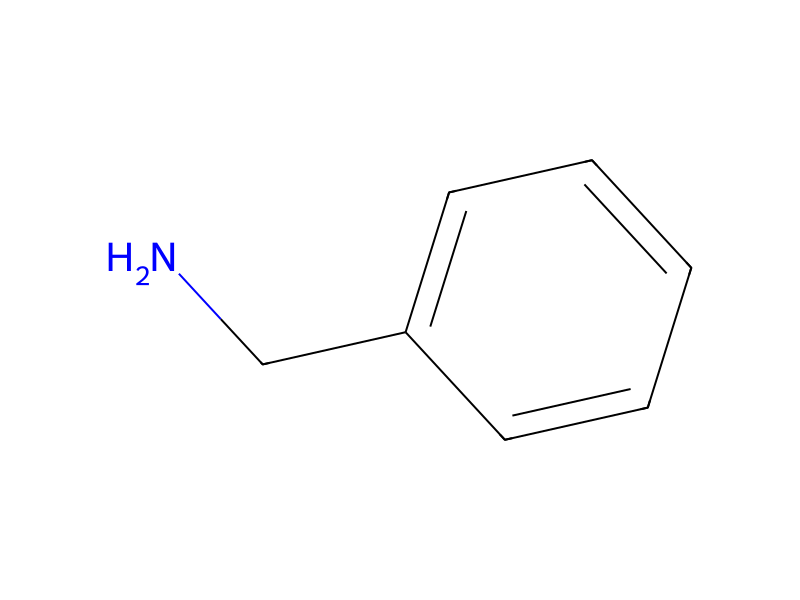


Procedure
A mixture of 5-acetoxy-2,3-epoxy-1,2,3,4-tetrahydronaphthalene (prepared in the manner disclosed in U.S. Pat. No. 4,076,843, 20.4 g) and benzylamine (85 mL) was heated in a bomb at 120° C. for 18 h. After cooling, excess amine was distilled off under high vacuum using a 70° C. bath. The semi-solid residue was triturated with chloroform (70 mL) and filtered. The filtercake was washed with chloroform, then with diethyl ether, and dried under vacuum to provide crude product. The crude product was recrystallized from a mixture of methanol and ethyl acetate to yield the title product (10 g) as a white solid. The regioisomeric product (trans 3-benzylamino-2,8-dihydroxy-1,2,3,4-tetrahydronaphthalene) was largely contained in the chloroform extract and wash.