Reaction equation

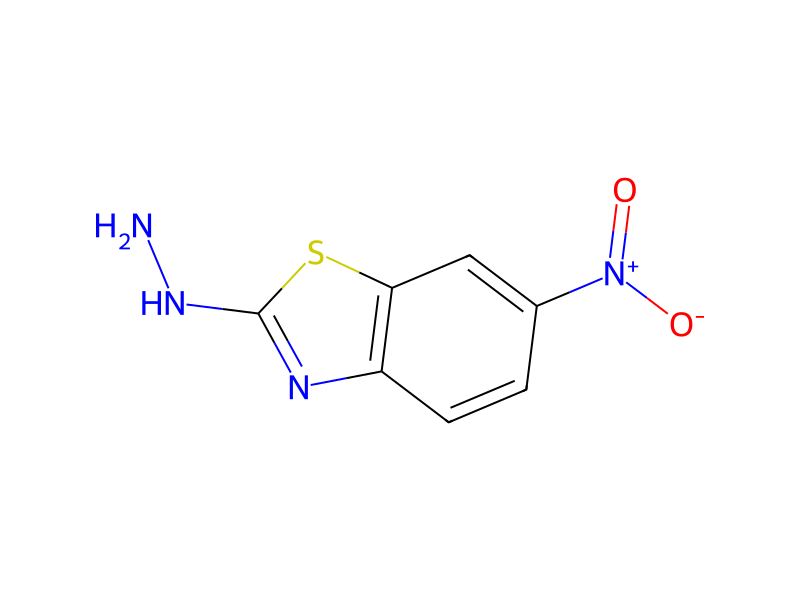
[N+:1]([C:4]1[O:8][C:7]([C:9](Cl)=[O:10])=[CH:6][CH:5]=1)([O-:3])=[O:2].[NH:12]([C:14]1[S:15][C:16]2[CH:22]=[C:21]([N+:23]([O-:25])=[O:24])[CH:20]=[CH:19][C:17]=2[N:18]=1)[NH2:13]>>[N+:23]([C:21]1[CH:20]=[CH:19][C:17]2[N:18]=[C:14]([NH:12][NH:13][C:9]([C:7]3[O:8][C:4]([N+:1]([O-:3])=[O:2])=[CH:5][CH:6]=3)=[O:10])[S:15][C:16]=2[CH:22]=1)([O-:25])=[O:24]Participants
3


Conditions
- Temperature
- 0 °C
Procedure
The compound 4h was prepared according to above described method by using 5-nitro-2-furancarboxylic acid chloride (430 mg, 1.5 mmol) and 2-hydrazino-6-nitrobenzothiazole (290 mg, 1 mmol) which stirred for 1 h at 0° C. and stirring continued at 25° C. for 11 h (yield 283 mg, 87%).
Workup
- stirringstirring
- waitcontinued at 25° C. for 11 h
Sources & evidence
- ORD record
- ord-7b2ba3c5ac92469e9ce1c3574c280e5c
- Source dataset
- uspto-grants-2016_03
- Patent number
- US09273039B2
Linked notes
Loading…