Reaction equation
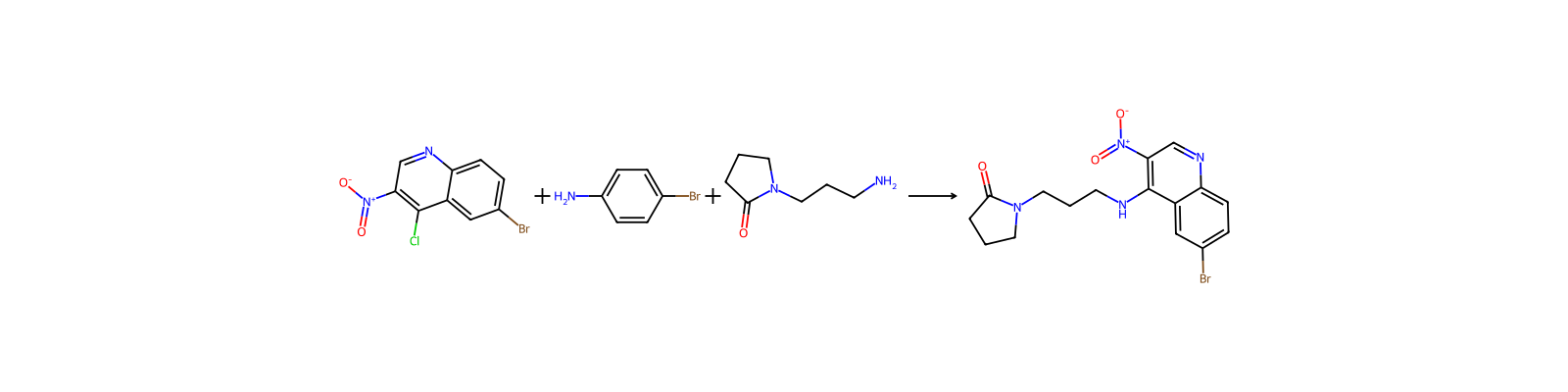
[Br:1][C:2]1[CH:3]=[C:4]2[C:9](=[CH:10][CH:11]=1)[N:8]=[CH:7][C:6]([N+:12]([O-:14])=[O:13])=[C:5]2Cl.BrC1C=CC(N)=CC=1.[NH2:24][CH2:25][CH2:26][CH2:27][N:28]1[CH2:32][CH2:31][CH2:30][C:29]1=[O:33]>>[Br:1][C:2]1[CH:3]=[C:4]2[C:9](=[CH:10][CH:11]=1)[N:8]=[CH:7][C:6]([N+:12]([O-:14])=[O:13])=[C:5]2[NH:24][CH2:25][CH2:26][CH2:27][N:28]1[CH2:32][CH2:31][CH2:30][C:29]1=[O:33]Participants
4


Procedure
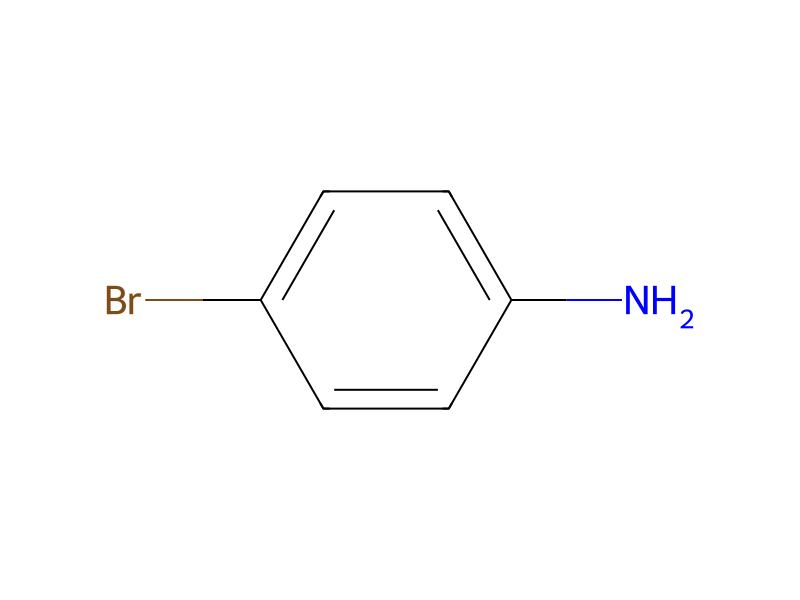
6-Bromo-4-chloro-3-nitroquinoline (50.62 g, 177.8 mmol), prepared from 4-bromoaniline according to the methods described in Parts A–D of Example 1, was treated with 1-(3-aminopropyl)pyrrolidin-2-one (27.5 mL, 196 mmol) according to the method described in Part E of Example 1 to provide 61.41 g of 1-[3-(6-bromo-3-nitroquinolin-4-ylamino)propyl]pyrrolidin-2-one as a solid.
Sources & evidence
- ORD record
- ord-9bc5d76282ce46f99fc9bea711c2f243
- Source dataset
- uspto-grants-2006_08
- Patent number
- US07091214B2
Linked notes
Loading…