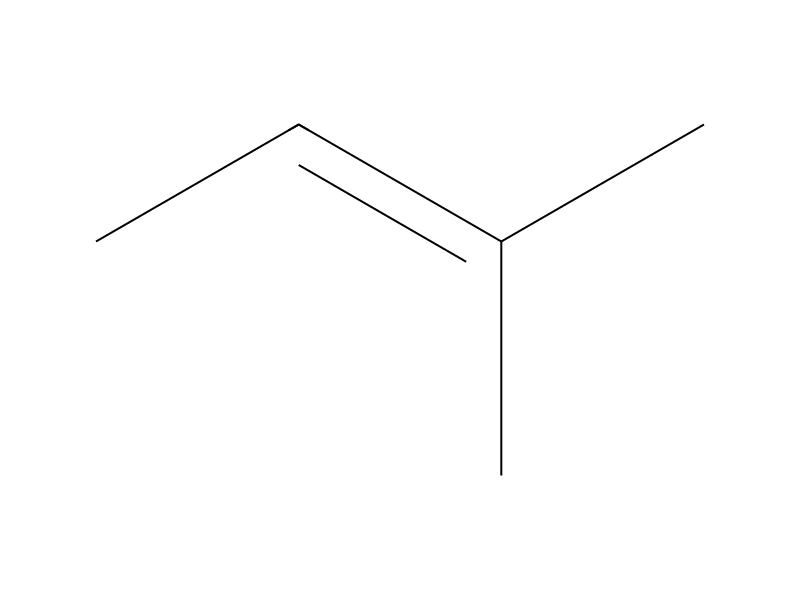
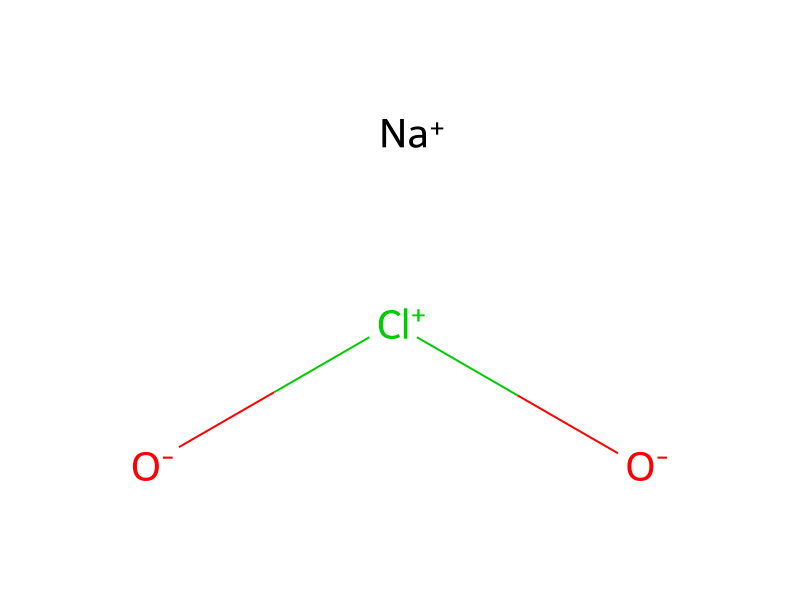
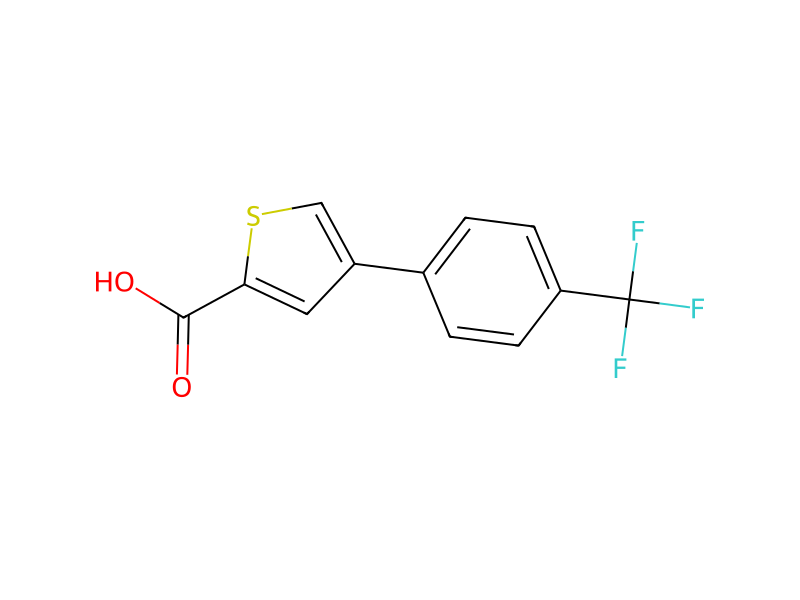
[F:1][C:2]([F:17])([F:16])[C:3]1[CH:8]=[CH:7][C:6]([C:9]2[CH:10]=[C:11]([CH:14]=[O:15])[S:12][CH:13]=2)=[CH:5][CH:4]=1.CC(=CC)C.Cl([O-])=[O:24].[Na+].P([O-])(O)(O)=O.[Na+]>O.C(O)(C)(C)C>[F:17][C:2]([F:16])([F:1])[C:3]1[CH:4]=[CH:5][C:6]([C:9]2[CH:10]=[C:11]([C:14]([OH:24])=[O:15])[S:12][CH:13]=2)=[CH:7][CH:8]=1A solution of 4-[4-(trifluoromethyl)phenyl]thiophene-2-carbaldehyde (intermediate 37, 1.23 g), t-butanol (20 ml) and 2-methyl-2-butene (10 ml) was cooled to 0° C. To this was added drop-wise, a solution of sodium chlorite (3.8 g) and sodium dihydrogen phosphate (4.03 g) in water (15 ml). After the addition was complete, the mixture was allowed to warm to room temperature and was stirred for 4 hours. The solution was then concentrated and partitioned between water and ethyl acetate. The aqueous layer was washed with a second ethyl acetate portion and the organic liquors were combined, washed with brine, then dried (MgSO4). The solution was then absorbed onto silica and loaded onto a SPE (Si) cartridge. The product was eluted with neat ethyl acetate to afford the title compound as a white solid.
Loading…