Reaction equation

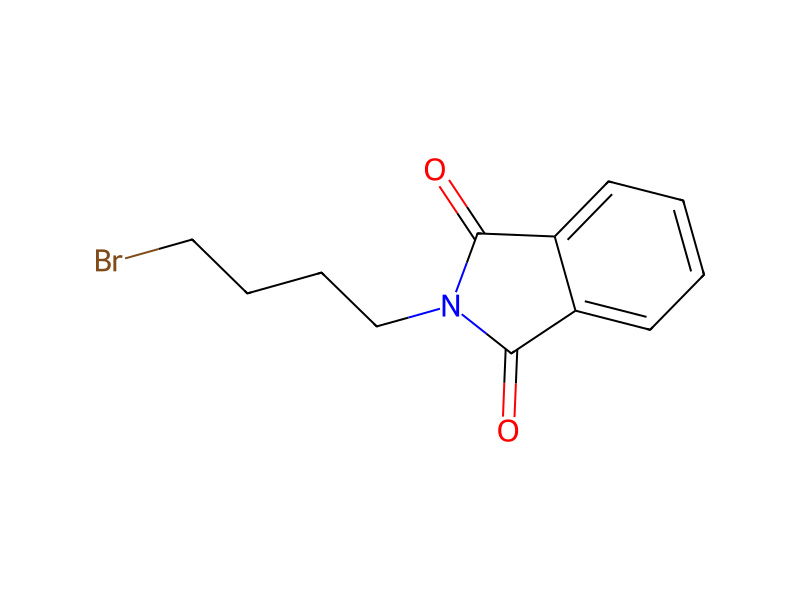
CN(N[C:5]([S:7][C:8]1[CH:9]=[N:10][CH:11]=[CH:12][CH:13]=1)=O)C.[OH-].[Na+].BrC[CH2:18][CH2:19][CH2:20][N:21]1[C:25](=[O:26])[C:24]2=[CH:27][CH:28]=[CH:29][CH:30]=[C:23]2[C:22]1=[O:31]>CO>[C:22]1(=[O:31])[N:21]([CH2:20][CH2:19][CH2:18][CH2:5][S:7][C:8]2[CH:9]=[N:10][CH:11]=[CH:12][CH:13]=2)[C:25](=[O:26])[C:24]2=[CH:27][CH:28]=[CH:29][CH:30]=[C:23]12Participants
5
Reactant 3


Product 1

Reagents, catalysts & solvents 1

Procedure
To a solution of 3.64 g (20 mmol) of 3-dimethylaminocarbamoylthiopyridine in 100 ml of methanol was added 1.6 g (40 mmol) of sodium hydroxide. The mixture was heated and refluxed for 3 hours under nitrogen atmosphere. After cooling, 5.64 g (20 mmol) of N-(4-bromobutyl)phthalimide was added. The mixture was heated and refluxed for 2.5 hours. The solvent was distilled off and chloroform was added to the residue. The mixture was washed with water and dried over anhydrous magnesium sulfate. The solvent was distilled off and the residue was purified by column chromatography (eluent: ethyl acetate/n-hexane=1:1) to obtain 280 mg of the desired compound (4.5%, colorless oil).
Workup
- temperatureThe mixture was heated
- temperaturerefluxed for 3 hours under nitrogen atmosphere
- temperatureAfter cooling
- temperatureThe mixture was heated
- temperaturerefluxed for 2.5 hours
- distillationThe solvent was distilled off
- additionchloroform was added to the residue
- washThe mixture was washed with water
- dry with materialdried over anhydrous magnesium sulfate
- distillationThe solvent was distilled off
- customthe residue was purified by column chromatography (eluent: ethyl acetate/n-hexane=1:1)
Sources & evidence
- ORD record
- ord-c610ca7f632d4f04b470d47f73af4b9a
- Source dataset
- uspto-grants-1998_06
- Patent number
- US05767121
Linked notes
Loading…