Reaction equation
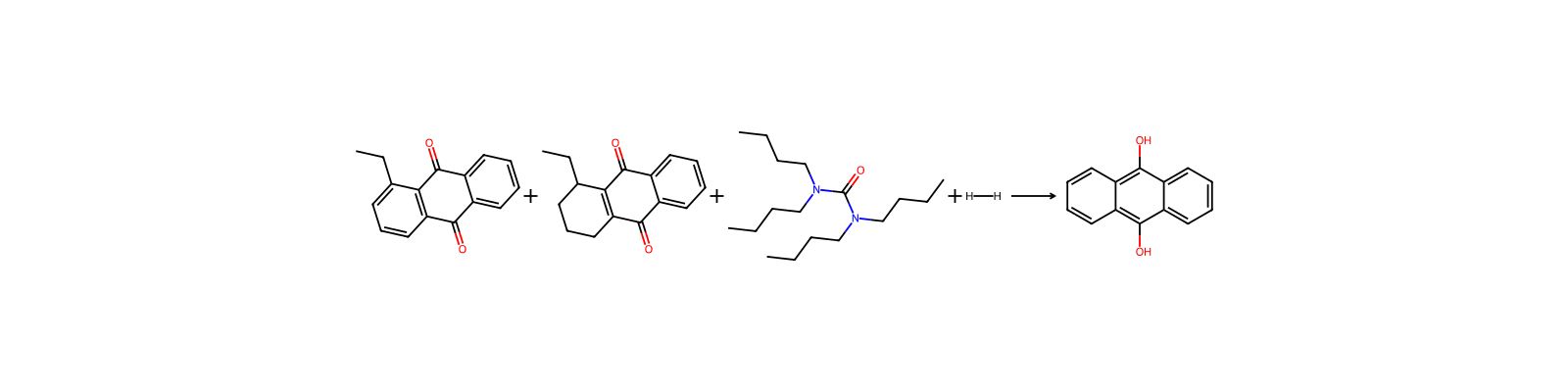
C([C:3]1[C:16]2[C:15](=[O:17])[C:14]3[C:9](=[CH:10][CH:11]=[CH:12][CH:13]=3)[C:8](=[O:18])[C:7]=2[CH:6]=[CH:5][CH:4]=1)C.C(C1C2C(=O)C3C(=CC=CC=3)C(=O)C=2CCC1)C.C(N(CCCC)C(=O)N(CCCC)CCCC)CCC.[H][H]>>[CH:12]1[CH:13]=[C:14]2[C:15]([OH:17])=[C:16]3[C:7](=[C:8]([OH:18])[C:9]2=[CH:10][CH:11]=1)[CH:6]=[CH:5][CH:4]=[CH:3]3Participants
5



Procedure
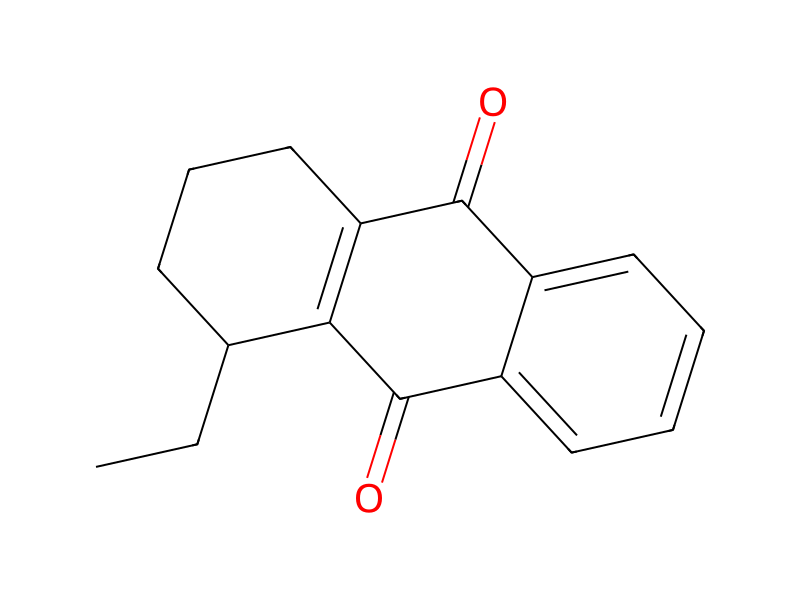
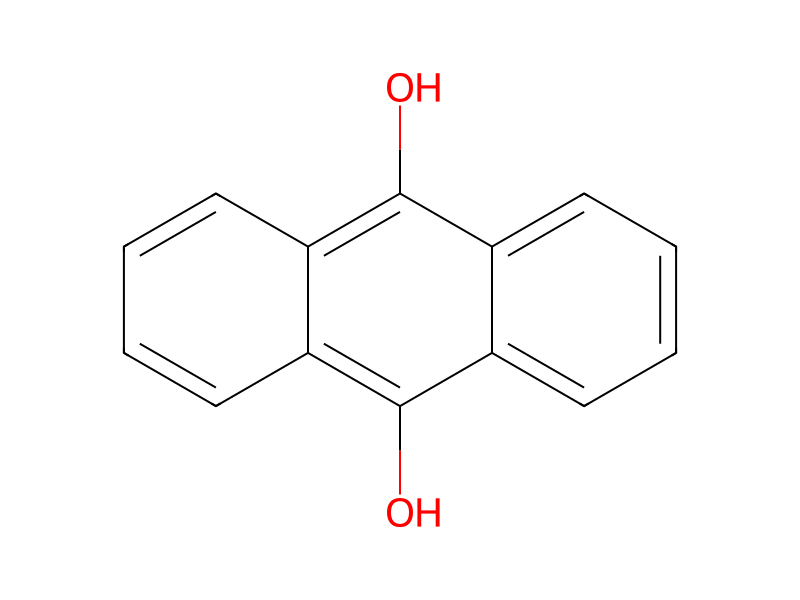
In a 1.75-liter continuously stirred tank-type reactor with internal filters to retain the catalyst inside the reactor, operating at a volume of 1.25 liters, a temperature of 43°-45° C. and pressure of 15 psig, a working solution was circulated at a flow rate of 50 ml/min. The working solution initially contained 18 wt % ethylanthraquinone, of which 45 wt % was tetrahydroethylanthraquinone, 58 wt % of an aromatic solvent (alkylated benzenes - heavy naphtha fraction, Aromatic 150), and 24 wt % tetra-n-butylurea. The hydrogen feed rate was controlled to give a maximum reduction level (anthrahydroquinone or HQ titer) of 0.408 g mol/l. 2.254 g of a 2.6 wt % palladium on gamma alumina catalyst was added to the reactor.
Workup
- customa temperature of 43°-45° C. and pressure of 15 psig
Sources & evidence
- ORD record
- ord-6956c82f2cc64918997e09c86b048f6e
- Source dataset
- uspto-grants-1998_06
- Patent number
- US05772977
Linked notes
Loading…