Triethyl phosphite → HCID 178436118, compound
HRID 977902
Reaction equation

Cl[CH2:2][CH2:3][C:4]1[CH:9]=[CH:8][C:7](CCl)=[CH:6][CH:5]=1.[P:12]([O:19]CC)([O:16]CC)[O:13]CC>C1C=CC=CC=1>[PH:12](=[O:13])([OH:19])[OH:16].[CH:3]([C:4]1[CH:9]=[CH:8][CH:7]=[CH:6][CH:5]=1)=[CH2:2]Participants
4
Reactant 2
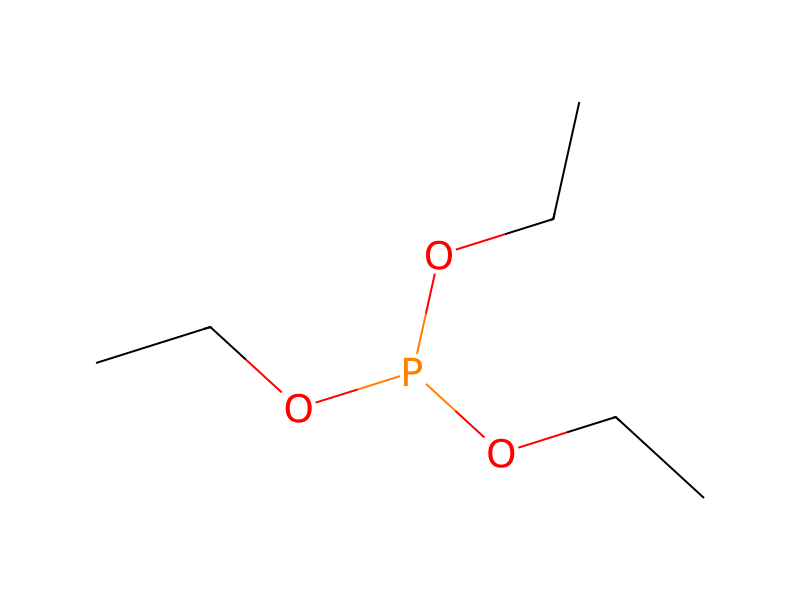

Product 1

Reagents, catalysts & solvents 1

Procedure
Vinyl benzene phosphonate was prepared by chloromethylating benzene by the procedure of Kindler, Hansen and Koebk (Ann. Chem. 617, 25, 1958). 1 mole p-(2-chloroethyl)-α-chlorotoluene was heated to 140°-155° C. under N2 and 95 ml triethyl phosphite was added. The mixture was heated for one hour and then diethyl-p-(2-chloroethyl)-benzyl phosphonate was distilled off at 140°-150° C./0.2 torr. The ethyl ester was hydrolysed for two hours using a 2:3 v/v mixture of 48% HBr and formic acid. The product was dehydrochlorinated using potassium ethoxide followed by acidification with HCl. The monomer was then flash distilled using 10-5 torr vacuum at room temperature.