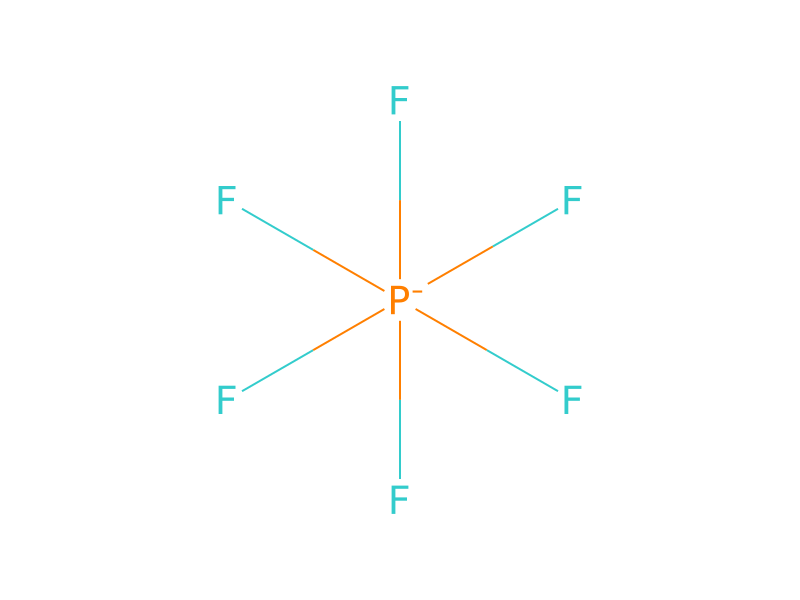
[F:1][Sb-:2]([F:7])([F:6])([F:5])([F:4])[F:3].F[P-](F)(F)(F)(F)F.S(C1C=CC(C)=CC=1)([O-])(=O)=O.[CH2:26]([O:34][C:35]1[CH:40]=[CH:39][CH:38]=[CH:37][C:36]=1[I+:41][C:42]1[CH:47]=[CH:46][CH:45]=[CH:44][CH:43]=1)[CH2:27][CH2:28][CH2:29][CH2:30][CH2:31][CH2:32][CH3:33]>CC(C)=O>[F:1][Sb-:2]([F:7])([F:6])([F:5])([F:4])[F:3].[CH2:26]([O:34][C:35]1[CH:40]=[CH:39][CH:38]=[CH:37][C:36]=1[I+:41][C:42]1[CH:47]=[CH:46][CH:45]=[CH:44][CH:43]=1)[CH2:27][CH2:28][CH2:29][CH2:30][CH2:31][CH2:32][CH3:33]The metathesis reaction can be effected with a mixture of an inert organic solvent, such as acetone and an alkali metal hexafluorometalloid salt, such as the corresponding hexafluoroantimonate, hexafluorophosphate or hexafluoroarensate, referred to hereinafter as the hexafluoroantimonate salt. The hexafluoroantimonate salt can be added to the (octyloxyphenyl) phenyliodonium tosylate followed by agitating the resulting mixture for a period of from 15 to 180 minutes. The mixture can then be filtered and then added to an excess amount of distilled water. The resulting oil can then be triturated with water and the water decanted followed by the addition of further amounts of water. The mixture can then be stirred for another 15 to 180 minutes and the water decanted and an inert aliphatic solvent such as n-heptane or n-octane can be added. This procedure results in the crystallization of the solid (octyloxyphenyl) phenyliodonium hexafluoroantimonate which can be broken up, washed with additional aliphatic organic solvent and then filtered.