

基本情報
- CAS
489-98-5- 標準SMILES
Nc1c([N+](=O)[O-])cc([N+](=O)[O-])cc1[N+](=O)[O-]- InChIKey
IAHOUQOWMXVMEH-UHFFFAOYSA-N- 分子式
- C6H4N4O6
- 平均分子量
- 228.12 g/mol
- 単同位体質量
- 228.01308386
概要
2,4,6-trinitroaniline appears as yellow monoclinic crystals. (NTP, 1992)
名称と識別子
- 優先名称
- 2,4,6-Trinitroaniline
- IUPAC
- 2,4,6-trinitroaniline
- 現地名
- 2,4,6-トリニトロアニリン
- 英語名
- 2,4,6-Trinitroaniline
- 分子式
- C6H4N4O6
- 分子量
- 228.12
名称と別名
2,4,6-TRINITROANILINEPicramide2,4,6-Trinitrobenzenamine1-Amino-2,4,6-trinitrobenzeneBenzenamine, 1,4,6-trinitro-NSC 4860MATB (EXPLOSIVE)EINECS 207-703-3UN0153Aniline, 2,4,6trinitroBenzenamine, 2,4,6trinitroAI3-28913
名称をさらに表示
ピクラミド2,4,6-トリニトロベンゼンアミン2,4,6-トリニトロアニリン1-アミノ-2,4,6-トリニトロベンゼンTNAMATBCLEC3BPicramide, MATBPicramide TNA MATBBenzenamine,2,4,6-trinitro-(2,4,6-trinitrophenyl)amine
DTXSID9074850RefChem:82162Benzenamine, 1,4,6trinitroDTXCID70406532,4,6TRINITROBENZENAMINEAniline, 2,4,6trinitro (8CI)1AMINO2,4,6TRINITROBENZENE2AMINO1,3,5TRINITROBENZENE
データベース識別子
- CAS
489-98-5- PubChem CID
- 10271
- DTXSID
DTXSID9074850- UNII
物性
構造計算による物性
- XLogP
- 0.6
- 極性表面積
- 163 Ų
- 水素結合供与体数
- 1
- 水素結合受容体数
- 7
- 回転可能結合数
- 0
- 重原子数
- 16
- 形式電荷
- 0
- 複雑度
- 292
実験および物理化学的性質
Chemical ClassesOther Uses -> Explosives
SpringerMaterials PropertiesBoiling point
Density1.762 at 54 °F (NTP, 1992) - Denser than water; will sink
SolubilityInsoluble (NTP, 1992)
Boiling PointExplodes (NTP, 1992)
Melting Point378 to 383 °F (NTP, 1992)
Physical Description
2,4,6-trinitroaniline appears as yellow monoclinic crystals. (NTP, 1992)
Yellow crystals; [CAMEO]
Ionization Efficiency
Positive
1.11
2.7
Agilent XCT
Electrospray ionization
formic acid (5.3nM)
物理化学的性質
- 融点
- 193.5 °C · 193.5°C
- 沸点
- 369.91 °C · 369.91°C (rough estimate)
- 比重(密度)
安全と法規制
安全情報は参考情報です。供給元の安全データシート(SDS)、適用法令、専門家による評価に代わるものではありません。
危険有害性情報
DOT LabelExplosive 1.1D
Fire HazardsFlash point data for this chemical are not available. It is probably combustible. (NTP, 1992)
Health HazardsSYMPTOMS: Symptoms of exposure to this compound may include skin and eye irritation; headache; drowsiness, weakness; cyanosis; and respiratory distress. Chronic exposure may lead to weight loss, anemia, and possible liver damage.
Hazards SummaryAdverse effects include skin irritation, headache, cyanosis, respiratory distress, anemia, and liver damage; [CAMEO]
Reactive GroupNitro, Nitroso, Nitrate, and Nitrite Compounds, Organic
Reactivity AlertsExplosive
Reactivity Profile
Explosive by heat or shock. 2,4,6-TRINITROANILINE is an aromatic nitrate. Aromatic nitrates range from slight to strong oxidizing agents. If mixed with reducing agents, including hydrides, sulfides and nitrides, they may begin a vigorous reaction that culminates in a detonation. The aromatic nitro compounds may explode in the presence of a base such as sodium hydroxide or potassium hydroxide even in the presence of water or organic solvents. The explosive tendencies of aromatic nitro compounds are increased by the presence of multiple nitro groups.
Air and Water ReactionsInsoluble in water.
安全と保護具
Fire FightingFires involving this material can be controlled with a dry chemical, carbon dioxide or Halon extinguisher. (NTP, 1992)
化学と産業
用途と製造
Uses
Used in explosives; [Hawley]
Forbidden: Transport of Trinitroaniline (Picramide) by cargo aircraft or passenger aircraft/rail; [HMT]
応用分野
使用Explosive compositions.
一般的な説明Yellow monoclinic crystals.
調製方法
Picric acid is converted to 2,4,6-trinitrochlorobenzene by treatment with PCl5, or a similar chlorinating agent; this is then aminated under mild reaction conditions.
上流・下流製品情報
上流原料
関連反応
18 件


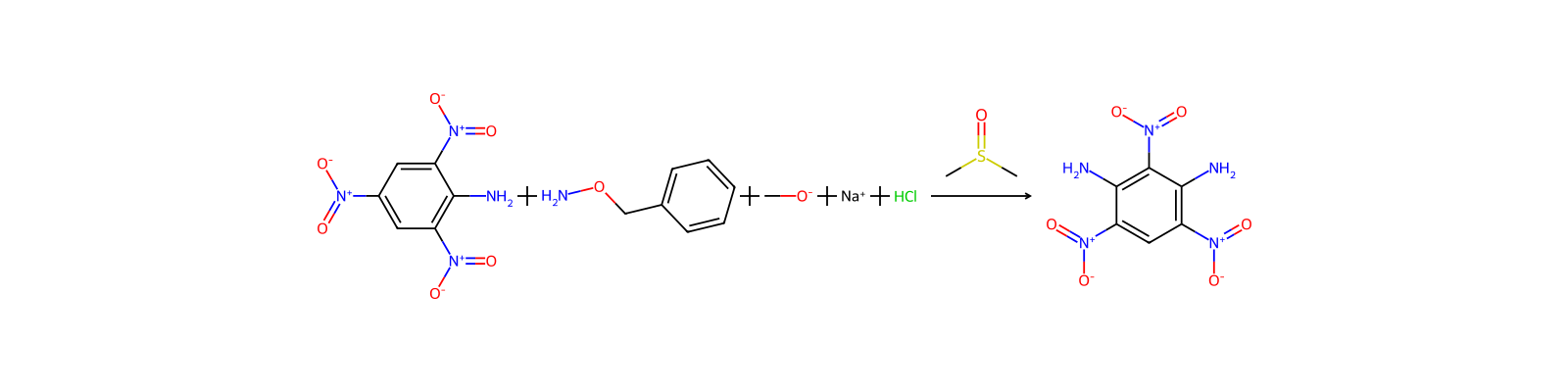


化合物ノート
読み込み中…