ホームMCPワークベンチSkills
ホームワークベンチ通知マイページ
llms.txt · MCPガイドプライバシーポリシー · 利用規約 · サポートv1.8.0
  1. ホーム
  2. /化合物

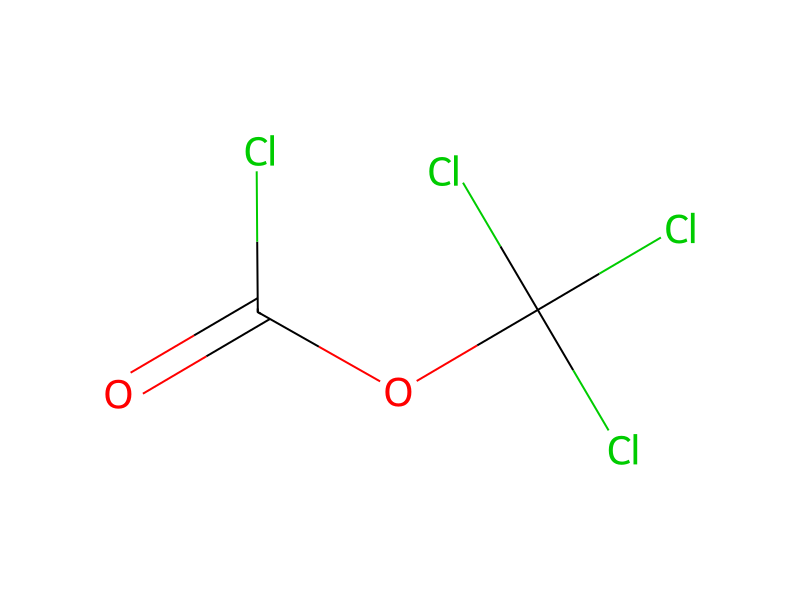
(トリクロロメトキシ)ぎ酸クロリド

Diphosgene

HCID 10426
ノートを作成反応を作成見積依頼を出す
印刷プレビュー

データを補完しています。しばらくしてからページを更新すると最新の内容を表示できます
基本情報概要名称と識別子物性安全と法規制化学と産業関連反応化合物ノート
部分構造検索類似構造を探す

基本情報

CAS
503-38-8
標準SMILES
O=C(Cl)OC(Cl)(Cl)Cl
InChIKey
HCUYBXPSSCRKRF-UHFFFAOYSA-N
分子式
C2Cl4O2
平均分子量
197.8 g/mol
単同位体質量
195.86523996

概要

Diphosgene is a moderately persistent synthetic organic compound, formed by chlorination of methyl chloroformate, that is a respiratory irritant and lachrymator. Trichloromethyl Chloroformate has been used as a chemical warfare agent and is characterized as a colorless liquid with an odor that is like newly mown hay. Exposure occurs by inhalation, ingestion, or contact.

名称と識別子

優先名称
Diphosgene
IUPAC
trichloromethyl carbonochloridate
現地名
(トリクロロメトキシ)ぎ酸クロリド
英語名
Diphosgene
分子式
C2Cl4O2
分子量
197.83

名称と別名

Trichloromethyl chloroformateDIPHOSGENE503-38-8DiphosgenDifosgenPerchloromethyl formateCarbonochloridic acid, trichloromethyl esterMethanol, trichloro-, chloroformateCarbonochloridic acid trichloromethyl esterPO4Q4R80LVFormic acid, chloro-, trichloromethyl esterTrichlormethylester kyseliny chlormravenci
名称をさらに表示
クロロぎ酸トリクロロメチルジホスゲンクロリド炭酸トリクロロメチルクロリド炭酸(トリクロロメチル)(トリクロロメトキシ)ぎ酸クロリドクロロ炭酸トリクロロメチルクロル炭酸トリクロルメチルDPASP-PROPerstoffDisphosgeneDiphosgene,99%perchloromethylformate
DTXSID60862065RefChem:134712DTXCID80810886207-965-9trichloromethyl carbonochloridatechloroformic acid trichloromethyl estertrichloromethylchloroformateMFCD00015553

データベース識別子

CAS
503-38-8
PubChem CID
10426
DTXSID
DTXSID60862065
UNII
PO4Q4R80LV
EC Number
207-965-9
Nikkaji
J12.981J

物性

構造計算による物性補完中

XLogP
3.1
極性表面積
26.3 Ų
水素結合供与体数
0
水素結合受容体数
2
回転可能結合数
1
重原子数
8
形式電荷
0
複雑度
94.7

実験および物理化学的性質

Chemical ClassesToxic Gases & Vapors -> Acid Halides
SpringerMaterials PropertiesNuclear quadrupole resonance spectroscopy
LogP1.49
OdorODOR SIMILAR TO PHOSGENE (NEWMOWN HAY)
Density · 3 件

1.6525 @ 14 °C

1.6 g/cm³

Relative density of the vapour/air-mixture at 20 °C (air = 1): 1.08

Color/FormCOLORLESS LIQUID
Solubility · 3 件

INSOL IN WATER; SOL IN ETHANOL, VERY SOL IN ETHER

SOL IN BENZENE, ALCOHOL, AND ETHER

Solubility in water: reaction

Boiling Point · 3 件

128 °C @ 760 MM HG

Suffocating liquid; Boiling point = 49 °C at 50 mm Hg; Stable at room temp, decomposes to phosgene at approximately 300 °C

at 101.3 kPa: 128 °C

DecompositionHighly dangerous; when heated to decomp ... will react to produce toxic and corrosive fumes. /phosgene/
Melting Point

安全と法規制

安全情報は参考情報です。供給元の安全データシート(SDS)、適用法令、専門家による評価に代わるものではありません。

GHS分類

GHS Classification · 4 件

Danger

H300 (87%): Fatal if swallowed [Danger Acute toxicity, oral]

P260, P264, P270, P271, P280, P284, P301+P316, P301+P330+P331, P302+P361+P354, P304+P340, P305+P354+P338, P316, P320, P321, P330, P363, P403+P233, P405, and P501 (click each P-code to see the statement)

Aggregated GHS information provided per 46 reports by companies from 4 notifications to the ECHA C&L Inventory. Each notification may be associated with multiple companies.

危険有害性情報

Regulatory Information · 2 件

Chemical: Carbonochloridic acid, trichloromethyl ester

Trichloromethyl chloroformate: Does not have an individual approval but may be used under an appropriate group standard

Other Safety InformationEvaluation - Chemicals that are unlikely to require further regulation to manage risks to human health
Fire HazardsNot combustible.
Hazards SummarySimilar to phosgene in reactivity; Decomposes slowly in water or moisture to release hydrochloric acid and carbon monoxide; Skin contact may cause burns or frostbite; [CAMEO] Causes lachrymation; [ICSC] See Phosgene.
Chemical DangersDecomposes on heating. This produces toxic and corrosive fumes including chlorine and phosgene. Reacts with water. This produces toxic and corrosive fumes.
Physical DangersThe vapour is heavier than air.
DOT Emergency Guidelines · 5 件

If ... THERE IS NO FIRE, go directly to the Table of Initial Isolation and Protective Action Distances /(see table below)/ ... to obtain initial isolation and protective action distances. IF THERE IS A FIRE, or IF A FIRE IS INVOLVED, go directly to the appropriate guide /(see guide(s) below)/ and use the evacuation information shown under PUBLIC SAFETY.

化学と産業

用途と製造

Uses · 3 件

Used as a chemical intermediate and miltary weapon; [CAMEO]

ORGANIC SYNTHESIS; MILITARY POISON GAS

Used in synthesis of isocyanides

ImpuritiesCarbon dioxide, hydrogen chloride, phosgene, and alkyl chlorides; main impurities are corresponding carbonates /Chloroformic esters/
Methods of Manufacturing · 1 件

Prepared by photochlorination of methyl formate: W Hentschel, J Prakt Chem 36: 209 (1887); F Grignard et al, CR Acad Sci 169: 1074 (1919); eidem, ibid 1143; by photochlorination of methyl chloroformate: A Kling et al, ibid 1046; K Kurita, Y Iwakura, Org Syn 59: 195 (1980).

Formulations/Preparations · 4 件

GRADE: TECHNICAL.

99% purity

Typical specifications of commercial chloroformates: purity, 98%; phosgene, <0.1%, iron, <10 ppm; acidity as HCl, <0.1%; alcohol or phenol, <2% /Chloroformic esters/

Commercial products have concentrations of 97-99 wt% /Chloroformic esters/

General Manufacturing Information · 3 件

Carbonochloridic acid, trichloromethyl ester: ACTIVE

Most chloroformate production is used captively and production figures are not available /Chloroformic esters/

On a laboratory scale, trichloromethyl chloroformate (diphosgene) ... can be used as substitute for phosgene to synthesize isocyanates from amines

応用分野 · 5 件

解説ジホスゲン(diphosgene) ホスゲンに似た窒息性臭をもつ無色の液体。化学式 ClCOOCCl3 毒作用はホスゲンと似ているが中毒の持続性は高い。毒ガスとして利用。うすい濃度で吸うと、数時間後に突然死ぬことがある。

用途ジホスゲン(Diphosgene)は炭素と酸素と塩素の化合物である。ホスゲンダイマーとも呼ばれる。常温で無色の液体であり、有機合成の有用な試薬として用いられている。また、ホスゲン同様に毒性が強いため化学兵器として使用されたこともある。 ジホスゲンは、紫外線の下でクロロギ酸メチルを急速に塩素化させることによって生成する。また、ジホスゲンを熱分解するとホスゲンが生成する。 ホスゲンを使用する反応に代替物質として利用される。たとえば、イソシアン酸塩からのアミン生成、塩化カルボニル化合物から第二級アミン生成、カルボン酸から酸塩化物の合成、ホルムアミドからイソシアン化物の合成などが挙げられる。

Diphosgene (DP), trichloromethyl chloroformate, is a clear, colorless liquid with an odor similar to phosgene. It is noncombustible, a strong irritant to the eyes and tissues, and is toxic by inhalation and ingestion. DP has a boiling point of 127°C–128°C (263°F) and a vapor pressure of 4.2 at 68°F (20°C). The liquid density is 1.65, which is heavier than water, and a melting/freezing point of 314°F (157°C). Inhalation LC50 is 3600 mg/m3 for 10 min. Effects of exposure are quite similar to phosgene gas. Its molecular formula is ClCOOCCl3, and the structure and molecular formula are shown in Figure 8.38. The DOT lists diphosgene as a 6.1 poison liquid. The NFPA 704 designation for CG is estimated to be health 4, flammability 0, reactivity 1, and special 0. It has a four-digit UN identification number of 2972.

関連反応

993 件
反応記録を作成
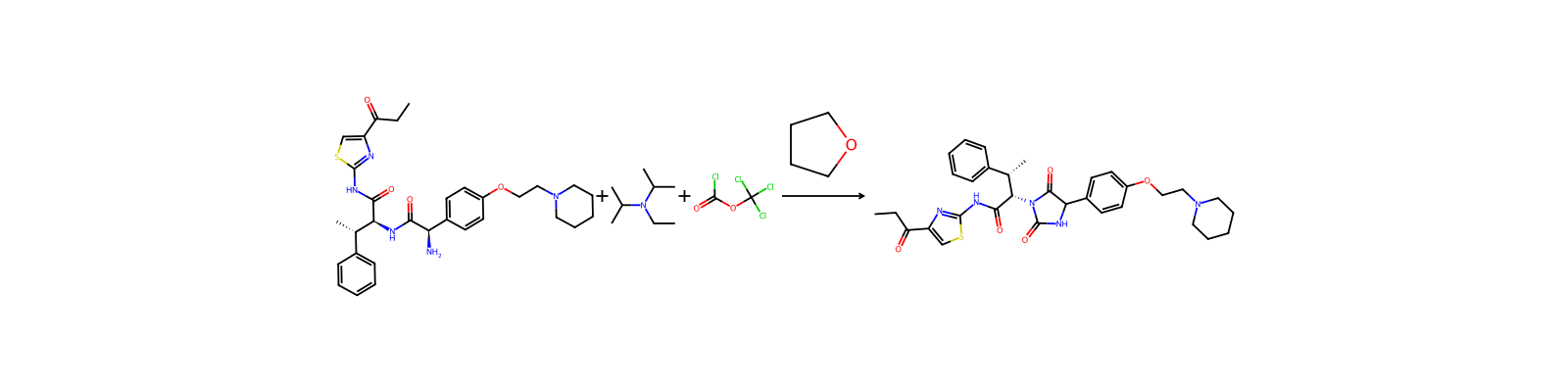
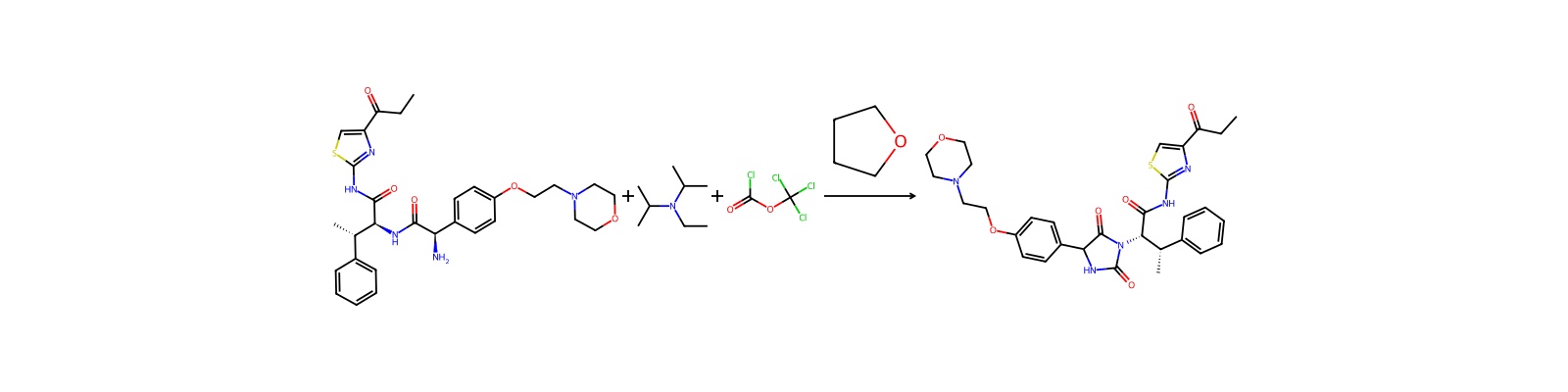
HRID 6822 の反応式
HRID 6822反応物としてuspto-grants-2006_08
HRID 15490 の反応式
HRID 15490反応物としてuspto-grants-2010_06
HRID 22476 の反応式
HRID 22476反応物としてuspto-grants-1995_06
HRID 25542 の反応式
HRID 25542反応物としてuspto-grants-2005_02
HRID 25553 の反応式
HRID 25553反応物としてuspto-grants-2005_02
HRID 32809 の反応式
HRID 32809反応物としてuspto-grants-2008_09
HRID 32820 の反応式
HRID 32820反応物としてuspto-grants-2008_09
HRID 32823 の反応式
HRID 32823反応物としてuspto-grants-2008_09
1 / 125 ページ

化合物ノート

読み込み中…

このページの内容基本情報概要名称と識別子物性安全と法規制化学と産業関連反応化合物ノート
その他の操作
ノートを作成反応を作成見積依頼を出す
· 2 件

-57 °C

-57 °C

Vapor DensityRelative vapor density (air = 1): 6.83
Vapor Pressure · 2 件

10 MM HG @ 20 °C

Vapor pressure, kPa at 20 °C: 1.3

物理化学的性質

融点
-57 °C · -57 °C
沸点
20 °C10 · 20 °C10 mm Hg(lit.)
比重(密度)
1.64 · 1.64
蒸気圧
13 hPa · 13 hPa ( 20 °C)
屈折率
20 · n20/D 1.458
闪点
110 °C · >110°C
貯蔵温度
2 · 2-8°C
溶解性
Chloroform (Soluble), Ethyl Acetate (Sparingly)
外見
液体
色
無色透明
水溶解度
分解する可能性があります
Merck
14 · 14,3334
BRN
970225 · 970225
安定性
Hygroscopic, Moisture Sensitive
InChI
1S/C2Cl4O2/c3-1(7)8-2(4,5)6
InChIKey
HCUYBXPSSCRKRF-UHFFFAOYSA-N
SMILES
ClC(=O)OC(Cl)(Cl)Cl
CAS データベース
503 · 503-38-8(CAS DataBase Reference)
NISTの化学物質情報
Trichloromethyl chloroformate(503-38-8)
EPAの化学物質情報
Carbonochloridic acid, trichloromethyl ester (503-38-8)

化学的性質

化学的特性clear colorless liquid

If ... THERE IS NO FIRE, go directly to the Table of Initial Isolation and Protective Action Distances /(see table below)/ ... to obtain initial isolation and protective action distances. IF THERE IS A FIRE, or IF A FIRE IS INVOLVED, go directly to the appropriate guide /(see guide(s) below)/ and use the evacuation information shown under PUBLIC SAFETY.

If ... THERE IS NO FIRE, go directly to the Table of Initial Isolation and Protective Action Distances /(see table below)/ ... to obtain initial isolation and protective action distances. IF THERE IS A FIRE, or IF A FIRE IS INVOLVED, go directly to the appropriate guide /(see guide(s) below)/ and use the evacuation information shown under PUBLIC SAFETY.

If ... THERE IS NO FIRE, go directly to the Table of Initial Isolation and Protective Action Distances /(see table below)/ ... to obtain initial isolation and protective action distances. IF THERE IS A FIRE, or IF A FIRE IS INVOLVED, go directly to the appropriate guide /(see guide(s) below)/ and use the evacuation information shown under PUBLIC SAFETY.

For more DOT Emergency Guidelines (Complete) data for DIPHOSGENE (12 total), please visit the HSDB record page.

Hazard Classes and CategoriesAcute Tox. 2 (87%)
Hazardous Reactivities and IncompatibilitiesWILL REACT WITH WATER OR STEAM TO PRODUCE TOXIC & CORROSIVE FUMES.

安全と保護具

Fire FightingIn case of fire in the surroundings, use appropriate extinguishing media.
First Aid Measures · 4 件

Fresh air, rest. Half-upright position. Artificial respiration may be needed. Refer for medical attention.

Rinse and then wash skin with water and soap.

First rinse with plenty of water for several minutes (remove contact lenses if easily possible), then refer for medical attention.

Rinse mouth.

Safe StorageDry. Well closed. Keep in a well-ventilated room.
Exposure Control and Personal Protection · 1 件

TIH (Toxic Inhalation Hazard) - Term used to describe gases and volatile liquids that are toxic when inhaled. Some are TIH materials themselves, e.g., chlorine, and some release TIH gases when spilled in water, e.g., chlorosilanes. [ERG 2016].

Storage Conditions... THESE CMPD DECOMPOSE EASILY, STORAGE CONTAINERS SHOULD BE VENTED. /CHLOROFORMATES/
Cleanup MethodsTO DECONTAMINATE IN ENCLOSED SPACES, USE AMMONIA OR STEAM.
Spillage Disposal · 1 件

Personal protection: chemical protection suit including self-contained breathing apparatus. Collect leaking and spilled liquid in sealable containers as far as possible. Absorb remaining liquid in sand or inert absorbent. Then store and dispose of according to local regulations.

Preventive MeasuresALL MATERIALS SHOULD BE HANDLED SO AS TO PREVENT ALL CONTACT. ... EYEWASH FOUNTAINS SHOULD BE PROVIDED. ALSO, SPECIAL ATTENTION SHOULD BE GIVEN TO EYE & RESPIRATORY TRACT MEDICAL EXAMINATIONS. /CHLOROFORMATES/
Eye PreventionWear safety goggles.
Inhalation RiskA harmful contamination of the air can be reached very quickly on evaporation of this substance at 20 °C.
Skin PreventionProtective gloves.
Exposure PreventionSTRICT HYGIENE!

毒性情報

Adverse EffectsDermatotoxin - Skin burns.
Exposure RoutesThe substance can be absorbed into the body in hazardous amounts by inhalation.
Signs and Symptoms · 4 件

Burning sensation. Chest tightness. Sore throat. Cough. Laboured breathing. Shortness of breath. Symptoms may be delayed.

Redness.

Watering of the eyes. Redness.

Sore throat.

Human Toxicity Excerpts · 3 件

EYE IRRITATION, IRRITATION OF UPPER RESPIRATORY TRACT, & SURFACE BURNS HAVE BEEN PRINCIPAL FINDINGS IN EXPOSED HUMANS. PULMONARY EDEMA WOULD UNDOUBTEDLY OCCUR WITH HIGHER LEVELS OF EXPOSURE. EYE IRRITATION MAY PERSIST SOME TIME AFTER EXPOSURE CEASES. SKIN SENSITIZATION MAY OCCUR. /CHLOROFORMATES/

INSIDIOUS POISON AS IT IS NOT IRRITATING IMMEDIATELY, EVEN WHEN FATAL CONCN ARE INHALED. MAY CAUSE SEVERE PULMONARY EDEMA (MAY BE QUICKLY FATAL) OR PNEUMONIA. INHALATION OF HIGH CONCN CAUSES CHOKING, CONSTRICTED FEELING IN CHEST, COUGHING, PAINFUL BREATHING, BLOODY SPUTUM. VAPORS STRONGLY IRRITATING TO THE EYES. /PHOSGENE/

HIGHLY TOXIC BY INHALATION & INGESTION. STRONG IRRITANT TO TISSUE.

Non-Human Toxicity Excerpts · 3 件

NO EVIDENCE EXISTS FOR A SYSTEMIC ACTION OF INHALED PHOSGENE, BUT VASOCONSTRICTION OF PULMONARY VASCULATURE HAS BEEN DESCRIBED IN RABBITS. SEQUELAE INCLUDE PULMONARY SCARRING, LOBULAR EMPHYSEMA, SMALL IRREGULAR AREAS OF ATELECTASIS & BRONCHITIS. /PHOSGENE/

SOME POSSIBLE MECHANISMS OF REDUCED ACTIVITY OF LUNG SURFACTANT IN ACUTE PULMONARY EDEMA WERE STUDIED IN ALBINO RATS & RABBITS. MOST OF THE EDEMOGENIC SUBSTANCES DID NOT CHANGE SURFACTANT ACTIVITY WHILE DIPHOSGENE REDUCED IT.

The purpose of this study was to examine the changes of pulmonary hemodynamics, cardiac impedance parameters and the number of pulmonary microembolus, and leukocyte after diphosgene inhalation in rabbits. Fifty-three rabbits were randomized into two sets, one set was used to monitor the pulmonary hemodynamics, the other set was used to determine the cardiac impedance parameters, microemboli and leukocytes were obtained directly from the pulmonary microcirculation by use of the retrograde perfusion method. As compared with control group, lt was found that pulmonary artery pressure rose and pulmonary vascular resistance increased (p < 0.05), but did not correlate with lung water parameters (p > 0.05). At 1, 6 hr after diphosgene inhalation cardiac Impedance parameters did not change (p > 0.05~, as compared with before inhalation. Microemboli (21.8 increased (p< 0.05), as compared with the control group (106/L, 430e pulmonary hemodynamics, but could not effectively reduce the degree of pulmonary edema.

Probable Routes of Human ExposureNO EFFECTS ON GENERAL HEALTH NOR IN LABORATORY FINDINGS (BLOOD STUDIES & LIVER FUNCTION TESTS) OF PERSONS MANUFACTURING CHLOROFORMATES WERE NOTED. /CHLOROFORMATES/
Toxicity DataLCLo (rabbits) = 900 mg/m3/15 min

安全データ

F
8-10-19
wgk
3
tsca
TSCA listed
rtecs
LQ7350000
ridadr
UN 3277 6.1/PG 2
毒性
LC100 in rabbits (10-20 minutes exposure to vapor): 0.9 mg/l air (Klika, Mysliveckova)
hs_code
29159000
risk_code
26/28-34-26/27/28-36/37/38
hazard_code
T+,Xi
safety_code
26-28-36/37/39-45-28A-36
hazard_class
6.1
packing_group
II
Hazard Classifications
Acute Tox. 2 InhalationAcute Tox. 4 OralSkin Corr. 1B
ストレージクラス
6.1B - Non-combustible acute toxic Cat. 1 and 2very toxic hazardous materials
有毒物質データの
503-38-8(Hazardous Substances Data)
説明

使用In organic synthesis; as war gas.

一般的な説明Colorless liquid, odorless to fruity.

上流・下流製品情報

下流製品

ジチオりん酸O,O-ジメチルS-[(5-メトキシ-2-オキソ-1,3,4-チアジアゾール-3(2H)-イル)メチル]2-[[[[(4-メトキシ-6-メチル-1,3,5-トリアジン-2-イル)(メチル)アミノ]カルボニル]アミノ]スルホニル]安息香酸メチルイソシアン酸4-フルオロベンジルクロロぎ酸ベンジル4-N-BOC-2-メチルピペラジンイソシアン酸 p-トリルジフェニルカルバミン酸 クロリドクロロ硫酸メチル炭酸1-クロロエチルシクロヘキシルイソシアン酸ヘプチル2-ニトロフェニルイソシアナート3‐イソシアナトプロピオン酸エチル1-CHLOROCARBONYL-4-PIPERIDINOPIPERIDINEDIALLYLCARBAMYL CHLORIDEオキスポコナゾール代謝産物 II4,4-ジメチル -2-オキサゾリジノン1-イソシアノ-2-メトキシ-2-メチルプロパン4-イソシアナト安息香酸メチルビス(1-メチルエチル)カルバミド酸クロリド

補足説明

定義diphosgene: A colourless liquid,ClCO.O.CCl3, originally used in 1916by Germany in World War I as achemical warfare agent. It is nowused as a reagent in organic synthesis.See also carbonyl chloride.