
HRID 194621反応物として
Chlorate ion
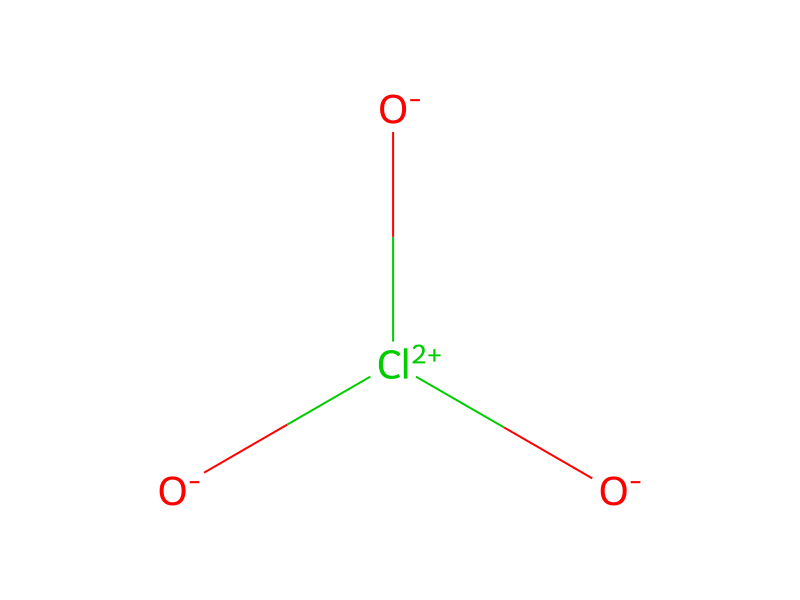
14866-68-3[O-][Cl+2]([O-])[O-]TYJXBNGPLHOYOB-UHFFFAOYSA-NChlorate, n.o.s., wet appears as a moist solid or slurry.
14866-68-3DTXSID3073137CHEMBL1161633CHEBI:49709FCS -> FDA Cumulative Estimated Daily Intake (CEDI)
FCS -> FDA Inventory of Food Contact Substances Listed in 21 CFR
Chlorate, n.o.s., wet appears as a moist solid or slurry.
Chlorate, inorganic, n.o.s. is a white crystalline. It is soluble in water. The material itself is noncombustible, but it can form a very flammable mixture with combustible materials, and this mixture may be explosive if the combustible material is very finely divided. The mixture can be ignited by friction. Contact with strong sulfuric acid can cause fires or explosions. When mixed with ammonium salts, spontaneous decomposition and ignition may result. Prolonged exposure of the material to heat or fire can result in an explosion.
安全情報は参考情報です。供給元の安全データシート(SDS)、適用法令、専門家による評価に代わるものではありません。
Hazard Traits - Endocrine Toxicity
Regulation (EC) No 1331/2008
Oxidizer
Oxidizer
Excerpt from ERG Guide 140 [Oxidizers]:
Excerpt from ERG Guide 140 [Oxidizers]:
Excerpt from ERG Guide 140 [Oxidizers]:
Excerpt from ERG Guide 140 [Oxidizers]:
Oxidizing Agents, Strong
Oxidizing Agents, Strong
Strong Oxidizing Agent
Explosive
CHLORATE, WET is an oxidizing agent. In the presence of strong acid can liberate explosive chlorine dioxide gas. Heating a moist metal chlorate and a dibasic organic acid liberates chlorine dioxide and carbon dioxide [Bretherick 1979 p. 100]. Mixtures of chlorates with ammonium salts, powdered metals, silicon, sulfur, or sulfides are readily ignited and potentially explosive [Bretherick 1979 p. 806]. A combination of finely divided aluminum with finely divided chlorates of barium, calcium, magnesium, potassium, sodium or zinc can explode by heat, percussion, and friction [Mellor 2:310 1946-47].
Metal chlorates are oxidants in the presence of strong acid; liberates explosive chlorine dioxide gas; liberates chlorine dioxide and carbon dioxide by heating a moist metal chlorate and a dibasic organic acid; mixtures of perchlorates with sulfur or phosphorus are explosives [Bretherick 1979 p. 100]; mixtures of the chlorate with ammonium salts, powdered metals, silicon, sulfur, or sulfides are readily ignited and potentially explosive [Bretherick 1979 p. 806]. A combination of finely divided aluminum with finely divided bromates (also chlorates and iodates) of barium, calcium, magnesium, potassium, sodium, or zinc can explode by heat, percussion, or friction [Mellor 2:310 1946-47].
一般的な説明Chlorate, inorganic, n.o.s. is a white crystalline. chloric acid is soluble in water. The material itself is noncombustible, but chloric acid can form a very flammable mixture with combustible materials, and this mixture may be explosive if the combustible material is very finely divided. The mixture can be ignited by friction. Contact with strong sulfuric acid can cause fires or explosions. When mixed with ammonium salts, spontaneous decomposition and ignition may result. Prolonged exposure of the material to heat or fire can result in an explosion.





Likely to be water soluble.
They are soluble in water.
Excerpt from ERG Guide 140 [Oxidizers]:
Excerpt from ERG Guide 140 [Oxidizers]:
Excerpt from ERG Guide 140 [Oxidizers]:
Excerpt from ERG Guide 140 [Oxidizers]:
Excerpt from ERG Guide 140 [Oxidizers]:
Excerpt from ERG Guide 140 [Oxidizers]:
Excerpt from ERG Guide 140 [Oxidizers]:
Excerpt from ERG Guide 140 [Oxidizers]:
Excerpt from ERG Guide 140 [Oxidizers]:
Excerpt from ERG Guide 140 [Oxidizers]: