
HRID 9640反応物として
2-Methyl-2-butene
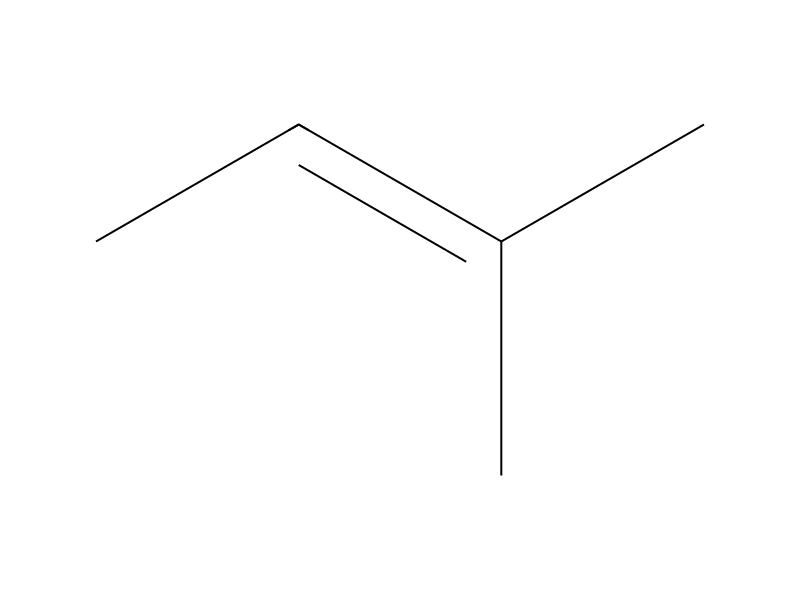
513-35-9CC=C(C)CBKOOMYPCSUNDGP-UHFFFAOYSA-N2-methyl-2-butene appears as a clear colorless liquid with a petroleum-like odor. Less dense than water and insoluble in water. Hence floats on water. Vapors heavier than air.
513-35-9DTXSID8027165CHEBI:28798Other Classes -> Aliphatics, Unsaturated
Flammable agents - 4th degree
0.66 @ 15 °C/4 °C
0.6623 @ 20°C
LIQUID AT ROOM TEMPERATURE
Colorless volatile liquid
Practically insol in water; miscible with alcohol, ether
Insoluble in water; Soluble in ethanol, ethyl ether, benzene
less than 20 °F (NFPA, 2010)
-17.8 °C
37.5-38.5 °C
38.56 °C @760 [mm Hg]
安全情報は参考情報です。供給元の安全データシート(SDS)、適用法令、専門家による評価に代わるものではありません。
This chemical does not meet GHS hazard criteria for 4.1% (14 of 341) of reports.
Danger
H224 (21.4%): Extremely flammable liquid and vapor [Danger Flammable liquids]
P203, P210, P233, P240, P241, P242, P243, P261, P264, P270, P271, P273, P280, P301+P316, P301+P317, P302+P352, P303+P361+P353, P304+P340, P318, P319, P321, P330, P331, P332+P317, P362+P364, P370+P378, P391, P403+P233, P403+P235, P405, and P501 (click each P-code to see the statement)
Aggregated GHS information provided per 341 reports by companies from 19 notifications to the ECHA C&L Inventory. Each notification may be associated with multiple companies.
Danger
Chemical: 2-Butene, 2-methyl-
2-Butene, 2-methyl- is listed on the EPA's Chemical Data Reporting (CDR) system. Manufacturers and importers of 2-Butene, 2-methyl- are required to report information about their production and use of this chemical to the EPA under the Toxic Substances Control Act (TSCA). (40 eCFR Part 711)
REACH registered substance: 2-methylbut-2-ene (EC: 208-156-3)
2-Butene, 2-methyl-: HSNO Approval: HSR001257 Approved with controls
The New Jersey Worker and Community Right to Know Act requires public and private employers to provide information about hazardous substances at their workplaces. (N.J.S.A. 34:5A-1 et. seq.)
Excerpt from ERG Guide 128 [Flammable Liquids (Water-Immiscible)]:
· HIGHLY FLAMMABLE: Will be easily ignited by heat, sparks or flames.
· HIGHLY FLAMMABLE: Will be easily ignited by heat, sparks or flames.
Used as a chemical intermediate for isoprene and tertiary pentyl alcohol (pharmaceutical solvent); as an additive in high octane fuel manufacture; for hydrogenation, halogenation, alkylation, and condensation reactions; [HSDB] Used as an intermediate in the production of hydrocarbon resins, as a stabilizer for chloroform, and as a component of natural gas and crude oil; [eChemPortal: SIDSUNEP] Was used as an anesthetic in humans; [ACGIH]
Petroleum Production and Refining [Category: Industry]
PRINCIPALLY CHEM INT FOR ISOPRENE; ADDITIVE IN HIGH OCTANE FUEL MFR; CHEM INT FOR THE PHARMACEUTICAL SOLVENT, TERTIARY PENTYL ALCOHOL
Organic synthesis; hydrogenation, halogenation, alkylation, condensation reactions
Octane additive
Pentenes are components of gasoline and are often produced as by-products of catalytic of thermal cracking of petroleum. (L1287)
2023: 25,000,000 - <40,000,000 lb
(1972) 1.45X10+11 GRAMS (PENTENES, MIXED)
(1975) 1.27X10+11 GRAMS (AMYLENES & PENTENES)
(1984) 697,131,000 lbs /Pentenes mixed/
DISTILLATION OF A CATALYTICALLY CRACKED GASOLINE STREAM, FOLLOWED BY EXTRACTION WITH AQUEOUS SULFURIC ACID AT LOW TEMP
Prepd by dehydration of tert-amyl alcohol in presence of p-toluenesulfonic acid
... A component of refinery gas.

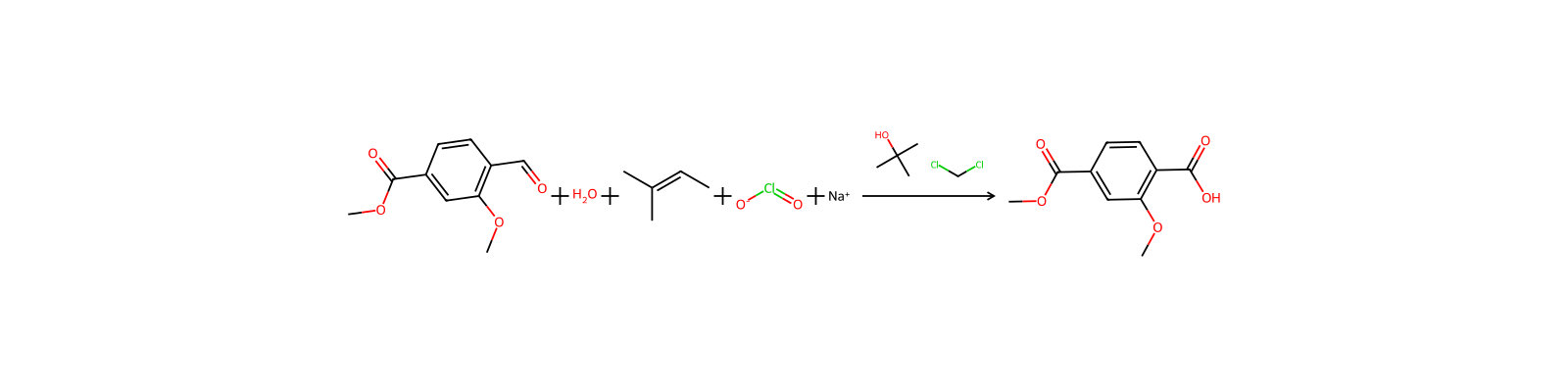




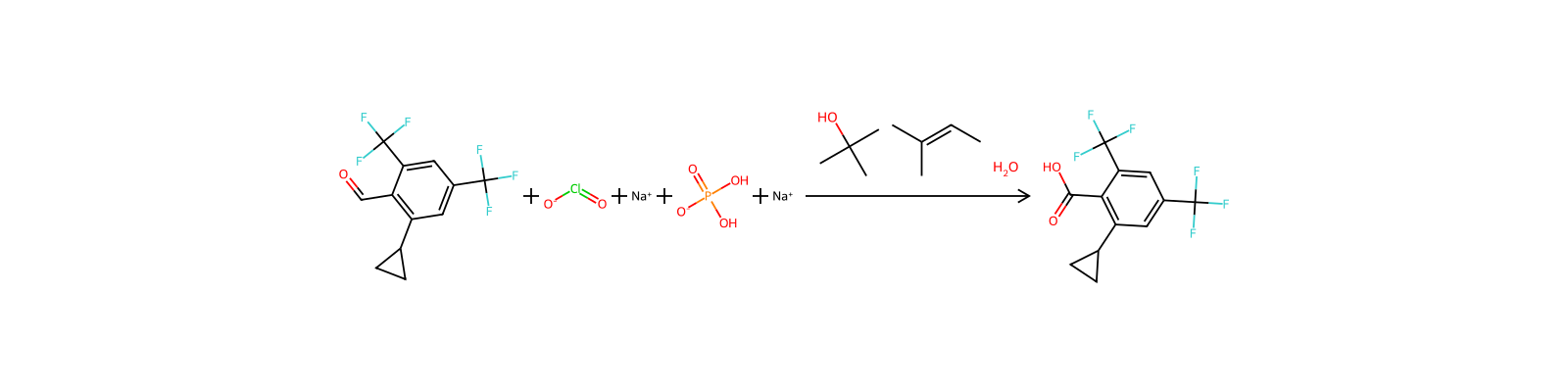
化学的特性2-Methyl-2-butene is a colorless volatile liquid with unpleasant odour (detection limit ca. 2 ppt) . soluble in alcohol, ether, benzene, insoluble in water. It is used in organic synthesis, hydrogenation, halogenation, alkylation, condensation reactions.
Excerpt from ERG Guide 128 [Flammable Liquids (Water-Immiscible)]:
CAUTION: Petroleum crude oil (UN1267) may contain TOXIC hydrogen sulphide gas.
CAUTION: Petroleum crude oil (UN1267) may contain TOXIC hydrogen sulphide gas.
Highly flammable liquid that is a simple asphyxiant; [Merck Index] May cause irritation or burns to skin and eyes; [CAMEO] Inhalation of high concentrations can cause CNS depression; A mild skin irritant; [eChemPortal: SIDSUNEP] Animal studies have shown chromosomal damage with inhalation exposures of 3000 ppm and greater. Chromosomal damage (clastogenic effects) is indicated by increases in micronucleated polychromatic erythrocytes in bone marrow. [ACGIH]
1108 128
2460 128
2-METHYL-2-BUTENE may react vigorously with strong oxidizing agents. May react exothermically with reducing agents to release gaseous hydrogen. In the presence of various catalysts (such as acids) or initiators, may undergo exothermic polymerization reactions.
/GUIDE 128: FLAMMABLE LIQUIDS (NON-POLAR/WATER-IMMISCIBLE)/ Fire or Explosion: HIGHLY FLAMMABLE: Will be easily ignited by heat, sparks or flames. Vapors may form explosive mixtures with air. Vapors may travel to source of ignition and flash back. Most vapors are heavier than air. They will spread along ground and collect in low or confined areas (sewers, basements, tanks). Vapor explosion hazard indoors, outdoors or in sewers. Those substances designated with a "P" may polymerize explosively when heated or involved in a fire. Runoff to sewer may create fire or explosion hazard. Containers may explode when heated. Many liquids are lighter than water. Substances may be transported hot.
/GUIDE 128: FLAMMABLE LIQUIDS (NON-POLAR/WATER-IMMISCIBLE)/ Health: Inhalation or contact with material may irritate or burn skin and eyes. Fire may produce irritating, corrosive and/or toxic gases. Vapors may cause dizziness or suffocation. Runoff from fire control or dilution water may cause pollution.
/GUIDE 128: FLAMMABLE LIQUIDS (NON-POLAR/WATER-IMMISCIBLE)/ Public Safety: CALL Emergency Response Telephone Number ... . As an immediate precautionary measure, isolate spill or leak area for at least 50 meters (150 feet) in all directions. Keep unauthorized personnel away. Stay upwind. Keep out of low areas. Ventilate closed spaces before entering.
/GUIDE 128: FLAMMABLE LIQUIDS (NON-POLAR/WATER-IMMISCIBLE)/ Protective Clothing: Wear positive pressure self-contained breathing apparatus (SCBA). Structural firefighters' protective clothing will only provide limited protection.
For more DOT Emergency Guidelines (Complete) data for AMYLENE (8 total), please visit the HSDB record page.
· CALL 911. Then call emergency response telephone number on shipping paper. If shipping paper not available or no answer, refer to appropriate telephone number listed on the inside back cover.
· ELIMINATE all ignition sources (no smoking, flares, sparks or flames) from immediate area.
· CALL 911. Then call emergency response telephone number on shipping paper. If shipping paper not available or no answer, refer to appropriate telephone number listed on the inside back cover.
· ELIMINATE all ignition sources (no smoking, flares, sparks or flames) from immediate area.
Excerpt from ERG Guide 128 [Flammable Liquids (Water-Immiscible)]:
General First Aid:
General First Aid:
· Wear positive pressure self-contained breathing apparatus (SCBA).
· Wear positive pressure self-contained breathing apparatus (SCBA).
SRP: At the time of review, criteria for land treatment or burial (sanitary landfill) disposal practices are subject to significant revision. Prior to implementing land disposal of waste residue (including waste sludge), consult with environmental regulatory agencies for guidance on acceptable disposal practices.
Incineration: Spray into a furnace. Incineration will become easier by mixing with a more flammable solvent.
Excerpt from ERG Guide 128 [Flammable Liquids (Water-Immiscible)]:
Immediate precautionary measure
Immediate precautionary measure
3.0 [mg/m3]
33 [mg/m3]
200 [mg/m3]
CAUTION: The majority of these products have a very low flash point. Use of water spray when fighting fire may be inefficient.
CAUTION: The majority of these products have a very low flash point. Use of water spray when fighting fire may be inefficient.
TERRESTRIAL FATE: Based on a classification scheme(1), an estimated Koc value of 68(SRC), determined from a structure estimation method(2), indicates that amylene is expected to have high mobility in soil(SRC). Volatilization of amylene from moist soil surfaces is expected to be an important fate process(SRC) given a Henry's Law constant of 0.110 atm-cu m/mole(3). The potential for volatilization of amylene from dry soil surfaces may exist based upon a vapor pressure of 468 mm Hg(4).
AQUATIC FATE: Based on a classification scheme(1), an estimated Koc value of 68(SRC), determined from a structure estimation method(2), indicates that amylene is not expected to adsorb to suspended solids and sediment in water(SRC). Based on exposure of activated sludge to amylene in the Warburg respirometer test at 20 °C, percent theoretical oxygen demand after 24 hrs was 0.9(3). Volatilization from water surfaces is expected(4) based upon a Henry's Law constant of 0.110 atm-cu m/mole(5). Volatilization half-lives for a model river and model lake are 2.5 and 80 hrs, respectively(SRC), using an estimation method(4). According to a classification scheme(6), an estimated BCF of 23(4,SRC), from a log Kow(7,SRC), suggests the potential for bioconcentration in aquatic organisms is low.
ATMOSPHERIC FATE: According to a model of gas/particle partitioning of semivolatile organic compounds in the atmosphere(1), amylene, which has a vapor pressure of 468 mm Hg at 25 °C(2), is expected to exist solely in the vapor phase in the ambient atmosphere. Vapor-phase amylene is degraded in the atmosphere by reaction with photochemically-produced hydroxyl radicals(SRC); the half-life for this reaction in air is estimated to be 4.4 hrs(SRC), calculated from its rate constant of 8.69X10⁻¹¹ cu cm/molecule-sec at 25 °C(3). The rate constant for the vapor-phase reaction of amylene with ozone is 4.2X10⁻¹⁶ cu cm/molec sec(4); the half-life for this reaction in air is estimated to be 39 minutes at an atmospheric concn of 7X10+11 molec/cu cm for ozone(5). The rate constant for the vapor-phase reaction of amylene with the nitrate radical is 9.0X10⁻¹² cu cm/molec sec(4); the half-life for this reaction in air is estimated to be 321 seconds at an ambient concn of 2.4X10+8 molec/cu cm at night(5).
Petroleum distillate poisoning may cause nausea, vomiting, cough, pulmonary irritation progressing to pulmonary edema, bloody sputum, and bronchial pneumonia. At high amounts, central nervous system depression may also occur, with symptoms such as weakness, dizziness, slow and shallow respiration, unconsciousness, and convulsions. Petroleum distillates are also irritating to the skin. (A594)
Emissions from 10 four-stroke lawn mower engines contained 0.26-0.30% amylene by mass of total organic gases(1). Amylene was detected ranging from 8.3-11.4 ppm for YJ93-6E-3 jet engines and 0.02-2.1 ppm for J856E-5B jet engines in exhausts when operated at simulated supersonic flight conditions(2). Amylene was detected in exhaust emitted from alkylate-based fuels, concn not specified(3). Amylene has been reported in stack emissions from waste incineration processes from 1964 to 1979, concn not specified(4). Automobile exhaust, representative of a vehicle operating under normal traffic conditions, was determined to contain 0.1-0.03 ppm of amylene when not irradiated(5).
Using a structure estimation method based on molecular connectivity indices(1), the Koc for amylene can be estimated to be about 68(SRC). According to a classification scheme(2), this estimated Koc value suggests that amylene is expected to have high mobility in soil.
URBAN/SUBURBAN: Amylene was detected ranging from 3.7 to 11.5 ppb in ambient air samples taken around the Tulsa, OK area on July 27, 1978(1). Amylene was also detected in air samples taken from Rio Blanco County, CO ranging from 0.9-3.0 ppb on July 24, 1978 and from air samples taken from the Smokey Mountains ranging from 0.1-3.7 ppb from Sept 25-26, 1978(1). Average exhaust hydrocarbon composition emitted from gasoline fueled vehicles in Sydney, Australia contained 0.5% amylene(2). Under congested city driving conditions (large % of vehicles at idle speed), amylene was detected at 0.45% of total emissions; under urban commuter traffic(ave speed 21.1 mi/hr), amylene was detected at 0.42% of total emissions and under rush hour expressway traffic (ave speed 34.7 mi/hr), amylene was detected at 0.27% of non-methane hydrocarbon emissions along U.S. Highway 70 near Raleigh, NC(3). Amylene concn in the major Tingstad Tunnel in Goteborg, Sweden ranged from 0.25-.41% of total non-methane hydrocarbons from June 27, 1991 to March 11, 1992(4). Amylene was detected in urban air samples taken in Cincinnati in the early afternoon (avg concn 3.8 ppb)(5). Amylene was detected in ambient air samples from Los Angeles, CA in 5 out of 23 samples ranging from 1-4 ppb from Sept 29-Nov 13, 1981(6). Amylene was detected in samples taken from March 12, 1990-March 11, 1991 in urban Washington, DC 48.21% of the time (mean concn 0.2 ppbv)(7). Amylene was detected in air samples from the Caldecott tunnel in San Francisco at 0.43% weight of total VOC's in Aug 1994 and 0.48% weight of total VOC's in Oct 1994(8). Amylene was detected in ambient air samples collected in downtown Houston, TX at concns ranging from 0-91.9 ppbC on Sept 1, 1973, 8.1-67.8 ppbC on Jan 30, 1974, and 0-4.1 ppbC on Apr 2, 1974(9). Amylene was detected in ambient air samples in the central Los Angeles business district during late summer and fall months of 1960, between the hours of 7 and 9 am at concns ranging from 0.002-0.018 ppm(10). Amylene was detected in air samples taken from various sites in Sydney Australia during the morning hours from Sept 1979 to June 1980 (avg concn 1.3 ppbV)(11). Amylene was detected at Huntington Park, CA on Oct 22, 1968 ranging from 0-4.2 ppb(12). Amylene was detected in air samples taken from Boone, NC (population 10,000) ranging from 0.1-4.1 ppb(13).
URBAN/SUBURBAN: The concn of amylene in air samples collected from 39 different U.S. cities from June to Sept of 1984-1986 from 0600 to 0900 averaged 0.4 ppb(1). Amylene has been reported to be 0.27% by mass of VOC emissions in 1990 in the United Kingdom(2). Amylene was detected, concn not specified, in 2 of 15 industrial area air samples taken in Riverside, CA(3). Amylene has been detected, concn not specified, in ambient air samples in Riverside, CA on Aug 21, 1969(4). Gas-phase reaction of amylene with the NO3 radical (concn ranging from 3.8-4.2X10+13 molec/cu cm) produced acetaldehyde, acetone, 2,2,3-trimethyloxirane, 3-methyl-3-nitroxy-2-butanone and 3-methyl-2-butanone. It was also found that the percent distribution of products was highly dependent upon pressure(5).
Amylene's production and use in organic syntheses(1) or as an octane additive(2) may result in its release to the environment through various waste streams(SRC). Industry gasoline, EPA certification gasoline and M-85 (85% methanol and 15% gasoline) contain 1.032%, 0.617%, and 0.142% of amylene, respectively(2). Whole gas of 87-89 octane contains 1.16% by weight amylene(3).
Petrochemical Manufacturing
2-Butene, 2-methyl-: ACTIVE
At one time it was used without success as a human anesthetic but produced better results in dentistry.
用途有機合成原料、重合阻害剤 (GANGOLLI (2ND, 1999) )
説明2-Methyl-2-butene (also named as Amylene) is an alkene hydrocarbon with the molecular formula C5H10. It is a colorless to pale yellow clear liquid. It can be used as a free radical scavenger in trichloromethane and dichloromethane. It was used for the alkylation of 3-methylthiophene over a zeolitic catalyst. It was also used as a precursor of peroxyacetyl nitrate for calibration purpose.
使用2-Methyl-2-butene is used to prepare 3-Brom-2.3-dimethyl-1.1-dicyan-butan in the presence of 2,2'-azobis-(2,4-dimethyl-4-methoxyvaleronitrile) as a catalyst. It may be employed as precursor for peroxyacetyl nitrate for the calibration purposes.
一般的な説明2-methyl-2-butene appears as a clear colorless liquid with a petroleum-like odor. Less dense than water and insoluble in water. Hence floats on water. Vapors heavier than air.
製造方法2-methyl-2-butene is prepared by dehydration of tert-amyl alcohol in presence of p-toluenesulfonic acid or distillation of a catalytically cracked gasoline stream, followed by extraction with aqueous sulfuric acid at low temp.
純化方法Distil amylene and collect the distillate at low temperature. It has also been distilled from sodium. FLAMMABLE. It is available in steel cylinders and has a short
定義ChEBI: 2-Methyl-2-butene is an alkene that is ethylene in which three of the hydrogens are replaced by methyl groups.
RURAL/REMOTE: From January 1-6, 1978 amylene was detected in Jones State forest, 38 miles north of Houston, TX, in a range of 0.1-7.1 ppbC(1). Amylene has been detected in ambient air samples taken from rural southern Appalachian Mountains of northwestern North Carolina from Sept 1981-Oct 1982 (concns ranging from 0-0.7 ppb)(2).