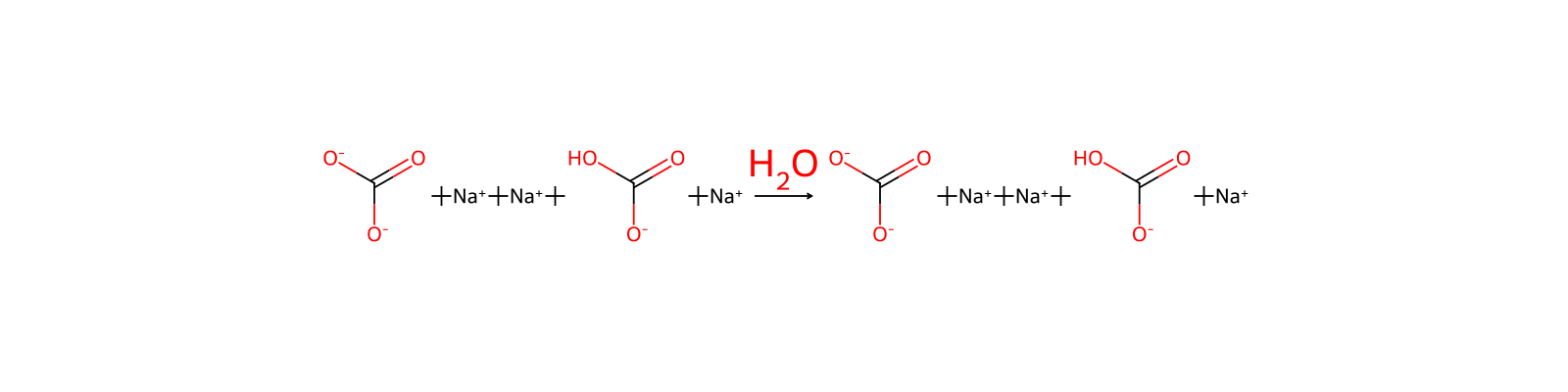
HRID 275637反応物として
Sodium Sesquicarbonate
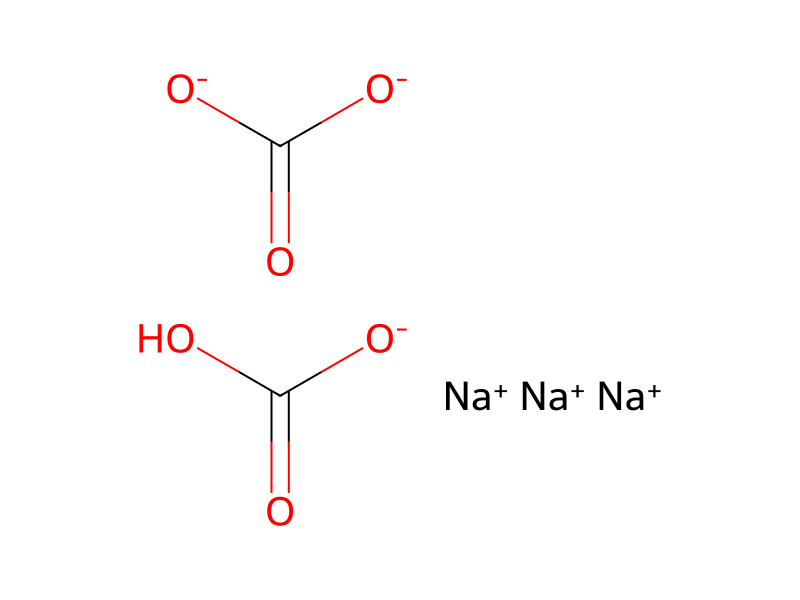
533-96-0O=C([O-])O.O=C([O-])[O-].[Na+].[Na+].[Na+]WCTAGTRAWPDFQO-UHFFFAOYSA-KTrona is a mineral with formula of Na3(HCO3)(CO3)·2H2O. The IMA symbol is Tn.
533-96-0、6106-20-3、72227-05-5DTXSID6049646Cosmetic ingredients (Sodium Sesquicarbonate) -> CIR (Cosmetic Ingredient Review)
Cleansing; Bulking; Buffering
White crystals, flakes, or crystalline powder
White, needle-shaped crystals
Freely soluble in water
Soluble in water
Liquid; Dry Powder; Other Solid
White flakes, crystals or crystalline powder
Found in nature as dihydrates: monocyclic needles that are stable in air and soluble in water; [Merck Index #8674] A glass-like, noncombustible solid that is white, yellow or gray; [Hawley]
安全情報は参考情報です。供給元の安全データシート(SDS)、適用法令、専門家による評価に代わるものではありません。
This chemical does not meet GHS hazard criteria for 6.8% (24 of 351) of reports.
Warning
H315 (11.1%): Causes skin irritation [Warning Skin corrosion/irritation]
P261, P264, P264+P265, P271, P280, P302+P352, P304+P340, P305+P351+P338, P319, P321, P332+P317, P337+P317, P362+P364, P403+P233, P405, and P501 (click each P-code to see the statement)
Aggregated GHS information provided per 351 reports by companies from 4 notifications to the ECHA C&L Inventory. Each notification may be associated with multiple companies.
Warning
Chemical: Carbonic acid, sodium salt (2:3)
Carbonic acid, sodium salt (2:3) is listed on the EPA's Chemical Data Reporting (CDR) system. Manufacturers and importers of Carbonic acid, sodium salt (2:3) are required to report information about their production and use of this chemical to the EPA under the Toxic Substances Control Act (TSCA). (40 eCFR Part 711)
REACH registered substance: Trisodium hydrogendicarbonate (EC: 208-580-9)
Sodium sesquicarbonate: Does not have an individual approval but may be used under an appropriate group standard
Solutions are alkaline and mildly irritating to skin; [Merck Index #8674] 142 underground miners and 88 surface miners at a trona mine in Wyoming had no excess loss of lung function in a 5 year follow-up study. Chest x-rays showed no evidence of pneumoconiosis. [Rom, p. 538]
Substance added directly to human food affirmed as generally recognized as safe (GRAS).
Sodium sesquicarbonate used as a general purpose food additive in animal drugs, feeds, and related products is generally recognized as safe when used in accordance with good manufacturing or feeding practice.
CIR ingredient: Sodium Sesquicarbonate
Used in bath salts, laundry detergents, water softeners, and buffers; Used to produce sodium carbonate and to tan leather; [HSDB]
Leather Tanning and Processing [Category: Industry]
Abundant salt in East African countries used in treatment of high- & low-tannin grain sorghums to reduce assayable tannins & improve nutritive value of grains; /sodium sesquicarbonate salt/
For sodium sesquicarbonate (USEPA/OPP Pesticide Code: 073507) there are 0 labels match. /SRP: Not registered for current use in the U.S., but approved pesticide uses may change periodically and so federal, state and local authorities must be consulted for currently approved uses./
The active ingredient is no longer contained in any registered pesticide products ... "cancelled."
2023: 100,000,000 - <500,000,000 lb
(1972) 2.8X10+12 G (NATURAL SODIUM CARBONATE)
(1975) 3.95X10+12 G (NATURAL SODIUM CARBONATE)
Prepared by: (1) Partial carbonation of soda ash solution followed by crystallization, centrifugation, and drying; (2) double refining of trona ore, a naturally occurring impure sodium sesquicarbonate.
RECRYSTALLIZATION OF MINERAL TRONA; PARTIAL CARBONATION OF SODIUM CARBONATE FOLLOWED BY CRYSTALLIZATION, CENTRIFUGATION & DRYING
Produced on a large scale from sodium carbonate and a slight excess of sodium bicarbonate.





Monoclinic needles, density: 2.112. Crystals are stable in air. Solubility in water (g/100 mL) at 0 °C: 13; at 100 42. Aqueous solutions are mildly alkaline. pH of 0.1M solution = 10.1 /Sodium sesquicarbonate dihydrate/
Less alkaline than sodium cabonate
DOUBLE SALT OF SODIUM CARBONATE & SODIUM BICARBONATE
MP: decomposes; Index of Refraction: 1.5073 /Sodium sesquicarbonate dihydrate/
化学的特性Soluble in water; less alkaline than sodium carbonate. Noncombustible.Sodium Sesquicarbonate is a white crystalline solid in either flake or powder form, known also as trona and urao. It dissolves rapidly and completely in water, and its solutions are alkaline (0.1 M aqueous solution, pH 10.1).
As the federal pesticide law FIFRA directs, EPA is conducting a comprehensive review of older pesticides to consider their health and environmental effects and make decisions about their continued use. Under this pesticide reregistration program, EPA examines newer health and safety data for pesticide active ingredients initially registered before November 1, 1984, and determines whether the use of the pesticide does not pose unreasonable risk in accordance to newer saftey standards, such as those described in the Food Quality Protection Act of 1996. Pesticides for which EPA had not issued Registration Standards prior to the effective date of FIFRA '88 were divided into three lists based upon their potential for human exposure and other factors, with List B containing pesticides of greater concern than those on List C, and with List C containing pesticides of greater concern than those on List D. Sodium sesquicarbonate is found on List D. Case No: 4066; Pesticide type: fungicide, herbicide, antimicrobial; Case Status: None of the active ingredients in the case are being supported for reregistration by their registrants. All are unsupported, or some are unsupported and some are cancelled. Cases described as "unsupported" generally are being processed for cancellation.; Active ingredient (AI): Sodium sesquicarbonate; AI Status: The active ingredient is no longer contained in any registered pesticide products ... "cancelled."
Skin Irrit. 2 (11.1%)
Skin corrosion/irritation - Category 2
Skin corrosion/irritation - Category 2
SRP: The most favorable course of action is to use an alternative chemical product with less inherent propensity for occupational harm/injury/toxicity or environmental contamination. Recycle any unused portion of the material for its approved use or return it to the manufacturer or supplier. Ultimate disposal of the chemical must consider: the material's impact on air quality; potential migration in soil or water; effects on animal and plant life; and conformance with environmental and public health regulations.
SRP: At the time of review, criteria for land treatment or burial (sanitary landfill) disposal practices are subject to significant revision. Prior to implementing land disposal of waste residue (including waste sludge), consult with environmental regulatory agencies for guidance on acceptable disposal practices.
Occurs native (as trona) in desert areas and Searles Lake brine /Mojave Desert, San Bernadino County, CA/
Found in nature as the dihydrate, e.g. Owens Lake, Searles Lake (U.S.A.); Lake Magadi (Kenya).
There are at least 62 identified naturally occurring sodium carbonate deposits in the world ...
Trona is a relatively rare sodium-rich mineral found in the United States, Africa, China, Turkey, and Mexico.
/SURVEILLANCE/ Trona (sodium sesquicarbonate) is mined from an underground deposit in Wyoming and processed for use in glass, paper, detergent, and chemical applications. Trona dust is alkaline (pH 10.5) and can have an irritant effect on respiratory airways, mucous membranes, and the skin. A study population of 142 underground miners and 88 surface workers from one facility volunteered for an epidemiologic study. Their mean age was 37.6 yr and mean duration of employment was 10.0 yr. The percentage with chronic cough and phlegm was 23%; both symptoms were more common among smokers than nonsmokers. Thirty-three percent of the workers complained of dyspnea when hurrying on level ground or walking up a slight hill. Half of the workers complained of upper respiratory tract symptoms and eye irritation. Both smokers and exsmokers had significant declines of forced expiratory volume in 1 sec (FEV1.0) with age; exsmokers also had declines with work-years when compared to a nonsmoking comparison population. Nonsmokers with personal dust measurements had a significant decline of FEV1.0 related to respirable dust exposure. A shift study of 104 workers revealed a significant fall in FEV1.0 among nonsmokers and surface workers. Significance was approached in the high dust exposure group. An increase in the mean percent predicted forced vital capacity and FEV1.0 was shown for the 125 workers who had a 5-yr follow-up of pulmonary function. There was no correlation between the shift study decrements and the longitudinal 5-yr follow-up. Industrial hygiene dust sampling found elevated levels of total dust but lower respirable dust, with no detectable free silica.
The world's largest deposit of trona is in the Green River Basin of Wyoming. About 47 billion tons of identified soda ash resources could be recovered from the 56 billion tons of bedded trona and the 47 billion tons of interbedded or intermixed trona and halite that are in beds more than 1.2 meters thick. ... Searles Lake and Owens Lake in California contain an estimated 815 million tons of soda ash reserves(1).
About fifty to sixty million years ago, a shallow, expansive body of water called Lake Gosiute covered the Green River Basin in southwestern Wyoming. The area climate would cycle from wet to dry: wet periods would deposit mud on the lake bottom, while dry periods would precipitate trona and other saline minerals. Over a period of many years, these cycles left behind approximately 100 billion tons of nearly pure trona layered between beds of sandstone, marlstone and shale. The trona beds have a nearly horizontal orientation, similar to when they were originally deposited, at depths ranging from about 800 feet to 3500 feet below the surface. ... There are 25 major trona beds that occur within the Wilkins Peak Member of the Upper Eocene Age Green River Formation. The trona deposit as a whole covers about 1000 square miles within the Green River Basin, mostly in Sweetwater County, Wyoming.
/VETERINARY CASE REPORTS/ A case of feed misformulation resulted in the addition of sodium sesquicarbonate (SSC) into broiler chicken feed. SSC is a buffering agent used in the manufacture of high urea ruminant feeds that were also produced in this feed mill. Within 2 days of receipt of the tainted broiler feed on the farm, chickens were exhibiting polydypsia and wet droppings and had increased levels of mortality. The postmortem lesions were dehydration, fluid-filled intestines, swollen, pale kidneys, and visceral urate deposits. Histopathology of the kidneys revealed dilated tubules with a giant cell response, loss of tubular epithelium, and a few needlelike crystals. The mortality within 4 days of exposure in three severely affected houses reached 17%. An analysis of the feed revealed sodium levels ranging from 2.59% to 4.88%, with chloride levels of 0.24%-0.40%. Ten percent of the ration was thought to be SSC that contains 36% sodium. To determine if the presence of the SSC caused the problems observed, a controlled study was undertaken. One hundred fifty 3-wk-old broilers were evenly distributed into three floor pens. One group was fed a normal grower ration, a second group was fed a ration containing 5% SSC, and a third group received a ration with 10% SSC. Mortality, packed cell volumes (PCV), total serum proteins, and histopathology of the kidneys were determined. The 10% SSC group had a 6% mortality. Dehydration was evident by elevated PCV within 1 day of ingestion of either ration containing SSC. Microscopic lesions in the kidney were more severe in chickens ingesting SSC when compared with control groups.
Immediate first aid: Ensure that adequate decontamination has been carried out. If patient is not breathing, start artificial respiration, preferably with a demand valve resuscitator, bag-valve-mask device, or pocket mask, as trained. Perform CPR if necessary. Immediately flush contaminated eyes with gently flowing water. Do not induce vomiting. If vomiting occurs, lean patient forward or place on the left side (head-down position, if possible) to maintain an open airway and prevent aspiration. Keep patient quiet and maintain normal body temperature. Obtain medical attention. /Organic bases/Amines and related compounds/
Basic treatment: Establish a patent airway (oropharyngeal or nasopharyngeal airway, if needed). Suction if necessary. Watch for signs of respiratory insufficiency and assist ventilations if necessary. Administer oxygen by nonrebreather mask at 10 to 15 L/min. Monitor for pulmonary edema and treat if necessary ... . Monitor for shock and treat if necessary ... . Anticipate seizures and treat if necessary ... . For eye contamination, flush eyes immediately with water. Irrigate each eye continuously with 0.9% saline (NS) during transport ... . Do not use emetics. For ingestion, rinse mouth and administer 5 mL/kg up to 200 ml of water for dilution if the patent can swallow, has a strong gag reflex, and does not drool. Administer activated charcoal ... . Cover skin burns with dry sterile dressings after decontamination ... . /Organic bases/Amines and related compounds/
Advanced treatment: Consider orotracheal or nasotracheal intubation for airway control in the patient who is unconscious, has severe pulmonary edema, or is in severe respiratory distress. Positive-pressure ventilation techniques with a bag-valve-mask device may be beneficial. Consider drug therapy for pulmonary edema ... . Monitor cardiac rhythm and treat arrhythmias as necessary ... . Start IV administration of D5W /SRP: "To keep open", minimal flow rate/. Use 0.9% saline (NS) or lactated Ringer's (LR) if signs of hypovolemia are present. For hypotension with signs of hypovolemia, administer fluid cautiously. If patient is unresponsive to these measures, vasopressors may be helpful. Watch for signs of fluid overload ... . Administer 1% solution methylene blue if patient is symptomatic with severe hypoxia, cyanosis, and cardiac compromise not responding to oxygen. ... . Treat seizures with diazepam or lorazepam ... . Use proparacaine hydrochloride to assist eye irrigation ... . /Organic bases/Amines and related compounds/
Substance added directly to human food affirmed as generally recognized as safe (GRAS).
Sodium sesquicarbonate used as a general purpose food additive in animal drugs, feeds, and related products is generally recognized as safe when used in accordance with good manufacturing or feeding practice.
As the federal pesticide law FIFRA directs, EPA is conducting a comprehensive review of older pesticides to consider their health and environmental effects and make decisions about their continued use. Under this pesticide reregistration program, EPA examines newer health and safety data for pesticide active ingredients initially registered before November 1, 1984, and determines whether the use of the pesticide does not pose unreasonable risk in accordance to newer saftey standards, such as those described in the Food Quality Protection Act of 1996. Pesticides for which EPA had not issued Registration Standards prior to the effective date of FIFRA '88 were divided into three lists based upon their potential for human exposure and other factors, with List B containing pesticides of greater concern than those on List C, and with List C containing pesticides of greater concern than those on List D. Sodium sesquicarbonate is found on List D. Case No: 4066; Pesticide type: fungicide, herbicide, antimicrobial; Case Status: None of the active ingredients in the case are being supported for reregistration by their registrants. All are unsupported, or some are unsupported and some are cancelled. Cases described as "unsupported" generally are being processed for cancellation.; Active ingredient (AI): Sodium sesquicarbonate; AI Status: The active ingredient is no longer contained in any registered pesticide products ... "cancelled."
EPA Safer Chemical Functional Use Classes -> Processing Aids and Additives
Safer Chemical Classes -> Green circle - The chemical has been verified to be of low concern
Food additives
Food Additives -> ACIDITY_REGULATOR -> JECFA Functional Classes
Food Additives -> ACIDITY_REGULATOR -> JECFA Functional Classes
Cosmetics -> Cleansing; Bulking; Buffering
Food, beverage, and tobacco product manufacturing
Carbonic acid, sodium salt (2:3): ACTIVE
Trona ore, a naturally occurring impure sodium sesquicarbonate
Underground room-and-pillar mining, using conventional and continuous mining, is the primary method of mining Wyoming trona ore.
Wyoming trona resources are being depleted at the rate of about 15 million tons per year (8.3 million tons of soda ash.
用途炭酸ナトリウム(ソーダ灰)の原料、バスソルトと洗剤成分の原材料、水軟化剤、プールのPH調整、洗剤原料
使用Detergent and soap builder, mild alkaline agent for general cleaning and water softening, bath crys- tals, alkaline agent in leather tanning, food additive.
定義本品は、セスキ炭酸のナトリウム塩であり、次の化学式で表される。