ホームMCPワークベンチSkills
ホームワークベンチ通知マイページ
llms.txt · MCPガイドプライバシーポリシー · 利用規約 · サポートv1.8.0
  1. ホーム
  2. /化合物

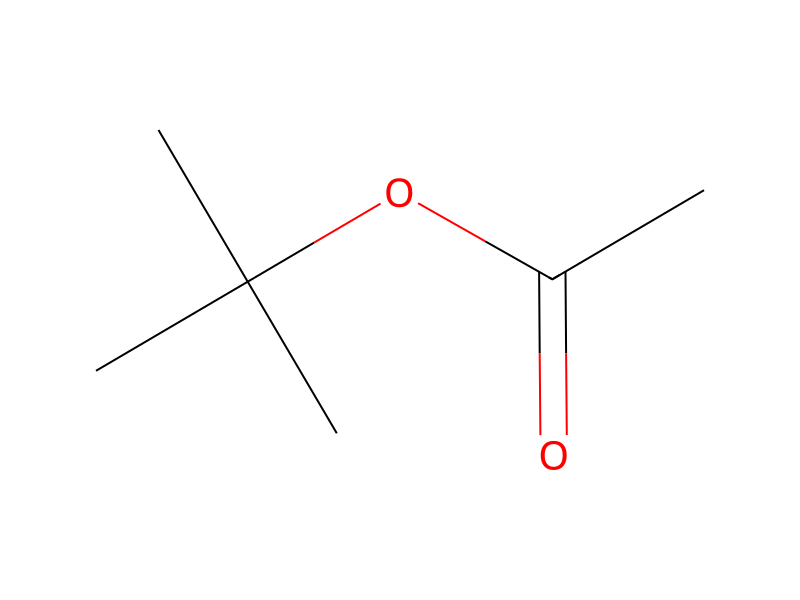
酢酸 tert-ブチル

tert-Butyl acetate

HCID 10908
ノートを作成反応を作成見積依頼を出す
印刷プレビュー

データを補完しています。しばらくしてからページを更新すると最新の内容を表示できます
基本情報概要名称と識別子物性安全と法規制化学と産業関連反応化合物ノート
部分構造検索類似構造を探す

基本情報

CAS
540-88-5
標準SMILES
CC(=O)OC(C)(C)C
InChIKey
WMOVHXAZOJBABW-UHFFFAOYSA-N
分子式
C6H12O2
平均分子量
116.16 g/mol
単同位体質量
116.08372962

概要

Tert-butyl acetate is a colorless liquid with a mild odor. Floats on water. Produces irritating vapor. (USCG, 1999)

名称と識別子

優先名称
tert-Butyl acetate
IUPAC
tert-butyl acetate
現地名
酢酸 tert-ブチル
英語名
tert-Butyl acetate
分子式
C6H12O2
分子量
116.16

名称と別名

TERT-BUTYL ACETATE540-88-5t-Butyl acetateAcetic acid, 1,1-dimethylethyl esterTexaco lead appreciatorAcetic acid, tert-butyl ester1,1-Dimethyl acetateDTXSID102205576N22HKP3XNSC-59719DTXCID702055tert-Butyl ester of acetic acid
名称をさらに表示
酢酸 tert-ブチル酢酸1,1-ジメチルエチル酢酸(tert-ブチル)tert-ブチル=アセタート酢酸tert-ブチル1,1-ジメチルエタノールアセタート酢酸t-ブチル酢酸-t-ブチルt-ブチルアセテ-ト酢酸tブチル酢酸TERT‐ブチル酢酸tert-ブチル, 99%tert-酢酸ブチルtert-ブチル アセタートTLATert-buty acetatetertiairybutylacetateTILACTBAC(TM)tertiairyAcetic acid-teCH3C(O)OC(CH3)3
RefChem:188195208-760-7tert-Butyl ethanoateAcetic Acid tert-Butyl Estertert-butylacetatetert butyl acetate1,1-dimethylethyl acetateNSC 59719

データベース識別子

CAS
540-88-5
PubChem CID
10908
DTXSID
DTXSID1022055
ChEMBL
CHEMBL3186747
UNII
76N22HKP3X
EC Number
208-760-7
Nikkaji
J3.290E

物性

構造計算による物性補完中

XLogP
1.8
極性表面積
26.3 Ų
水素結合供与体数
0
水素結合受容体数
2
回転可能結合数
2
重原子数
8
形式電荷
0
複雑度
89.2

実験および物理化学的性質

Chemical ClassesFlammable agents - 3rd degree
SolventsSolvents -> Esters (<C12)
CosmeticsCosmetic ingredients (t-Butyl Acetate) -> CIR (Cosmetic Ingredient Review)
SpringerMaterials PropertiesSchoenflies notation
LogP · 3 件

log Kow = 1.76

1.76

1.76

OdorFruity odor
Density · 6 件

0.8665 at 68 °F 0.8593 at 25 °C (USCG, 1999) - Less dense than water; will float

0.8665 g/cu cm at 20 °C

Relative density (water = 1): 0.86

0.87

0.8593 @25 °C

0.87

Color/Form · 2 件

Liquid

Colorless liquid

Solubility · 6 件

Insoluble (NIOSH, 2024)

Soluble in ethanol, ethyl ether, chloroform, acetic acid

Miscible with common industrial organic solvents

Practically insoluble in water

Solubility in water: poor

Insoluble

安全と法規制

安全情報は参考情報です。供給元の安全データシート(SDS)、適用法令、専門家による評価に代わるものではありません。

GHS分類

GHS Classification · 6 件

Danger

H225: Highly Flammable liquid and vapor [Danger Flammable liquids]

P210, P233, P240, P241, P242, P243, P280, P303+P361+P353, P370+P378, P403+P235, and P501 (click each P-code to see the statement)

This chemical does not meet GHS hazard criteria for < 0.1% (1 of 1382) of reports.

Danger

H225 (> 99.9%): Highly Flammable liquid and vapor [Danger Flammable liquids]

危険有害性情報

Regulatory Information · 6 件

Chemical: Acetic acid, 1,1-dimethylethyl ester

Regulation (EC) No 178/2002 (amended)

Acetic acid, 1,1-dimethylethyl ester is listed on the EPA's Chemical Data Reporting (CDR) system. Manufacturers and importers of Acetic acid, 1,1-dimethylethyl ester are required to report information about their production and use of this chemical to the EPA under the Toxic Substances Control Act (TSCA). (40 eCFR Part 711)

Status: Active Update: 05-10-2021 https://echa.europa.eu/registration-dossier/-/registered-dossier/10192

Acetic acid, 1,1-dimethylethyl ester: HSNO Approval: HSR001094 Approved with controls

The New Jersey Worker and Community Right to Know Act requires public and private employers to provide information about hazardous substances at their workplaces. (N.J.S.A. 34:5A-1 et. seq.)

Other Safety InformationIMAP assessments - Acetate esters (C2-C4): Human health tier II assessment
DOT LabelFlammable Liquid
Fire Hazards · 2 件

Excerpt from ERG Guide 129 [Flammable Liquids (Water-Miscible / Noxious)]:

Highly flammable. Above 15.5 °C explosive vapour/air mixtures may be formed.

Fire PotentialFlammable.
Health Hazards

化学と産業

薬理情報

Mechanism of Action... /tert-Butyl acetate/ behaved as inhibitor of acetylcholine when it combined with the acetylcholine receptor on the muscle.
Biological Half-Life... When tert-butyl acetate was added to human blood samples the... /half-life/ was 300 minutes.
Metabolism/Metabolites · 2 件

Butyl acetates are readily hydrolyzed to acid and alcohol in blood, liver, small intestines and respiratory passages, and this has been demonstrated in vitro in homogenates. ... /butyl acetates/

A continuous 5 hr-exposure to approximately 440 ppm tert-butyl acetate in air (via a tracheal canule) resulted in continuously increasing concentrations of tert-butyl acetate and tert-butyl alcohol (metabolite of tert-butyl acetate) in the blood of rats. This accumulation of tert-butyl acetate and tert-butyl alcohol was reproduced during a continuous exposure to about 900 ppm tert-butyl acetate in air over a period of 4 hr and 15 min. After the inhalation approximately 50% of the blood level of tert-butyl acetate decreased within 45 min, but that of tert-butyl alcohol remained unchanged at a high level.

用途と製造

Uses · 5 件

CIR ingredient: t-Butyl Acetate

Used as a solvent (industrial coatings, inks, adhesives, cleaners) and gasoline additive; Bananas and other fruits are food sources. [ACGIH]

Painting (Solvents) [Category: Paint]

Solvent, gasoline additive

Antiknock action enhancer of tetraethyl lead, especially at very high octane levels.

U.S. Production · 3 件

2023: 10,000,000 - <25,000,000 lb

Production volumes for non-confidential chemicals reported under the Inventory Update Rule. [Table#2260]

Production volume for non-confidential chemicals reported under the 2006 Inventory Update Rule. Chemical: Acetic acid, 1,1-dimethylethyl ester. Aggregated National Production Volume: 1 to < 10 million pounds.

Consumer Uses

関連反応

558 件

反応記録を作成
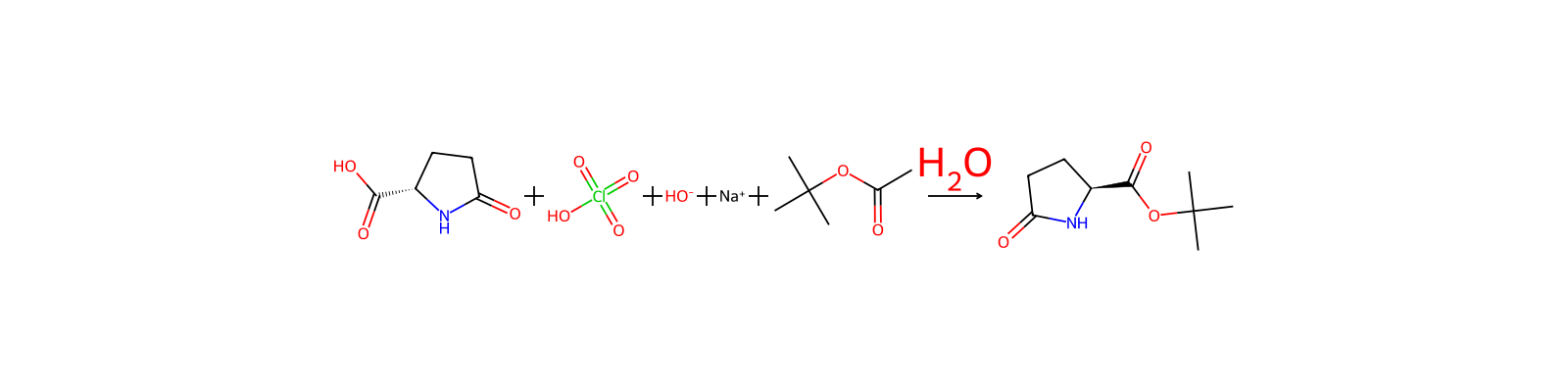
HRID 1174 の反応式
HRID 1174反応物としてuspto-grants-1998_03
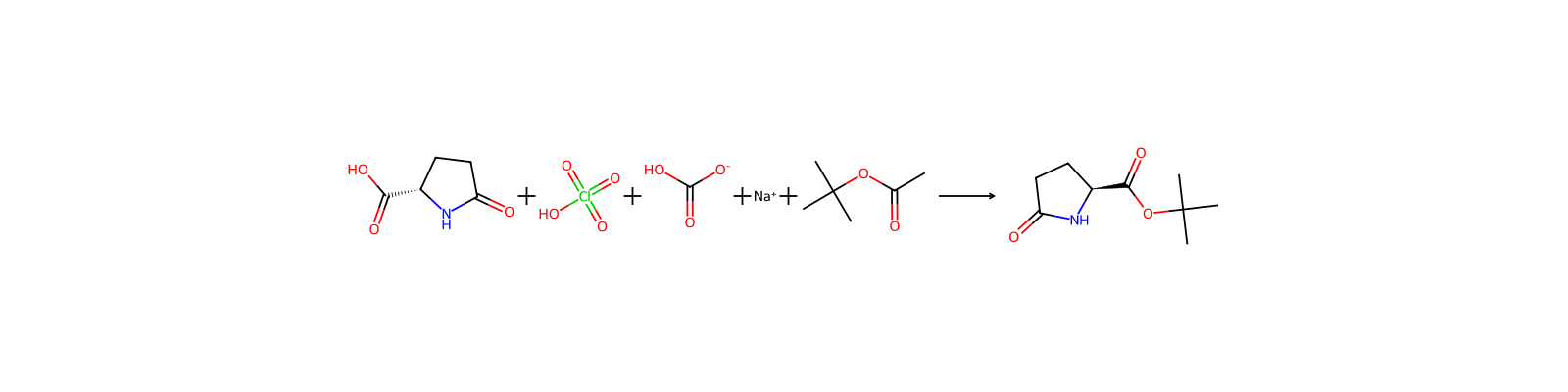
HRID 3144 の反応式
HRID 3144反応物としてuspto-grants-1998_03
HRID 10127 の反応式
HRID 10127反応物としてuspto-grants-2006_08
HRID 10418 の反応式
HRID 10418反応物としてuspto-grants-2006_08
HRID 10951 の反応式
HRID 10951反応物としてuspto-grants-2006_08
HRID 11998 の反応式
HRID 11998反応物としてuspto-grants-2010_06
HRID 21742 の反応式
HRID 21742反応物としてuspto-grants-1995_06
HRID 21743 の反応式
HRID 21743溶媒としてuspto-grants-1995_06
1 / 70 ページ

化合物ノート

読み込み中…

このページの内容基本情報概要名称と識別子物性安全と法規制化学と産業関連反応化合物ノート
その他の操作
ノートを作成反応を作成見積依頼を出す
Flash Point · 6 件

72 °F (NIOSH, 2024)

72 °F

72 °F (closed cup)

16.6 - 22.2 °C (CLOSED CUP)

15.5 °C c.c.

72 °F

Boiling Point · 6 件

208 °F at 760 mmHg (USCG, 1999)

95.1 °C

97.8 °C

208 °F

97.8 °C @760 [mm Hg]

208 °F

DecompositionWhen heated to decomposition it emits acrid smoke and irritating fumes.

物理化学的性質

融点
-62 °C · -62°C
沸点
98 °C · 98 °C
比重(密度)
0.866 g/mL · 0.866 g/mL at 20 °C(lit.)
蒸気密度
4.01 · 4.01 (vs air)
蒸気圧
41 hPa · 41 hPa (20 °C)
屈折率
20 · n20/D 1.386(lit.)
闪点
60 °F · 60 °F
貯蔵温度
30 °C · Store below +30°C.
溶解性
アルコールおよびエーテルと混和する (Windholz et al., 1983)。
外見
液体
色
無色透明
臭い (Odor)
フルーティー
臭気閾値(Odor Threshold)
0.071 ppm · 0.071ppm
爆発限界(explosive limit)
1.5 % · 1.5%(V)
水溶解度
不溶性
比熱容量
1.99 J/ · Cp(liquid): 1.99 J/(g·K), at 25℃
Merck
14 · 14,1537
BRN
1699506 · 1699506
Henry's Law Constant
1.2 · 1.2×10-2 mol/(m3Pa) at 25℃, Brockbank (2013)
化粧品成分の機能
溶媒
InChI
1S/C6H12O2/c1-5(7)8-6(2,3)4/h1-4H3
InChIKey
WMOVHXAZOJBABW-UHFFFAOYSA-N
SMILES
CC(=O)OC(C)(C)C
LogP
1.64 at · 1.64 at 21.7℃
CAS データベース
540 · 540-88-5(CAS DataBase Reference)
NISTの化学物質情報
1 · Acetic acid, 1,1-dimethylethyl ester(540-88-5)
EPAの化学物質情報
tert-Butyl acetate (540-88-5)
化学的性質 · 1 件

化学的特性tert-Butyl acetate or t-butyl acetate is a colorless flammable liquid with a camphoror blueberry-like smell. It is used as a solvent in the production of lacquers, enamels, inks, adhesives, thinners, and industrial cleaners. It is also used as an additive to improve the antiknock properties of motor fuels. tert-Butyl acetate has three isomers: n-butyl acetate, isobutyl acetate, and sec-butyl acetate.

INHALATION: Irritation of throat. EYES: Irritation. (USCG, 1999)
Hazards SummaryLiver changes were seen in animals exposed to 7900 mg/m3. [ACGIH] A throat and eye irritant; [CAMEO] Inhalation of high concentrations can cause CNS depression; [CHEMINFO]
DOT ID and Guide1123 129
Reactive GroupEsters, Sulfate Esters, Phosphate Esters, Thiophosphate Esters, and Borate Esters
EC ClassificationSymbol: F; R: 11-66; S: (2)-16-23-25-29-33; Note: C
UN ClassificationUN Hazard Class: 3; UN Pack Group: II
Special Reports · 1 件

Eighty organic cmpd, incl tert-butyl acetate, are discussed from the points of view of biological effects, toxicity (acute and subacute), genetic and carcinogenic effects. Each chapter is followed by a table summarizing toxicological data.[Damgard Nielsen G et al; Arbejdstilsynet, Arbejdsmiljoinstituttet, Rosenvaengets All'e 16-18, 2100 Kobenhavn N, Denmark, Aug 1982. 102 pages.]

安全と保護具

Fire Fighting · 2 件

Fire Extinguishing Agents Not to Be Used: Water may be ineffective.

Use carbon dioxide, dry powder, foam. In case of fire: keep drums, etc., cool by spraying with water.

First Aid Measures · 4 件

Fresh air, rest.

Remove contaminated clothes. Rinse and then wash skin with water and soap.

First rinse with plenty of water for several minutes (remove contact lenses if easily possible), then refer for medical attention.

Rinse mouth.

First Aid · 2 件

Excerpt from NIOSH Pocket Guide for tert-Butyl acetate:

(General first aid procedures)

Safe StorageFireproof. Separated from strong oxidants, strong bases and strong acids.
Exposure Control and Personal Protection20.0 [ppm]
Fire Fighting ProceduresTo fight fire, use alcohol foam, CO2, dry chemical.
Cleanup Methods · 2 件

1. Remove all ignition sources. 2. Ventilate area of spill or leak. 3. For small quantities, absorb on paper towels. Evaporate in a safe place (such as a fume hood). Allow sufficient time for evaporating vapors to completely clear the hood ductwork. Burn the paper in a suitable location away from combustible materials. Large quantities can be collected and atomized in a suitable combustion chamber.

/Absorbtion/ in vermiculite, dry sand, earth, or a similar material.

Nonfire Spill ResponseExcerpt from ERG Guide 129 [Flammable Liquids (Water-Miscible / Noxious)]:
Disposal Methods · 3 件

SRP: The most favorable course of action is to use an alternative chemical product with less inherent propensity for occupational harm/injury/toxicity or environmental contamination. Recycle any unused portion of the material for its approved use or return it to the manufacturer or supplier. Ultimate disposal of the chemical must consider: the material's impact on air quality; potential migration in soil or water; effects on animal and plant life; and conformance with environmental and public health regulations.

SRP: Wastewater from contaminant suppression, cleaning of protective clothing/equipment, or contaminated sites should be contained and evaluated for subject chemical or decomposition product concentrations. Concentrations shall be lower than applicable environmental discharge or disposal criteria. Alternatively, pretreatment and/or discharge to a permitted wastewater treatment facility is acceptable only after review by the governing authority and assurance that "pass through" violations will not occur. Due consideration shall be given to remediation worker exposure (inhalation, dermal and ingestion) as well as fate during treatment, transfer and disposal. If it is not practicable to manage the chemical in this fashion, it must be evaluated in accordance with EPA 40 CFR Part 261, specifically Subpart B, in order to determine the appropriate local, state and federal requirements for disposal.

/Proposed methods of disposal should be used on statutory requirements of the state where disposal is to occur. The usual methods would be expected to include:/ 1) Absorbing in vermiculite, dry sand, earth, or a similar material and disposing in a secured sanitary landfill. 2) Atomizing in a suitable combustion chamber.

Spillage DisposalDo NOT wash away into sewer. Collect leaking and spilled liquid in sealable containers as far as possible. Absorb remaining liquid in sand or inert absorbent. Then store and dispose of according to local regulations.
Preventive Measures · 5 件

SRP: The scientific literature for the use of contact lenses by industrial workers is inconsistent. The benefits or detrimental effects of wearing contact lenses depend not only upon the substance, but also on factors including the form of the substance, characteristics and duration of the exposure, the uses of other eye protection equipment, and the hygiene of the lenses. However, there may be individual substances whose irritating or corrosive properties are such that the wearing of contact lenses would be harmful to the eye. In those specific cases, contact lenses should not be worn. In any event, the usual eye protection equipment should be worn even when contact lenses are in place.

Employees should wash promptly when skin is wet or contaminated. Remove clothing immediately if wet or contaminated to avoid flammability hazard.

... A complete respiratory protection program should be instituted which includes regular training, maintenance, inspection, cleaning, and evaluation. ... Clothing wet with liquid tert-butyl acetate should be placed in closed containers for storage until it can be discarded or until provision is made for the removal of tert-butyl acetate from the clothing. If the clothing is to be laundered or otherwise cleaned to remove the tert-butyl acetate, the person performing the operation should be informed of tert-butyl acetate's hazardous properties.

The worker should immediately wash the skin when it becomes contaminated.

For more Preventive Measures (Complete) data for TERT-BUTYL ACETATE (6 total), please visit the HSDB record page.

Isolation and EvacuationExcerpt from ERG Guide 129 [Flammable Liquids (Water-Miscible / Noxious)]:

毒性情報

Target Organsrespiratory system, eyes, skin, central nervous system
Ecotoxicity Values · 3 件

EC50; Species: Chlorococcales (Green Algae Order); Conditions: freshwater, static; Concentration: 1300000 ug/L for 24 hr; Effect: physiology, assimilation efficiency /formulation/

LC50; Species: Daphnia magna (Water Flea) age < or =24 hr; Conditions: freshwater, static, 20-22 °C; Concentration: 4730000 ug/L for 24 hr /formulation/

LC50; Species: Pimephales promelas (Fathead minnow) age 30 days, length 20.8 mm, weight 0.136 g; Conditions: freshwater, flow through, 25 °C, pH 7.5, hardness 44.8 mg/L CaCO3, alkalinity 43.3 mg/L CaCO3, dissolved oxygen 6.7 mg/L; Concentration: 327000 ug/L for 96 hr (95% confidence interval: 296000-362000 ug/L) /99+% purity/

Environmental Fate · 3 件

TERRESTRIAL FATE: Based on a classification scheme(1), an estimated Koc value of 12(SRC), determined from a structure estimation method(2), indicates that tert-butyl acetate is expected to have very high mobility in soil(SRC). Volatilization of tert-butyl acetate from moist soil surfaces is expected to be an important fate process(SRC) given an estimated Henry's Law constant of 4.1X10⁻⁴ atm-cu m/mole(SRC), using a fragment constant estimation method(3). tert-Butyl acetate is expected to volatilize from dry soil surfaces(SRC) based upon a vapor pressure of 47 mm Hg at 25 °C(4). No biodegradation studies have been located for tert-butyl acetate, however, studies on structurally similar compounds(5-7) have shown that, in general, the ester functional group of alkyl acetates are biodegradable(SRC).

AQUATIC FATE: Based on a classification scheme(1), an estimated Koc value of 12(SRC), determined from a structure estimation method(2), indicates that tert-butyl acetate is not expected to adsorb to suspended solids and sediment(SRC). Volatilization from water surfaces is expected(3) based upon an estimated Henry's Law constant of 4.1X10⁻⁴ atm-cu m/mole(SRC), developed using a fragment constant estimation method(4). Using this Henry's Law constant and an estimation method(3), volatilization half-lives for a model river and model lake are 5.5 hours and 5 days, respectively(SRC). According to a classification scheme(5), an estimated BCF of 7(SRC), from its log Kow of 1.76(6) and a regression-derived equation(7), suggests the potential for bioconcentration in aquatic organisms is low(SRC). No biodegradation studies have been located for tert-butyl acetate, however, studies on structurally similar compounds(8-10) have shown that, in general, the ester functional group of alkyl acetates are biodegradable(SRC). Hydrolysis is expected to occur slowly based upon experimentally determined hydrolysis half-lives of 135, 14.6 and 1.5 years at pH 7, 8 and 9, respectively(11).

ATMOSPHERIC FATE: According to a model of gas/particle partitioning of semivolatile organic compounds in the atmosphere(1), tert-butyl acetate, which has a vapor pressure of 47 mm Hg at 25 °C(2), is expected to exist solely as a vapor in the ambient atmosphere. Vapor-phase tert-butyl acetate is degraded in the atmosphere by reaction with photochemically-produced hydroxyl radicals(SRC); the half-life for this reaction in air is estimated to be 36 days(SRC), calculated from its rate constant of 4.5X10⁻¹³ cu cm/molecule-sec at 25 °C(3). tert-Butyl acetate does not contain chromophores that absorb at wavelengths >290 nm(4) and therefore is not expected to be susceptible to direct photolysis by sunlight(SRC).

Food Survey Valuestert-Butyl acetate occurs naturally in bananas and other related fruits(1).
Adverse EffectsNeurotoxin - Acute solvent syndrome
Exposure Routes · 2 件

The substance can be absorbed into the body by inhalation of its vapour.

inhalation, ingestion, skin and/or eye contact

Toxicity SummarySafe in the present practices of use and concentration. Ingredient, concentration, and use information are available in documents discoverable at https://cir-reports.cir-safety.org
Signs and Symptoms · 4 件

Cough. Sore throat.

Dry skin.

Redness. Pain.

Itch, inflammation eyes; irritation upper resp tract; headache; narcosis; dermatitis

Medical SurveillanceConsider initial effects on skin and resp tract in any preplacement or periodical exam, as well as liver, and kidney function.
Soil Adsorption/Mobility · 1 件

Using a structure estimation method based on molecular connectivity indices(1), the Koc of tert-butyl acetate can be estimated to be 12(SRC). According to a classification scheme(2), this estimated Koc value suggests that tert-butyl acetate is expected to have very high mobility in soil.

Natural Pollution Sourcestert-Butyl acetate occurs in bananas and related fruits(1) and may be released into the environment as a plant volatile(SRC).
Atmospheric Concentrations · 1 件

INDOOR: Air samples were collected in 336 different industrial plants in Northern Belgium(1-2); 262 facilities contained one or more glycol esters; of these 262 facilities iso- or tert-butyl acetate was identified in 5% of operations using printing pastes and inks, 17% of those using paints and varnishes, 45% of car repair shops, and 30% of other industries(1,2).

法規制情報

TSCA Requirements · 2 件

Section 8(a) of TSCA requires manufacturers of this chemical substance to report preliminary assessment information concerned with production, exposure, and use to EPA as cited in the preamble in 51 FR 41329. Effective date 1/26/94; Reporting date: 3/28/94.

Pursuant to section 8(d) of TSCA, EPA promulgated a model Health and Safety Data Reporting Rule. The section 8(d) model rule requires manufacturers, importers, and processors of listed chemical substances and mixtures to submit to EPA copies and lists of unpublished health and safety studies. tert-Butyl acetate is included on this list. Effective date: 1/26/94; Sunset date: 6/30/98.

CERCLA Reportable Quantities · 1 件

Persons in charge of vessels or facilities are required to notify the National Response Center (NRC) immediately, when there is a release of this designated hazardous substance, in an amount equal to or greater than its reportable quantity of 5000 lb or 2270 kg. The toll free number of the NRC is (800) 424-8802. The rule for determining when notification is required is stated in 40 CFR 302.4 (section IV. D.3.b).

Clean Water Act Requirements · 1 件

tert-Butyl acetate is designated as a hazardous substance under section 311(b)(2)(A) of the Federal Water Pollution Control Act and further regulated by the Clean Water Act Amendments of 1977 and 1978. These regulations apply to discharges of this substance. This designation includes any isomers and hydrates, as well as any solutions and mixtures containing this substance.

安全データ

OEB
A
OEL
TWA: 200 ppm (950 mg/m3)
wgk
1
IDLA
1,500 ppm
tsca
TSCA listed
rtecs
AF7400000
ridadr
UN 1123 3/PG 2
毒性
LD50 orally in Rabbit: 4100 mg/kg
hs_code
29153990
risk_code
11-66
化審法
(2)-731
安衛法
57,57-2
消防法
危-4-1-II
hazard_code
F
safety_code
16-23-25-29-33
hazard_class
3
packing_group
III
Hazard Classifications
Acute Tox. 4 InhalationFlam. Liq. 2STOT SE 3
ストレージクラス
3 - Flammable liquids
有毒物質データの
540-88-5(Hazardous Substances Data)
Solvent
Industry UsesFuel agents
Methods of ManufacturingPrepared from isobutylene reacting with acetic acid in the liquid phase with vanadium pentoxide impregnated silica as catalyst and with heat to increase the yield.
Formulations/PreparationsTEXACO LEAD APPRECIATOR
Household ProductsInformation on 1 consumer products that contain T-Butyl Acetate in the following categories is provided:
General Manufacturing Information · 2 件

Wholesale and Retail Trade

Acetic acid, 1,1-dimethylethyl ester: ACTIVE

応用分野

用途酢酸tert-ブチル(さくさんターシャリーブチル、tert-Butyl acetate)もしくはt-butyl acetateは樟脳やブルーベリーに似た臭いの無色可燃性体の有機化合物である。酢酸tert-ブチルは塗料(ラッカー、エナメル)や接着剤製造あるいはシンナーや工業用クリーナーの溶媒に利用される。

用途溶剤、着香料。

調製方法

tert-Butyl acetate is prepared from isobutylene reacting with acetic acid in the liquid phase with vanadium pentoxideimpregnated silica as the catalyst and with heat to increase the yield .

純化方法Wash the ester with 5% Na2CO3 solution, then saturated aqueous CaCl2, dry with CaSO4 and distil it. [McClosky et al. Org Synth Coll Vol IV 263 1963, Mangia et al. Org Prep Proc Int 18 13 1986, Beilstein 2 IV 151.]

上流・下流製品情報

上流原料

炭酸カリウム塩化亜鉛tert-ブタノールジエチルエーテル (無水)N,N-ジメチルベンゼンアミン·塩酸塩

下流製品

ラシジピンマロン酸1-tert-ブチル3-エチルtert-butyl (4R)-4,5-diamino-5-oxopentanoatePentanoic acid, 5-hydroxy-, 1,1-dimethylethyl esterL-グルタミン酸ジ-tert-ブチルH-Glu(OMe)-OtBuN-tert-ブチルアセトアミド3-メチル-L-バリンtert-ブチル5-メチルヘキサン酸エタノール-d1 (5% D2Oを含む)L-バリンtert-ブチル4-メチル安息香酸TERT-ブチルチル