
HRID 143651反応物として
Chloroacetic anhydride
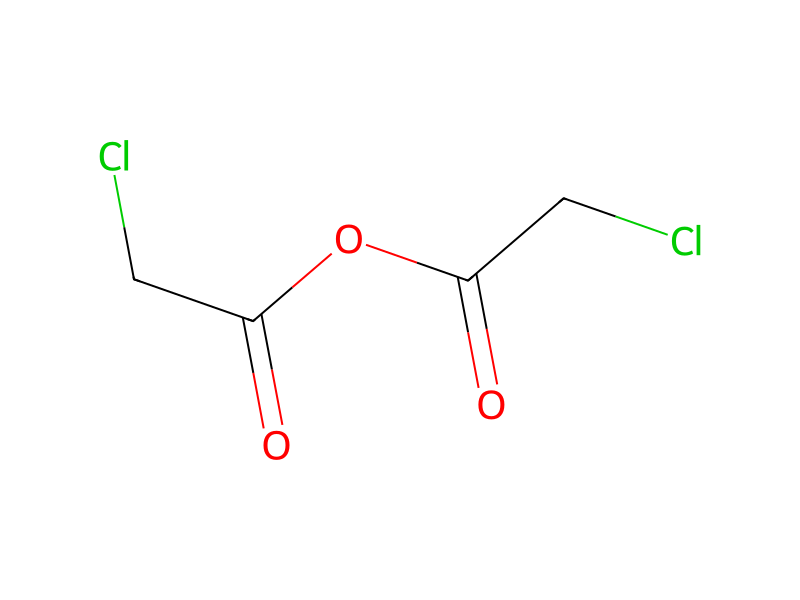
541-88-8O=C(CCl)OC(=O)CClPNVPNXKRAUBJGW-UHFFFAOYSA-N541-88-8DTXSID701014649PRISMS FROM BENZENE
Colorless to slightly yellow crystals
0.03 [mmHg]
3.72X10⁻² mm Hg @ 25 °C
化学的特性brownish semi-transparent crystals, chunks or low
安全情報は参考情報です。供給元の安全データシート(SDS)、適用法令、専門家による評価に代わるものではありません。
Danger
H301+H311+H331 (67.5%): Toxic if swallowed, in contact with skin or if inhaled [Danger Acute toxicity, oral; acute toxicity, dermal; acute toxicity, inhalation]
P260, P261, P262, P264, P264+P265, P270, P271, P272, P273, P280, P301+P316, P301+P330+P331, P302+P352, P302+P361+P354, P304+P340, P305+P354+P338, P316, P317, P321, P330, P333+P317, P361+P364, P362+P364, P363, P391, P403+P233, P405, and P501 (click each P-code to see the statement)
Aggregated GHS information provided per 154 reports by companies from 8 notifications to the ECHA C&L Inventory. Each notification may be associated with multiple companies.
Chemical: Acetic acid, chloro-, anhydride
REACH registered substance: Chloroacetic anhydride (EC: 208-794-2)
Chloroacetic anhydride: Does not have an individual approval but may be used under an appropriate group standard
A skin and eye irritant; Emergency treatment: irritants; [HSDB] Reacts with water evolving hydrochloric acid; A corrosive substance that can cause injury to the skin, eyes, and respiratory tract; Causes lacrimation and may cause edema and chemical pneumonitis after inhalation; [MSDSonline]
SRP: At the time of review, criteria for land treatment or burial (sanitary landfill) disposal practices are subject to significant revision. Prior to implementing land disposal of waste residue (including waste sludge), consult with environmental regulatory agencies for guidance on acceptable disposal practices.
SRP: The scientific literature for the use of contact lenses in industry is conflicting. The benefit or detrimental effects of wearing contact lenses depend not only upon the substance, but also on factors including the form of the substance, characteristics and duration of the exposure, the uses of other eye protection equipment, and the hygiene of the lenses. However, there may be individual substances whose irritating or corrosive properties are such that the wearing of contact lenses would be harmful to the eye. In those specific cases, contact lenses should not be worn. In any event, the usual eye protection equipment should be worn even when contact lenses are in place.
TERRESTRIAL FATE: A base-catalyzed second-order hydrolysis rate constant of 1.9X10+5 L/mole-sec(SRC) estimated using a structure estimation method(2); corresponding to half-lives of 37 and 4 seconds at pH values of 7 and 8, respectively(1). Therefore, chloroacetic anhydride will not adsorb to soil nor volatilize from moist soil due to this rapid reaction with water. Chloroacetic anhydride is not expected to volatilize from dry soil surfaces(SRC) based upon a vapor pressure of 3.72X10⁻² mm Hg(2).
AQUATIC FATE: A base-catalyzed second-order hydrolysis rate constant of 1.9X10+5 L/mole-sec(SRC) was estimated using a structure estimation method(1); this corresponds to half-lives of 37 and 4 seconds at pH values of 7 and 8, respectively(1). This hydrolysis rate indicates that chloroacetic anhydride will react rapidly with water and will not adsorb to suspended solids or sediment, volatilize, or bioconcentrate(SRC).
ATMOSPHERIC FATE: According to a model of gas/particle partitioning of semivolatile organic compounds in the atmosphere(1), chloroacetic anhydride, which has a vapor pressure of 3.72X10⁻² mm Hg at 25 °C(2), is expected to exist solely as a vapor in the ambient atmosphere. Vapor-phase chloroacetic anhydride is degraded in the atmosphere by reaction with photochemically-produced hydroxyl radicals(SRC); the half-life for this reaction in air is estimated to be 73 days(SRC), calculated from its rate constant of 2.2X10⁻¹¹ cu cm/molecule-sec at 25 °C(3) determined using a structure estimation method(3).
Using a structure estimation method based on molecular connectivity indices(1), the Koc for chloroacetic anhydride can be estimated to be 3(SRC). According to a classification scheme(2), this estimated Koc value suggests that chloroacetic anhydride is expected to have very high mobility. An estimated base-catalyzed second-order hydrolysis rate constant of 1.9X10+5 L/mole-sec(SRC) which corresponds to half-lives of 37 and 4 seconds at pH values of 7 and 8, respectively(3) will make it unlikely for chloroacetic anhydride to be mobile.
Chloroacetic anhydride (CAS# 541-88-8) was evaluated for acute dermal toxicity in six guinea pigs at a dose range of 0.1 to 1.0 g/kg. The test substance was applied as a solid moistened with water on the cuff. Toxic signs with 24-hours included moderate edema and an entire patch area necrotic with hemorrhagic ban at periphery. After 1-week there was a depressed eschar over the entire patch area with moderate erythema at periphery. After 2-weeks, a secondary eschar appeared on one rabbit and another rabbit had one depressed, and a third had scarring. Time of death was between 4 and 24 hours. The test substance was determined to be a severe skin irritant with evidence of percutaneous absorption. The LD50 was determined to be between 0/1 and 0/2 g/kg.
An estimated BCF of 3 was calculated for chloroacetic anhydride(SRC), using an estimated log Kow of -0.07(1,SRC) and a regression-derived equation(2). According to a classification scheme(3), this BCF suggests the potential for bioconcentration in aquatic organisms is low. Bioconcentration is unlikely to occur due to an estimated base-catalyzed second-order hydrolysis rate constant of 1.9X10+5 L/mole-sec(SRC) which corresponds to half-lives of 37 and 4 seconds at pH values of 7 and 8, respectively(4).
The Henry's Law constant for chloroacetic anhydride is estimated as 4.42X10⁻⁶ atm-cu m/mole(SRC) using a fragment constant estimation method(1). This Henry's Law constant indicates that chloroacetic anhydride could volatilize from water surfaces(2) if it did not hydrolyze. A base-catalyzed second-order hydrolysis rate constant of 1.9X10+5 L/mole-sec(SRC) which corresponds to half-lives of 37 and 4 seconds at pH values of 7 and 8, respectively(4), makes chloroacetic anhydride very susceptible to hydrolysis. Chloroacetic anhydride is not expected to volatilize from dry soil surfaces(SRC) based upon a vapor pressure of 3.72X10⁻² mm Hg(3).
The rate constant for the vapor-phase reaction of chloroacetic anhydride with photochemically-produced hydroxyl radicals has been estimated as 2.2X10⁻¹¹ cu cm/molecule-sec at 25 °C(SRC) using a structure estimation method(1). This corresponds to an atmospheric half-life of about 73 days at an atmospheric concentration of 5X10+5 hydroxyl radicals per cu cm(1). A base-catalyzed second-order hydrolysis rate constant of 1.9X10+5 L/mole-sec(SRC) was estimated using a structure estimation method(2); this corresponds to half-lives of 37 and 4 seconds at pH values of 7 and 8, respectively(2).
Chloroacetic anhydride's production and use as an intermediate for cellulose chloroacetate may result in its release to the environment through various waste streams. If released to air, a vapor pressure of 3.72X10⁻² mm Hg at 25 °C indicates chloroacetic anhydride will exist solely as a vapor in the ambient atmosphere. Vapor-phase chloroacetic anhydride will be degraded in the atmosphere by reaction with photochemically-produced hydroxyl radicals; the half-life for this reaction in air is estimated to be 73 days. If released to soil, chloroacetic anhydride will rapidly react with water; an estimated base-catalyzed second-order hydrolysis rate constant of 1.9X10+5 L/mole-sec corresponds to half-lives of 37 and 4 seconds at pH values of 7 and 8, respectively. Chloroacetic anhydride is not expected to volatilize from dry soil surfaces based upon its vapor pressure. If released into water, chloroacetic anhydride will react rapidly with water and will not adsorb to suspended solids or sediment, volatilize or bioconcentrate. Occupational exposure to chloroacetic anhydride may occur through inhalation and dermal contact with this compound at workplaces where chloroacetic anhydride is produced or used. (SRC)
Used in the N-acetylation of amino acids and to make cellulose chloroacetates; [Merck Index] No evidence of commercial production in the US; [HSDB]
In N-acetylation of amino acids in alkaline soln; prepn of cellulose chloroacetates.
CHEM INT FOR CELLULOSE CHLOROACETATE
REAGENT FOR N-ACETYLATION OF AMINO ACIDS IN ALKALINE SOLN
(1979) NO EVIDENCE OF COMMERCIAL PRODN IN U.S.
(1981) NO EVIDENCE OF COMMERCIAL PRODN IN U.S.
Prepd by treating monochloroacetic acid in tetrahydrofuran with methoxyacetylene @ 15 °C and distilling the mixt ... By mixing monochloroacetic acid and hydrogen cyanide with 1,4-dioxane saturated with hydrogen chloride and fractionating the mixt ... By heating chloroacetyl chloride with monochloroacetic acid in the presence of aluminum chloride.
REACTION OF CHLORACETIC ACID WITH CHLORACETYL CHLORIDE & ALUMINUM CHLORIDE CATALYST
用途アセチル化剤。
使用Chloroacetic anhydride has been used in the synthesis of 3,3-bis(sulfonato)-4,4-bis(chloroacetamido)azobenzene (BSBCA), a water-soluble, thiol-reactive and photo-switchable cross-linker, D,L-7-azatryptophan, 2-methyl-[3,4-di-O-acetyl-6-O-(chloroacetyl)-1,2-dideoxy-α-D-glucopyrano]-[2,1:4,5]-2-oxazoline.
製造方法chloroacetic anhydride Synthesis: Powdered s odium monochloroacetate(113.3g, 1.138 mol) was added slowly for a period of 15 min at room temperature (which slowly raises to 60°C) to a stirred solution of commercially available chloroaceyl chloride (127.5g, 1mol) in dry benzene (136mL) was refluxed for 9h. Salts were filtered off, the filtrate was cooled to room temperature, diluted with n-hexane and further cooled to 0°C. The solid separated was then filtered, washed with dry hexane and dried to yield chloroacetic anhydride as white crystalline compound in 60% yield (80g); mp=46-49°C [Lit. mp=46°C]. Alternatively, the benzene layer was directly subjected to high vacuum distillation.The product collected at 109-10°C at 10mm vacuum on cooling chloroacetic anhydride in lump form in 70 % yield (93g). It was observed that, the latter method gives anhydride in lump form while the former method gives in crystalline form.
純化方法Crystallise the it from *benzene. [Eglinton et al. J Chem Soc 1860 1954, Beilstein 2 IV 487.]


