ホームMCPワークベンチSkills
ホームワークベンチ通知マイページ
llms.txt · MCPガイドプライバシーポリシー · 利用規約 · サポートv1.8.0
  1. ホーム
  2. /化合物

チオシアン酸メチル

Methyl thiocyanate

HCID 11168
ノートを作成反応を作成見積依頼を出す
印刷プレビュー
基本情報概要名称と識別子物性安全と法規制化学と産業関連反応化合物ノート
部分構造検索類似構造を探す

基本情報

CAS
556-64-9
標準SMILES
CSC#N
InChIKey
VYHVQEYOFIYNJP-UHFFFAOYSA-N
分子式
C2H3NS
平均分子量
73.12 g/mol
単同位体質量
72.9986201

概要

Methyl thiocyanate is a colorless liquid and an odor of onions. Used as an agricultural insecticide, a fumigant and as a research chemical. No evidence of commercial production in the U.S. (EPA, 1998)

名称と識別子

優先名称
Methyl thiocyanate
IUPAC
methyl thiocyanate
現地名
チオシアン酸メチル
英語名
Methyl thiocyanate
分子式
C2H3NS
分子量
73.12

名称と別名

METHYL THIOCYANATE556-64-9Methyl sulfocyanateMethylrhodanidThiocyanic acid, methyl esterMethyl rhodanateMethylthiokyanatMethane, thiocyanato-CH3SCNMeSCN(methylsulfanyl)carbonitrile55I23VY6IE
名称をさらに表示
チオシアン酸メチルメチルロダニドメチルチオシアナートメチルチオシアニドメチルチオシアネ-トメチルチオシアネート(メチルチオ)シアニドmethylrhodanateThiocyanomethaneMETHYL RHODANIDEMethylsalfocyanateMethylethiocyanatemethylsulfocyanate
NSC-9368DTXSID5060304CHEBI:61112RefChem:158037DTXCID2041915209-134-6thiocyanatomethaneThiocyanic Acid Methyl Ester

データベース識別子

CAS
556-64-9
PubChem CID
11168
DTXSID
DTXSID5060304
ChEBI
CHEBI:61112
UNII
55I23VY6IE
EC Number
209-134-6
Nikkaji
J3.296D

物性

構造計算による物性

XLogP
0.9
極性表面積
49.1 Ų
水素結合供与体数
0
水素結合受容体数
2
回転可能結合数
0
重原子数
4
形式電荷
0
複雑度
41.2

実験および物理化学的性質

Chemical ClassesFlammable agents - 2nd degree
SpringerMaterials PropertiesCoriolis coupling
PesticidesPesticides -> Other Insecticides
OdorONION ODOR
Density · 3 件

1.068 at 77 °F (EPA, 1998) - Denser than water; will sink

1.068 g/cu cm at 25 °C

1.068 @25 °C

Color/FormCOLORLESS LIQUID
Solubility · 2 件

VERY SLIGHTLY SOL IN WATER; MISCIBLE WITH ALC, ETHER

Soluble in carbon tetrachloride.

Boiling Point · 2 件

266 to 271 °F at 760 mmHg (EPA, 1998)

130-133 °C

DecompositionWhen heated to decomposition it emits very toxic fumes of NOx and SOx.
Melting Point · 3 件

-60 °F (EPA, 1998)

-51 °C

-51 °C

Vapor Pressure · 3 件

安全と法規制

安全情報は参考情報です。供給元の安全データシート(SDS)、適用法令、専門家による評価に代わるものではありません。

GHS分類

GHS Classification · 4 件

Danger

H226 (98%): Flammable liquid and vapor [Warning Flammable liquids]

P210, P233, P240, P241, P242, P243, P260, P261, P262, P264, P264+P265, P270, P271, P280, P284, P301+P316, P302+P352, P303+P361+P353, P304+P340, P305+P351+P338, P316, P319, P320, P321, P330, P332+P317, P337+P317, P361+P364, P362+P364, P370+P378, P403+P233, P403+P235, P405, and P501 (click each P-code to see the statement)

Aggregated GHS information provided per 49 reports by companies from 7 notifications to the ECHA C&L Inventory. Each notification may be associated with multiple companies.

危険有害性情報

Regulatory Information · 3 件

Chemical: Thiocyanic acid, methyl ester

Methyl thiocyanate: Does not have an individual approval but may be used under an appropriate group standard

The New Jersey Worker and Community Right to Know Act requires public and private employers to provide information about hazardous substances at their workplaces. (N.J.S.A. 34:5A-1 et. seq.)

DOT LabelPoison Flammable Liquid
Fire Hazards · 1 件

When heated to decomposition, it emits very toxic fumes of oxides of nitrogen and sulfur. (Non-Specific -- Thiocyanates) Incompatible with nitric acid. Violent reactions have occurred when mixed with chlorates, nitrates, nitric acid, organic peroxides, peroxides, potassium chlorate, and sodium chlorate. This material is volatile. (EPA, 1998)

Health HazardsThis material is highly toxic if ingested. It is a rapidly acting poison. (EPA, 1998)
Hazards Summary · 1 件

Releases cyanide after absorption into the body; Onset of symptoms may be delayed; [HSDB] Causes somnolence and convulsions in lethal dose studies of animals; [RTECS] A fast acting poison; [CAMEO] An irritant and lachrymator; Toxic by ingestion, inhalation, or skin absorption; May cause burns after skin contact and lung edema after inhalation; [Aldrich MSDS]

化学と産業

薬理情報

Metabolism/Metabolites · 3 件

ENZYMES IN THE LIVER AND PERHAPS OTHER ORGANS ARE KNOWN TO LIBERATE CYANIDE ION FROM METHYL...THIOCYANATE... GLUTATHIONE S-TRANSFERASE CATALYZES THE ATTACK OF REDUCED GLUTATHIONE @ THIOCYANATE SULFUR, RESULTING IN LIBERATION OF HYDROGEN CYANIDE, OXIDIZED GLUTATHIONE & THE MERCAPTAN MOIETY OF THE ORGANOTHIOCYANATE.

METHYL THIOCYANATE UP TO 5 MMOL REDUCED THE HYDROGEN ION SECRETION OF BULLFROG, RANA CATESBEIANA, GASTRIC MUCOSA WITHOUT EXHIBITING ANY APPRECIABLE INHIBITORY EFFECT ON MICROSOMAL ATPASE ACTIVITY. NO CONVERSION OF METHYL THIOCYANATE TO THIOCYANATE ION, A POTENT INHIBITOR OF GASTRIC ACID SECRETION, WAS DEMONSTRATED IN THE GASTRIC MUCOSA.

Organic nitriles are converted into cyanide ions through the action of cytochrome P450 enzymes in the liver. Cyanide is rapidly absorbed and distributed throughout the body. Cyanide is mainly metabolized into thiocyanate by either rhodanese or 3-mercaptopyruvate sulfur transferase. Cyanide metabolites are excreted in the urine. (L96)

用途と製造

Uses · 6 件

Used as an agricultural insecticide, fumigant, pharmaceutical intermediate, and research chemical; [HSDB]

Farming (Pesticides) [Category: Industry]

AGRICULTURAL INSECTICIDE

FUMIGANT

RESEARCH CHEMICAL

Chemical and pharmaceutical intermediate.

U.S. Exports · 2 件

(1979) No Data

(1981) No Data

U.S. Imports · 2 件

(1979) No Data

(1981) No Data

U.S. Production · 2 件

(1979) NO EVIDENCE OF COMMERCIAL PRODN IN U.S.

(1981) NO EVIDENCE OF COMMERCIAL PRODN IN U.S.

Methods of Manufacturing...FROM DIMETHYL SULFATE AND AQ BARIUM THIOCYANATE.
Formulations/Preparations99% Colorless liquid grade

関連反応

41 件
反応記録を作成
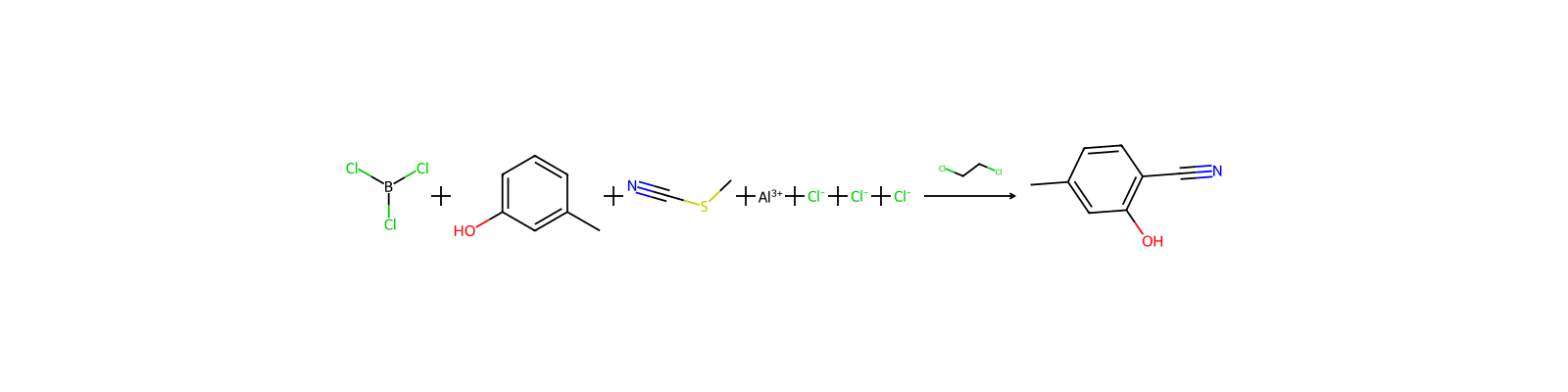
HRID 8915 の反応式
HRID 8915反応物としてuspto-grants-2006_08
HRID 101198 の反応式
HRID 101198反応物としてTraining data from https://doi.org/10.1039/C8SC04228D (2/10)
HRID 106524 の反応式
HRID 106524反応物としてTraining data from https://doi.org/10.1039/C8SC04228D (2/10)
HRID 131156 の反応式
HRID 131156反応物としてuspto-grants-2008_06
HRID 131159 の反応式
HRID 131159反応物としてuspto-grants-2008_06
HRID 131162 の反応式
HRID 131162反応物としてuspto-grants-2008_06
HRID 144624 の反応式
HRID 144624反応物としてTraining data from https://doi.org/10.1039/C8SC04228D (9/10)
HRID 165795 の反応式
HRID 165795反応物としてTraining data from https://doi.org/10.1039/C8SC04228D (9/10)
1 / 6 ページ

化合物ノート

読み込み中…

このページの内容基本情報概要名称と識別子物性安全と法規制化学と産業関連反応化合物ノート
その他の操作
ノートを作成反応を作成見積依頼を出す

10 mmHg at 70.88 °F (EPA, 1998)

12.1 [mmHg]

12.1 mm Hg at 25 °C

Refractive Index · 2 件

INDEX OF REFRACTION: 1.4669 @ 25 °C/D

INDEX OF REFRACTION: 1.4697 @ 20 °C/D

物理化学的性質

融点
-5 °C · -5 °C
沸点
131 °C · 131 °C
比重(密度)
1.08 · 1.08
屈折率
1.467 · 1.467-1.469
闪点
38 °C · 38 °C
貯蔵温度
Poison room
水溶解度
Practically insoluble in water
溶解性
Chloroform (Soluble), Methanol (Slightly)
外見
液体
色
無色透明~薄黄色
臭い (Odor)
0.01 · プロピレングリコール中0.01%。硫黄タマネギ
Merck
14 · 14,6127
Henry's Law Constant
2.2 · 2.2×10-1 mol/(m3Pa) at 25℃, HSDB (2015)
Dielectric constant
4.3 · 4.3(19℃)
InChI
1S/C2H3NS/c1-4-2-3/h1H3
InChIKey
VYHVQEYOFIYNJP-UHFFFAOYSA-N
SMILES
CSC#N
LogP
0.502 · 0.502 (est)
CAS データベース
556 · 556-64-9(CAS DataBase Reference)
NISTの化学物質情報
Thiocyanic acid, methyl ester(556-64-9)
EPAの化学物質情報
Methyl thiocyanate (556-64-9)

化学的性質

化学的特性Methyl thiocyanate is a colorless liquid. Onion-like odor

Reactive GroupIsocyanates and Isothiocyanates
Reactivity Profile · 1 件

METHYL THIOCYANATE is a moderately toxic liquid, flammable. Violent, possibly explosive oxidation reaction when mixed with chlorates, nitrates, nitric acid, organic or inorganic peroxides, perchlorates. On contact with mineral acids or acid fumes deadly toxic hydrogen cyanide gas is produced. When heated to decomposition or on contact with mineral acids it emits highly toxic fumes of nitriles, oxides of sulfur and nitrogen [Lewis, 3rd ed., 1993, p. 879, 1234].

Air and Water ReactionsVery slightly soluble in water [Merck].
CERCLA Reportable Quantities · 1 件

Releases of CERCLA hazardous substances are subject to the release reporting requirement of CERCLA section 103, codified at 40 CFR part 302, in addition to the requirements of 40 CFR part 355. Methyl thiocyanate is an extremely hazardous substance (EHS) subject to reporting requirements when stored in amounts in excess of its threshold planning quantity (TPQ) of 10,000 lbs.

Hazard Classes and Categories · 2 件

Flam. Liq. 3 (98%)

Flammable agents - 2nd degree, Reactive agents - 1st degree

DHS Chemicals of Interest (COI) · 4 件

Methyl thiocyanate

1

20000

Toxic chemical that can be released at a facility.

Skin, Eye, and Respiratory Irritations... irritant to skin & eyes. ... /Aliphatic thiocyanates/

安全と保護具

Fire Fighting · 1 件

(Non-Specific -- Pesticide, Liquid, n.o.s.) Keep unnecessary people away; isolate hazard area and deny entry. Stay upwind; keep out of low areas. Ventilate closed spaces before entering them. Wear positive pressure breathing apparatus and special protective clothing. Remove and isolate contaminated clothing at the site. If water pollution occurs, notify appropriate authorities.

First AidNote: Methyl thiocyanate is very readily absorbed through the skin.
Nonfire Spill Response · 1 件

Avoid inhalation and skin contact. (Non-Specific -- Pesticide, Liquid, n.o.s.) Do not touch spilled material; stop leak if you can do so without risk. Use water spray to reduce vapors. For small spills, absorb with sand or other noncombustible absorbent material and place into containers for later disposal. For large spills, dike far ahead of spill for later disposal. (EPA, 1998)

Disposal Methods · 1 件

SRP: At the time of review, criteria for land treatment or burial (sanitary landfill) disposal practices are subject to significant revision. Prior to implementing land disposal of waste residue (including waste sludge), consult with environmental regulatory agencies for guidance on acceptable disposal practices.

Isolation and EvacuationExcerpt from ERG Guide 131 [Flammable Liquids - Toxic]:
Protective Action Criteria (PAC) · 3 件

0.18 [mg/m3]

2.0 [mg/m3]

12 [mg/m3]

Personal Protective Equipment (PPE) · 1 件

For emergency situations, wear a positive pressure, pressure-demand, full facepiece self-contained breathing apparatus (SCBA) or pressure- demand supplied air respirator with escape SCBA and a fully-encapsulating, chemical resistant suit. (EPA, 1998)

Acute Exposure Guideline Levels (AEGLs)The compound is currently at the Holding Status AEGLs which have been reviewed by the NAC/AEGL Committee and are on hold due to insufficient data to develop AEGL values.
AEGLs NotesAEGLs Status: Holding

毒性情報

Treatment · 1 件

Antidotes to cyanide poisoning include hydroxocobalamin and sodium nitrite, which release the cyanide from the cytochrome system, and rhodanase, which is an enzyme occurring naturally in mammals that combines serum cyanide with thiosulfate, producing comparatively harmless thiocyanate. Oxygen therapy can also be administered. (L97)

Health Effects · 1 件

Exposure to high levels of cyanide for a short time harms the brain and heart and can even cause coma, seizures, apnea, cardiac arrest and death. Chronic inhalation of cyanide causes breathing difficulties, chest pain, vomiting, blood changes, headaches, and enlargement of the thyroid gland. Skin contact with cyanide salts can irritate and produce sores. (L96, L97)

Environmental Fate · 3 件

TERRESTRIAL FATE: Based on a recommended classification scheme(1), an estimated Koc value of 8.3(SRC), determined from a structure estimation method(2), indicates that methyl thiocyanate is expected to have very high mobility in soil(SRC). Volatilization of methyl thiocyanate from moist soil surfaces is expected (SRC) based upon an estimated Henry's Law constant of 4.4X10⁻⁵ atm-cu m/mole(SRC), using a fragment constant estimation method(3). The potential for volatilization of methyl thiocyanate from dry soil surfaces is expected to exist(SRC) based on a measured vapor pressure of 12 mm Hg(4). Based upon a group contribution method for predicting the probability and rate of aerobic biodegradation(5), methyl thiocyanate has been estimated to biodegrade fast with primary biodegradation occurring over a period of days to weeks(SRC).

AQUATIC FATE: Based on a recommended classification scheme(1), an estimated Koc value of 8.3(SRC), determined from a structure estimation method(2), indicates that methyl thiocyanate is not expected to adsorb to suspended solids and sediment in water(SRC). Methyl thiocyanate is expected to volatilize from water surfaces(3,SRC) based on an estimated Henry's Law constant of 4.4X10⁻⁵ atm-cu m/mole(SRC), developed using a fragment constant estimation method(4). Estimated volatilization half-lives for a model river and model lake are 20 hours and 8.6 days, respectively(3,SRC). According to a classification scheme(5), an estimated BCF value of 2.1(3,SRC), from an estimated log Kow(6,SRC), suggests that bioconcentration in aquatic organisms is low(SRC). Based upon a group contribution method for predicting the probability and rate of aerobic biodegradation(7), methyl thiocyanate has been estimated to be highly biodegraded with ultimate biodegradation occurring over a period of weeks(SRC).

ATMOSPHERIC FATE: According to a model of gas/particle partitioning of semivolatile organic compounds in the atmosphere(1), methyl thiocyanate, which has an measured vapor pressure of 12 mm Hg at 25 °C(2,SRC), is expected to exist solely as a vapor in the ambient atmosphere. Vapor-phase methyl thiocyanate is degraded in the atmosphere by reaction with photochemically-produced hydroxyl radicals(SRC); the half-life for this reaction in air is estimated to be about 15 days(3,SRC).

Adverse EffectsOther Poison - Chemical Asphyxiant
Exposure RoutesOral (L96) ; inhalation (L96) ; dermal (L96)
Toxicity Summary · 1 件

Organic nitriles decompose into cyanide ions both in vivo and in vitro. Consequently the primary mechanism of toxicity for organic nitriles is their production of toxic cyanide ions or hydrogen cyanide. Cyanide is an inhibitor of cytochrome c oxidase in the fourth complex of the electron transport chain (found in the membrane of the mitochondria of eukaryotic cells). It complexes with the ferric iron atom in this enzyme. The binding of cyanide to this cytochrome prevents transport of electrons from cytochrome c oxidase to oxygen. As a result, the electron transport chain is disrupted and the cell can no longer aerobically produce ATP for energy. Tissues that mainly depend on aerobic respiration, such as the central nervous system and the heart, are particularly affected. Cyanide is also known produce some of its toxic effects by binding to catalase, glutathione peroxidase, methemoglobin, hydroxocobalamin, phosphatase, tyrosinase, ascorbic acid oxidase, xanthine oxidase, succinic dehydrogenase, and Cu/Zn superoxide dismutase. Cyanide binds to the ferric ion of methemoglobin to form inactive cyanmethemoglobin. (L97)

Signs and SymptomsCyanide poisoning is identified by rapid, deep breathing and shortness of breath, general weakness, giddiness, headaches, vertigo, confusion, convulsions/seizures and eventually loss of consciousness. (L96, L97)
Soil Adsorption/Mobility · 1 件

Using a structure estimation method based on molecular connectivity indices(1), the Koc for methyl thiocyanate can be estimated to be about 8.3(SRC). According to a recommended classification scheme(2), this estimated Koc value suggests that methyl thiocyanate is expected to have very high mobility in soil(SRC).

Natural Pollution SourcesMethyl thiocyanate is of anthropogenic origin, and is not known to be produced by natural sources. (SRC)
Human Toxicity Excerpts · 4 件

SYMPTOMATOLOGY (LARGELY INFERRED FROM ANIMAL TESTS): 1. INGESTION OF CONCN SOLN MAY LEAD TO VOMITING BECAUSE OF MUCOSAL IRRITATION. ... 5. MASSIVE SKIN CONTAMINATION WITH ORGANIC THIOCYANATE SOLN MAY PRODUCE SYSTEMIC POISONING...&...LOCAL IRRITATION & DERMATITIS. /ALIPHATIC THIOCYANATES/

SYMPTOMATOLOGY (LARGELY INFERRED FROM ANIMAL TESTS): 6. IN NONFATAL CASES EVIDENCE OF INJURIES TO THE LIVER & KIDNEYS MAY APPEAR. /ALIPHATIC THIOCYANATES/

...METHYL.../THIOCYANATE IS/ RAPIDLY ACTING /POISON/...OF HIGH POTENCY...

THE SIGNS AND SYMPTOMS OF KEROSENE POISONING ARE OFTEN DOMINANT AFTER EXPOSURES TO DILUTE SOLN OF THIOCYANATE INSECTICIDES. /ALIPHATIC THIOCYANATES/

Artificial Pollution SourcesMethyl thiocyanate's production and use as a chemical and pharmaceutical intermediate(1) may result in its release to the environment(SRC).
Environmental BiodegradationBased upon a group contribution method for predicting the probability and rate of aerobic biodegradation(1), methyl thiocyanate has been estimated to biodegrade fast with primary biodegradation occurring over a period of days to weeks(SRC).

法規制情報

CERCLA Reportable Quantities · 1 件

Releases of CERCLA hazardous substances are subject to the release reporting requirement of CERCLA section 103, codified at 40 CFR part 302, in addition to the requirements of 40 CFR part 355. Methyl thiocyanate is an extremely hazardous substance (EHS) subject to reporting requirements when stored in amounts in excess of its threshold planning quantity (TPQ) of 10,000 lbs.

DHS Chemicals of Interest (COI) · 4 件

Methyl thiocyanate

1

20000

Toxic chemical that can be released at a facility.

安全データ

wgk
3
tsca
TSCA listed
rtecs
XL1575000
ridadr
UN1992
毒性
LD50 i.p. in mice: 315 nmoles/g (Ohkawa)
hs_code
29309099
risk_code
23/24/25-10-36/37
消防法
危-4-2-III
hazard_code
T
safety_code
28A-27-26-16-45-36/37/39
hazard_class
3
packing_group
III
Hazard Classifications
Acute Tox. 3 DermalAcute Tox. 3 InhalationAcute Tox. 3 OralEye Irrit. 2Flam. Liq. 3STOT SE 3
ストレージクラス
3 - Flammable liquids
有毒物質データの
556-64-9(Hazardous Substances Data)
General Manufacturing InformationThiocyanic acid, methyl ester: ACTIVE

応用分野

一般的な説明Colorless liquid and an odor of onions. Used as an agricultural insecticide, a fumigant and as a research chemical. No evidence of commercial production in the U.S.

上流・下流製品情報

上流原料

チオシアノカリウム4-フルオロチオアニソール

下流製品

メタンスルホン酸シアヌル酸クロリドチオシアン酸ブチル2-アミノ-5-(メチルチオ)-1,3,4-チアジアゾールペルクロロメチルメルカプタンIsoquinoline, 3,4-dihydro-3,3,6-trimethyl-1-(methylthio)-ジチオりん酸O,O-ジエチルS-メチル2-[(1-methylpiperidin-4-yl)amino]benzonitrile

補足説明

定義ChEBI: Methyl thiocyanate is a member of the class of thiocyanates, being the methyl ester of thiocyanic acid.