
亜鉛ジシアニド
Zinc cyanide (Zn(CN)2)
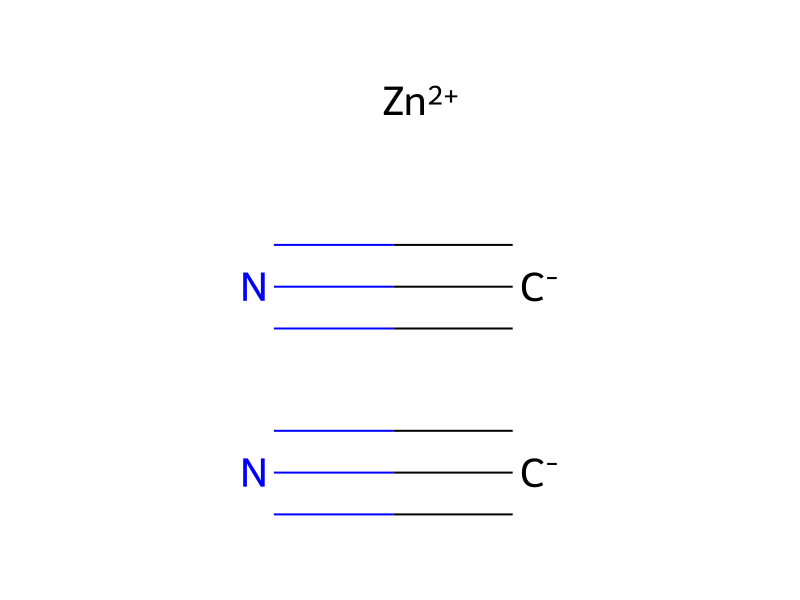
基本情報
- CAS
557-21-1- 標準SMILES
[C-]#N.[C-]#N.[Zn+2]- InChIKey
GTLDTDOJJJZVBW-UHFFFAOYSA-N- 分子式
- C2N2Zn
- 平均分子量
- 117.4 g/mol
- 単同位体質量
- 115.93529
概要
Zinc cyanide is a chemical compound of zinc and cyanide. It is used in organic synthesis. Zinc is a metallic element with the atomic number 30. It is found in nature most often as the mineral sphalerite. Though excess zinc in harmful, in smaller amounts it is an essential element for life, as it is a cofactor for over 300 enzymes and is found in just as many transcription factors. (L48, L49, L65)
名称と識別子
- 優先名称
- Zinc cyanide (Zn(CN)2)
- IUPAC
- zinc dicyanide
- 現地名
- 亜鉛ジシアニド
- 英語名
- ZINC CYANIDE
- 分子式
- C2N2Zn
- 分子量
- 117.43
名称と別名
zinc;dicyanideZinc cyanide (Zn(CN)2)dicyanozincZinc cyanide Zn(CN)2Cyanure de zinc [French]RCRA waste no. P121RCRA waste number P121dicyano zincCyanure de zincHSDB 1051EINECS 209-162-9UN1713
名称をさらに表示
シアン化亜鉛亜鉛ジシアニドジシアノ亜鉛青化亜鉛シアン化シアン化亜鉛(II)シアン化亜鉛, 98%Zn(Cn)2ZinkcyanidZINC CYANIDEcyanuredezinczincdicyanideZinc cyanide, purercrawastenumberp121zinccyanide(zn(cn)2)
Zinc cyanide, 98%BRN 4124366AI3-28752SCHEMBL360531UNII-04392RL5SRVJHHEOJUJAQMPF-UHFFFAOYSA-NZinc cyanide [UN1713] [Poison]BP-21167
データベース識別子
- CAS
557-21-1- PubChem CID
- 11186
- Nikkaji
- J44.262C
物性
構造計算による物性
- 極性表面積
- 47.6 Ų
- 水素結合供与体数
- 0
- 水素結合受容体数
- 4
- 回転可能結合数
- 0
- 重原子数
- 5
- 形式電荷
- 0
- 複雑度
- 31.6
物理化学的性質
- 融点
- 800 °C · 800 °C
- 比重(密度)
- 1 · 1,85 g/cm3
- 蒸気圧
- 0 Pa · 0Pa at 25℃
- 溶解性
- Aqueous Base (Sparingly)
- 外見
- 粉
- 色
- ホワイトからオフホワイト
- 水溶解度
- アルカリ、シアン化カリウム、アンモニアに可溶。水およびほとんどの溶剤に不溶。
- Merck
- 14 · 14,10135
- BRN
- 4124366 · 4124366
- 安定性
- Moisture Sensitive
- InChI
- 1S/2CN.Zn/c2*1-2;
- InChIKey
- VJHHEOJUJAQMPF-UHFFFAOYSA-N
- SMILES
- N#C[Zn]C#N
- LogP
- -2.31 at · -2.31 at 25℃
- CAS データベース
- 557 · 557-21-1(CAS DataBase Reference)
- EPAの化学物質情報
- Zinc cyanide (557-21-1)
化学的性質
化学的特性Colorless crystalline solid or white powder. Slight, bitter almond odor. Sinks in water; insoluble.
安全と法規制
安全情報は参考情報です。供給元の安全データシート(SDS)、適用法令、専門家による評価に代わるものではありません。
危険有害性情報
CSL Reaction Information
CSL00046
N,N-DIMETHYLFORMAMIDE + 2-CHLORO-5-FLUOROPYRIMIDINE + ZINC CYANIDE
Violent thermal exotherm at >100oC
Harmful,Toxic
Heteroaryl chloride
Cyanation
安全と保護具
Minimum Risk LevelIntermediate Oral: 0.3 mg/kg/day (L134)
Chronic Oral: 0.3 mg/kg/day (L134)
毒性情報
Treatment
Zinc poisoning is treated symptomatically, often by administering fluids such as water or milk, or with gastric lavage. Antidotes to cyanide poisoning include hydroxocobalamin and sodium nitrite, which release the cyanide from the cytochrome system, and rhodanase, which is an enzyme occurring naturally in mammals that combines serum cyanide with thiosulfate, producing comparatively harmless thiocyanate. Oxygen therapy can also be administered. (L49, L97)
Health Effects
Chronic exposure to zinc causes anemia, atazia, lethargy, and decreases the level of good cholesterol in the body. It is also believed to cause pancreatic and reproductive damage. Exposure to high levels of cyanide for a short time harms the brain and heart and can even cause coma, seizures, apnea, cardiac arrest and death. Chronic inhalation of cyanide causes breathing difficulties, chest pain, vomiting, blood changes, headaches, and enlargement of the thyroid gland. Skin contact with cyanide salts can irritate and produce sores. (L49, L96, L97)
Exposure RoutesInhalation (L96) ; oral (L96) ; dermal (L96)
Toxicity Summary
Anaemia results from the excessive absorption of zinc suppressing copper and iron absorption, most likely through competitive binding of intestinal mucosal cells. Unbalanced levels of copper and zinc binding to Cu,Zn-superoxide dismutase has been linked to amyotrophic lateral sclerosis (ALS). Stomach acid dissolves metallic zinc to give corrosive zinc chloride, which can cause damage to the stomach lining. Metal fume fever is thought to be an immune response to inhaled zinc. Organic nitriles decompose into cyanide ions both in vivo and in vitro. Consequently the primary mechanism of toxicity for organic nitriles is their production of toxic cyanide ions or hydrogen cyanide. Cyanide is an inhibitor of cytochrome c oxidase in the fourth complex of the electron transport chain (found in the membrane of the mitochondria of eukaryotic cells). It complexes with the ferric iron atom in this enzyme. The binding of cyanide to this cytochrome prevents transport of electrons from cytochrome c oxidase to oxygen. As a result, the electron transport chain is disrupted and the cell can no longer aerobically produce ATP for energy. Tissues that mainly depend on aerobic respiration, such as the central nervous system and the heart, are particularly affected. Cyanide is also known produce some of its toxic effects by binding to catalase, glutathione peroxidase, methemoglobin, hydroxocobalamin, phosphatase, tyrosinase, ascorbic acid oxidase, xanthine oxidase, succinic dehydrogenase, and Cu/Zn superoxide dismutase. Cyanide binds to the ferric ion of methemoglobin to form inactive cyanmethemoglobin. (L48, L49, A49, L97)
化学と産業
薬理情報
Metabolism/Metabolites
Zinc can enter the body through the lungs, skin, and gastrointestinal tract. Intestinal absorption of zinc is controlled by zinc carrier protein CRIP. Zinc also binds to metallothioneins, which help prevent absorption of excess zinc. Zinc is widely distributed and found in all tissues and tissues fluids, concentrating in the liver, gastrointestinal tract, kidney, skin, lung, brain, heart, and pancreas. In the bloodstream zinc is found bound to carbonic anhydrase in erythrocytes, as well as bound to albumin, _2-macroglobulin, and amino acids in the the plasma. Albumin and amino acid bound zinc can diffuse across tissue membranes. Zinc is excreted in the urine and faeces. Organic nitriles are converted into cyanide ions through the action of cytochrome P450 enzymes in the liver. Cyanide is rapidly absorbed and distributed throughout the body. Cyanide is mainly metabolized into thiocyanate by either rhodanese or 3-mercaptopyruvate sulfur transferase. Cyanide metabolites are excreted in the urine. (L49, L96)
用途と製造
UsesZinc cyanide is used in organic synthesis. (L65)
応用分野
使用Zinc cyanide is used in electroplating; as an insecticide; and for separating ammonia from producer gas.
一般的な説明A white powder. insoluble in water (about 5mg/L at 20°C); soluble in alkalies, potassium cyanide and ammonia solutions; insoluble in alcohol. Toxic by inhalation (dust and the hydrogen cyanide from slight decomposition) and by ingestion. Produces toxic oxides of nitrogen in fires. Used in medicine, in metal plating, and in chemical analysis.
調製方法
純化方法It is a POISONOUS white powder which becomes black on standing if Mg(OH)2 and carbonate are not removed in the preparation. Thus, wash it well with H2O, then well with EtOH, Et2O and dry it in air at 50o. Analyse it by titrating the cyanide with standard AgNO3. Other likely impurities are ZnCl2, MgCl2 and traces of basic zinc cyanide; the first two salts can be washed out. It is soluble in aqueous KCN solutions. However, if purified in this way Zn(CN)2 is not reactive in the Gattermann synthesis. For this, the salt should contain at least 0.33 mols of KCl or NaCl which will allow the reaction to proceed faster. [Adams & Levine J Am Chem Soc 45 2375 1923, Arnold & Sorung J Am Chem Soc 60 1699 1938, Fuson et al. Org Synth Coll Vol III 549 1955.]
関連反応
1,898 件


化合物ノート
読み込み中…