

基本情報
- 標準SMILES
C=C(C)CCl- InChIKey
OHXAOPZTJOUYKM-UHFFFAOYSA-N- 分子式
- C4H7Cl
- 平均分子量
- 90.55 g/mol
- 単同位体質量
- 90.0236279
概要
3-Chloro-2-methylpropene can cause cancer according to an independent committee of scientific and health experts.
名称と識別子
- 優先名称
- 3-Chloro-2-methyl-1-propene
- IUPAC
- 3-chloro-2-methylprop-1-ene
- 現地名
- 3-クロロ-2-メチル-1-プロペン
- 英語名
- 3-Chloro-2-methylpropene
- 分子式
- C4H7Cl
- 分子量
- 90.55
名称と別名
3-Chloro-2-methylpropene563-47-33-Chloro-2-methylprop-1-ene3-CHLORO-2-METHYL-1-PROPENE2-Methylallyl chlorideIsobutenyl chloride1-Propene, 3-chloro-2-methyl-2-Methyl-2-propenyl chloridebeta-Methallyl chloride2-Methallyl chlorideCloruro di metallile1-Chloro-2-methyl-2-propene
名称をさらに表示
3-クロロ-2-メチル-1-プロペンβ-メタリルクロリド2-メチルアリルクロリドイソブテニルクロリド2-メタリルクロリド3-クロロ-2-メチルプロペン3-クロロイソブテン2-(クロロメチル)-1-プロペン2-メチル-3-クロロ-1-プロペン1-クロロ-2-メチル-2-プロペンメタリルクロリド3-クロロ-2-メチルプロペン-12-メチル-2-プロペニルクロリドメタリルクロライド2-メチル-2-ブテニルクロライド塩化メタリル3クロロ2メチル1プロペン3-クロロ-2-メチルプロパ-1-エン3‐クロロ‐2‐メチルプロペンMETHALLYL CHLORIDEMacbeta-methylallylchlorideMethylallyl chloride
Propene, 3-chloro-2-methyl-2-Methyl-allylchloridChlorure de methallyleNCI-C54820beta-Methylallyl chloride3-Chloroisobutylenegamma-Chloroisobutylenemethallylchloride
データベース識別子
- CAS
563-47-3- PubChem CID
- 11241
- DTXSID
DTXSID1020279- ChEMBL
CHEMBL157368- ChEBI
CHEBI:82419- UNII
- 7A9X1C3I3O
- EC Number
- 209-251-2
- Nikkaji
- J2.671I
物性
構造計算による物性
- XLogP
- 2.1
- 極性表面積
- 0 Ų
- 水素結合供与体数
- 0
- 水素結合受容体数
- 0
- 回転可能結合数
- 1
- 重原子数
- 5
- 形式電荷
- 0
- 複雑度
- 38.9
実験および物理化学的性質
Chemical Classes
Other Classes -> Halogenated Aliphatics, Unsaturated
Flammable agents - 3rd degree
SpringerMaterials PropertiesSchoenflies notation
LogP
1.98
1.98
Odor
SHARP, PENETRATING
Disagreeable odor
Density
0.928 at 68 °F (USCG, 1999) - Less dense than water; will float
0.9210 at 15 °C/4 °C; 0.9165 at 20 °C/4 °C
Density of commercial grade = 0.926-0.930 at 20 °C/20 °C
Relative density (water = 1): 0.92
0.9257 @ 20°C
Viscosity4.2X10-4 Pa.s
Color/FormCOLORLESS TO STRAW-COLORED LIQUID
Solubility
less than 1 mg/mL at 70 °F (NTP, 1992)
Miscible in alcohol and ether, very soluble in chloroform, and soluble in acetone.
Solubility in water at 20 °C is ca. 0.05 wt%; water solubility in methylallyl chloride is 0.04 wt%.
1400 mg/l in water at 25 °C.
Solubility in water, g/100ml at 25 °C: 0.14 (very poor)
Flash Point
9 °F (NTP, 1992)
-12 °C
-3 °F (OPEN CUP)
92 °F (-12 °C) (CLOSED CUP)
-12 °C c.c.
Boiling Point
160 to 162 °F at 760 mmHg (NTP, 1992)
71-72 °C
72 °C
72.17 °C @760 [mm Hg]
Melting Point
less than -112 °F (NTP, 1992)
< -80 °C
-80 °C
Vapor Density
3.12 (NTP, 1992) - Heavier than air; will sink (Relative to Air)
3.1 (AIR= 1)
Relative vapor density (air = 1): 3.1
物理化学的性質
- 融点
- -80 °C · -80 °C (lit.)
- 沸点
- 71 · 71-72 °C (lit.)
- 比重(密度)
- 0.925 g/mL · 0.925 g/mL at 20 °C (lit.)
- 蒸気密度
- 3.12 · 3.12 (vs air)
- 蒸気圧
- 102 mm · 102 mm Hg ( 20 °C)
- 屈折率
- 20 · n20/D 1.427(lit.)
- 闪点
- 9 °F · 9 °F
- 貯蔵温度
- 2 · 2-8°C
- 溶解性
- 2 O: · H2O: 不溶
- 外見
- 液体
- 色
- クリア
- 爆発限界(explosive limit)
- 2.2 · 2.2-10.4%(V)
- 水溶解度
- 0.5 g/L · 0.5g/L(20℃)
- Merck
- 14 · 14,2148
- BRN
- 878160 · 878160
- Henry's Law Constant
- 1.1 · 1.1×10-3 mol/(m3Pa) at 25℃, Duchowicz et al. (2020)
- InChI
- 1S/C4H7Cl/c1-4(2)3-5/h1,3H2,2H3
- InChIKey
- OHXAOPZTJOUYKM-UHFFFAOYSA-N
- SMILES
- CC(=C)CCl
- CAS データベース
- 563 · 563-47-3(CAS DataBase Reference)
- NISTの化学物質情報
- 1 · 1-Propene, 3-chloro-2-methyl-(563-47-3)
- EPAの化学物質情報
- 3 · 3-Chloro-2-methyl-1-propene (563-47-3)
化学的性質
化学的特性clear liquid
安全と法規制
GHS分類
GHS Classification
Danger
H225: Highly Flammable liquid and vapor [Danger Flammable liquids]
P210, P233, P240, P241, P242, P243, P260, P261, P264, P270, P271, P272, P273, P280, P301+P317, P301+P330+P331, P302+P352, P302+P361+P354, P303+P361+P353, P304+P340, P305+P354+P338, P316, P317, P321, P330, P333+P317, P362+P364, P363, P370+P378, P391, P403+P235, P405, and P501 (click each P-code to see the statement)
Danger
H225 (100%): Highly Flammable liquid and vapor [Danger Flammable liquids]
P203, P210, P233, P240, P241, P242, P243, P260, P261, P264, P264+P265, P270, P271, P272, P273, P280, P301+P316, P301+P317, P301+P330+P331, P302+P352, P302+P361+P354, P303+P361+P353, P304+P340, P305+P354+P338, P316, P317, P318, P321, P330, P331, P333+P317, P362+P364, P363, P370+P378, P391, P403+P233, P403+P235, P405, and P501 (click each P-code to see the statement)
危険有害性情報
Regulatory Information
Chemical: 1-Propene, 3-chloro-2-methyl-
Hazard Traits - Carcinogenicity
Commission Regulation No 844/2012
1-Propene, 3-chloro-2-methyl- is listed on the EPA's Chemical Data Reporting (CDR) system. Manufacturers and importers of 1-Propene, 3-chloro-2-methyl- are required to report information about their production and use of this chemical to the EPA under the Toxic Substances Control Act (TSCA). (40 eCFR Part 711)
Status: Active Update: 24-09-2020 https://echa.europa.eu/registration-dossier/-/registered-dossier/20647
1-Propene, 3-chloro-2-methyl-: Does not have an individual approval but may be used under an appropriate group standard
Other Safety InformationIMAP assessments - 1-Propene, 3-chloro-2-methyl-: Environment tier I assessment
DOT LabelFlammable Liquid
Fire Hazards
Special Hazards of Combustion Products: Irritating and toxic hydrogen chloride and phosgene vapors may be formed.
· HIGHLY FLAMMABLE: Will be easily ignited by heat, sparks or flames.
Highly flammable. Gives off irritating or toxic fumes (or gases) in a fire. Vapour/air mixtures are explosive. Heating will cause rise in pressure with risk of bursting.
Fire PotentialFLAMMABLE, DANGEROUS FIRE RISK.
Health Hazards
Inhalation causes irritation of nose and throat. Contact of vapor or liquid with eyes causes irritation. Liquid irritates skin. Ingestion causes irritation of mouth and stomach. (USCG, 1999)
· May cause toxic effects if inhaled or absorbed through skin.
Hazards Summary
A skin, eye, and respiratory tract irritant; Tear drawing; Inhalation of high concentrations may cause CNS effects; May cause skin sensitization; [ICSC] Dangerous fire risk; Explosive limits in air are 3.2 - 8.1%; [Hawley] Harmful by inhalation and ingestion; Causes burns; Lachrymatory effect; May cause skin sensitization; [MSDSonline] See Carcinogenicity of some industrial chemicals, Volume 115. [IARC, News Release, 23 February 2016] Methylallyl chloride (UN2554) has warning of explosive polymerization; [ERG 2016]
DOT ID and Guide2554 130P
Reactive GroupHalogenated Organic Compounds
EC ClassificationSymbol: F, C, N; R: 11-20/22-34-43-51/53; S: (2)-9-16-26-29-36/37/39-45-61
UN ClassificationUN Hazard Class: 3; UN Pack Group: II
Special Reports
Toxicology & Carcinogenesis Studies of 3-Chloro-2-methylpropene in F344/N Rats and B6C3F1 Mice Technical Report Series No. 300 (1986) NIH Publication No. 86-2556 U.S. Department of Health and Human Services, National Toxicology Program, National Institute of Environmental Health Sciences, Research Triangle Park, NC 27709
National Toxicology Program. Eleventh Report on Carcinogens (2005). The Report on Carcinogens is an informational scientific and public health document that identifies and discusses substances (including agents, mixtures, or exposure circumstances) that may pose a carcinogenic hazard to human health. 3-Chloro-2-methyl-1-propene (563-47-3) is listed as reasonably anticipated to be a human carcinogen.[Available from, as of July 31, 2009: http://ntp.niehs.nih.gov/ntp/roc/eleventh/profiles/s0403c2m.pdf]
安全と保護具
Fire Fighting
Excerpt from ERG Guide 130 [Flammable Liquids (Water-Immiscible / Noxious); polymerization hazard]:
Use powder, carbon dioxide, foam. In case of fire: keep drums, etc., cool by spraying with water.
First Aid Measures
Fresh air, rest. Half-upright position. Artificial respiration may be needed. Refer for medical attention.
Remove contaminated clothes. Rinse and then wash skin with water and soap.
First rinse with plenty of water for several minutes (remove contact lenses if easily possible), then refer for medical attention.
Rinse mouth. Do NOT induce vomiting. Rest. Refer for medical attention .
Accidental Release Measures
· CALL 911. Then call emergency response telephone number on shipping paper. If shipping paper not available or no answer, refer to appropriate telephone number listed on the inside back cover.
· ELIMINATE all ignition sources (no smoking, flares, sparks or flames) from immediate area.
First Aid
EYES: First check the victim for contact lenses and remove if present. Flush victim's eyes with water or normal saline solution for 20 to 30 minutes while simultaneously calling a hospital or poison control center. Do not put any ointments, oils, or medication in the victim's eyes without specific instructions from a physician. IMMEDIATELY transport the victim after flushing eyes to a hospital even if no symptoms (such as redness or irritation) develop.
General First Aid:
Safe StorageFireproof. Separated from strong oxidants and strong bases. Cooled. Well closed. Ventilation along the floor. Store in an area without drain or sewer access.
Exposure Control and Personal Protection· Wear positive pressure self-contained breathing apparatus (SCBA).
Fire Fighting Procedures
Do not extinguish fire unless flow can be stopped. Use water in flooding quantities as fog because solid streams of water may spread fire. Cool all affected containers with flooding quantities of water, being sure to apply water from as far a distance as possible. Use alcohol foam, carbon dioxide or dry chemical.
Personnel protection: Keep upwind of fire and avoid breathing vapors. Do not handle broken packages without protective equipment and be sure to wash away any material which may have contacted the body, with copious amounts of soap and water.
Wear boots, protective gloves, goggles and a self-contained breathing apparatus when fighting fires.
Nonfire Spill ResponseExcerpt from ERG Guide 130 [Flammable Liquids (Water-Immiscible / Noxious); polymerization hazard]:
Disposal Methods
SRP: At the time of review, criteria for land treatment or burial (sanitary landfill) disposal practices are subject to significant revision. Prior to implementing land disposal of waste residue (including waste sludge), consult with environmental regulatory agencies for guidance on acceptable disposal practices.
Spillage Disposal
Evacuate danger area! Consult an expert! Personal protection: chemical protection suit including self-contained breathing apparatus. Remove all ignition sources. Collect leaking and spilled liquid in sealable containers as far as possible. Absorb remaining liquid in sand or inert absorbent. Then store and dispose of according to local regulations. Do NOT wash away into sewer. Do NOT let this chemical enter the environment.
Preventive Measures
Do not handle broken packages without protective equipment and be sure to wash away any material which may have contacted the body, with copious amounts of soap and water.
SRP: The scientific literature for the use of contact lenses in industry is conflicting. The benefit or detrimental effects of wearing contact lenses depend not only upon the substance, but also on factors including the form of the substance, characteristics and duration of the exposure, the uses of other eye protection equipment, and the hygiene of the lenses. However, there may be individual substances whose irritating or corrosive properties are such that the wearing of contact lenses would be harmful to the eye. In those specific cases, contact lenses should not be worn. In any event, the usual eye protection equipment should be worn even when contact lenses are in place.
Isolation and Evacuation
Excerpt from ERG Guide 130 [Flammable Liquids (Water-Immiscible / Noxious); polymerization hazard]:
Immediate precautionary measure
毒性情報
Ecotoxicity Values
MEDIAN LETHAL CONCN OF METHYLALLYL CHLORIDE FOR THE SMALL BLACK BEETLE, TRIBOLIUM DESTRUCTOR, WAS 21.9-22.9 G/CU M.
LD50 Goldfish 14 mg/l/24 hr
Environmental Fate
TERRESTRIAL FATE: Based on a recommended classification scheme(1), an estimated Koc value of 81(SRC), determined from a measured water solubility(2) and a recommended regression-derived equation(3), indicates that 3-chloro-2-methyl-1-propene will have high mobility in soil(SRC). Volatilization of 3-chloro-2-methyl-1-propene may be important from moist soil surfaces(SRC) given an estimated Henry's Law constant of 8.7X10⁻³ atm-cu m/mole(SRC), calculated from experimental values for water solubility(2) and vapor pressure(4). Volatilization from dry soil surfaces(SRC) is expected based on a measured vapor pressure of 101.7 mm Hg(4). Based on limited data, 3-chloro-2-methyl-1-propene is expected to biodegrade under aerobic conditions in soil; in screening tests, this compound reached 42%(5) of the theoretical BOD in 5 days and 89-107% of the theoretical BOD in 28 days(2).
AQUATIC FATE: Based on a recommended classification scheme(1), an estimated Koc value of 81(SRC), determined from a measured water solubility(2) and a recommended regression-derived equation(1), indicates that 3-chloro-2-methyl-1-propene should not adsorb to suspended solids and sediment in water(SRC). 3-Chloro-2-methyl-1-propene may volatilize from water surfaces(1,SRC) based on an estimated Henry's Law constant of 8.7X10⁻³ atm-cu m/mole(SRC), calculated from experimental values for water solubility(2) and vapor pressure(3). Estimated half-lives for a model river and model lake are 3 hours and 4 days, respectively(1,SRC). According to a classification scheme(4), an estimated BCF value of 10(1,SRC), from a measured water solubility(2), suggests that bioconcentration in aquatic organisms is low(SRC). Based on limited data, 3-chloro-2-methyl-1-propene is expected to biodegrade under aerobic conditions in water; in screening tests, this compound reached 42%(5) of the theoretical BOD in 5 days and 89-107% of the theoretical BOD in 28 days(2).
ATMOSPHERIC FATE: According to a model of gas/particle partitioning of semivolatile organic compounds in the atmosphere(1), 3-chloro-2-methyl-1-propene, which has a measured vapor pressure of 101.7 mm Hg at 20 °C(2), will exist solely as a vapor in the ambient atmosphere. Vapor-phase 3-chloro-2-methyl-1-propene is degraded in the atmosphere by reaction with photochemically-produced hydroxyl radicals and ozone(SRC); the half-lives for these reactions in air are estimated to be about 10 and 27 hours, respectively(3,SRC).
Adverse EffectsNeurotoxin - Acute solvent syndrome
Exposure RoutesThe substance can be absorbed into the body by inhalation of its vapour and by ingestion.
Signs and Symptoms
Cough. Sore throat. Headache. Shortness of breath.
Redness. Pain.
Watering of the eyes. Redness. Pain.
Ongoing Test Status
The following link will take the user to the National Toxicology Program (NTP) Test Agent Search Results page, which tabulates all of the "Standard Toxicology & Carcinogenesis Studies", "Developmental Studies", and "Genetic Toxicity Studies" performed with this chemical. Clicking on the "Testing Status" link will take the user to the status (i.e., in review, in progress, in preparation, on test, completed, etc.) and results of all the studies that the NTP has done on this chemical. [http://ntp-apps.niehs.nih.gov/ntp_tox/index.cfm?fuseaction=ntpsearch.searchresults&searchterm=563-47-3]
Effluent Concentrations
Samples collected from a chemical plant chlorinated still bottom extract contained 3-chloro-2-methyl-1-propene at unreported concentrations(1). Effluent samples collected from an advanced wastewater treatment plant in Lake Tahoe, California in 1974 contained unreported concentrations of 3-chloro-2-methyl-1-propene(2).
ICSC Environmental DataThe substance is harmful to aquatic organisms.
Soil Adsorption/Mobility
The Koc of 3-chloro-2-methyl-1-propene is estimated as approximately 81(SRC), using a measured water solubility of 1400 mg/l at 25 °C(1) and a regression-derived equation(2,SRC). According to a recommended classification scheme(3), this estimated Koc value suggests that 3-chloro-2-methyl-1-propene has high mobility in soil(SRC).
TSCA Test Submissions
The ability of 3-chloro-2-methylpropene (CMP) to induce morphological transformation in the BALB/3T3 mouse cell line (Cell Transformation Assay) in the presence and absence of added metabolic activation by Aroclor-induced rat liver S9 fraction was evaluated. Based on preliminary clonal toxicity determinations (exposure time=2 hrs), CMP was tested at 0.03, 0.1, 0.3 and 1.0 ul/ml in the absence of activation (cell survival ranging from 100-77% relative to acetone solvent control), and at 0.10, 0.15, 0.20 and 0.25 ul/ml in the presence of added metabolic activation (cell survival ranging from 85% to <1%). Test material did not induce the appearance of a significant number of transformed foci.
The ability of 3-chloro-2-methylpropene (CMP) to induce morphological transformation in the BALB/3T3 mouse cell line (Cell Transformation Assay) in the presence and absence of added metabolic activation by Aroclor-induced rat liver S9 fraction was evaluated. Based on preliminary clonal toxicity determinations (exposure time=2 hrs), CMP was tested at 0.03, 0.1, 0.3 and 1.0 ul/ml in the absence of activation (cell survival ranging from 95-48% relative to acetone solvent control), and at 0.1, 0.18, 0.3 and 0.5 ul/ml in the presence of added metabolic activation (cell survival ranging from 124-48%). Test material did not induce the appearance of a significant number of transformed foci, although a marginal yet dose-responsive increase in transformation was observed in the assay with added metabolic activation.
Toxicity of 1-chloro-2-methylpropene (CMP) with respect to testicular changes was evaluated in male albino Wistar rats (10/treated group, 20 in arachis oil vehicle control group) exposed orally to CMP by gavage at dosage levels of 0, 40 or 60 mg/kg/day for 14 days. On day 15, the animals were sent for pathological examination. Significant differences were observed between treated and control animals in the following: decreased maternal body weight and body weight gain (high-dose group), increased incidence of minor renal changes (increase in eosinophilic intra-cytoplasmic inclusion droplets in the proximal convoluted tubules, high-dose group), and increased incidence of gastric lesions, severe irritative changes in the stomach, and focal erosion of the cardiac mucosa with moderate hyperkeratosis and acanthosis in the stomach (both treated groups). No significant differences between treated and control animals were observed in the following: maternal mortality, clinical observations, testes weights, morphology, or detailed macroscopic and microscopic examination of the testes, epididymides, ductuli efferentes, and vasa deferentes.
The mutagenicity of 3-chloro-2-methylpropene was evaluated in Salmonella tester strains TA1535, TA100, TA1537, TA1538 and TA98 (Ames test), both in the presence and absence of added metabolic activation by Aroclor-induced rat liver S9 fraction. 3-Chloro-2-methylpropene, diluted in DMSO, was tested at concentrations up to 100ul/plate using the plate incorporation technique. 3-Chloro-2-methylpropene did not cause a positive response in any tester strain with or without metabolic activation.
For more TSCA Test Submissions (Complete) data for 3-CHLORO-2-METHYL-1-PROPENE (9 total), please visit the HSDB record page.
Human Toxicity Excerpts
SYMPTOMATOLOGY: 1. A. INHALATION, HIGH VAPOR CONCN: GASPING, REFUSAL TO BREATHE, COUGHING, SUBSTERNAL PAIN, & EXTREME RESP DISTRESS @ ... CONCN OVER 1500 PPM. IRRITATION OF EYES & UPPER RESP MUCOSA APPEARS PROMPTLY AFTER EXPOSURE TO CONCENTRATED VAPORS. LACRIMATION AND HEADACHE ARE PROMINENT. COMA MAY OCCUR RAPIDLY. B. INHALATION, LOW VAPOR CONCN: CENTRAL NERVOUS DEPRESSION & MODERATE IRRITATION OF RESP SYSTEM. 2. DERMAL: SEVERE SKIN IRRITATION WITH MARKED INFLAMMATORY RESPONSE OF EPIDERMIS & UNDERLYING TISSUES. /DICHLOROPROPENES/
SYMPTOMATOLOGY: 3. ORAL: ACUTE GI DISTRESS WITH PULMONARY CONGESTION & EDEMA. CNS DEPRESSION, PERHAPS EVEN IN ABSENCE OF IMPAIRED OXYGEN UPTAKE. 4. BY ANY ROUTE, POSSIBLE INJURIES TO LIVER, KIDNEYS & HEART. /DICHLOROPROPENES/
Artificial Pollution Sources
3-Chloro-2-methyl-1-propene's production and use as a chemical intermediate in the manufacture of insecticides, plastics, pharmaceuticals and other chemicals(1) may result in its release to the environment through various waste streams(SRC). 3-Chloro-2-methyl-1-propene's former use as a fumigant(2) for grains, tobacco, soil(1) and vegetable seeds(4) would have resulted in its direct release to the environment(SRC).
安全データ
- wgk
- 2
- tsca
- TSCA listed
- rtecs
- UC8050000
- ridadr
- UN 2554
- PRTR法
- 第一種指定化学物質
- hs_code
- 29032900
- risk_code
- 11-20/22-34-43-51/53
- 化審法
- (2)-117, (2)-2367
- 安衛法
- 変異原性物質
- 消防法
- 危-4-1-II
- hazard_code
- F,C,N
- safety_code
- 9-16-29-36/37/39-45-61-26
- hazard_class
- 3
- packing_group
- II
- 自然発火温度
- 899 °F
- 環境リスク評価
- 3-クロロ-2-メチル-1-プロペン(563-47-3)
- Hazard Classifications
- Acute Tox. 4 InhalationAcute Tox. 4 OralAquatic Chronic 2Eye Dam. 1Flam. Liq. 2Skin Corr. 1BSkin Sens. 1
- ストレージクラス
- 3 - Flammable liquids
- 有毒物質データの
- 563-47-3(Hazardous Substances Data)
化学と産業
薬理情報
Metabolism/Metabolites
The main urinary metabolite was N-acetyl-S-(2-methylpropenyl)cysteine, which constituted 45% of the total urinary radiolabel. This metabolite is presumed to arise from direct conjugation of glutathione with 3-chloro-2-methylpropene.
... Daily doses of 150 mg/kg 2-(14)C-1-chloro-2-methylpropene (DMVC) or 2-(14)C-3-chloro-2-methylpropene (CMP) were admin to male Fischer 344 rats for 1, 2, or 4 consecutive days. One daily dose of 150 mg/kg DMVC was admin to male B6C3F1 mice. Both DMVC and CMP were rapidly metabolized; however, CMP was cleared at a slightly slower rate. Rats exhaled approx 25 and 10% of the DMVC and CMP as carbon dioxide, respectively. Mice exhaled 25% of the DMVC as carbon dioxide. Rats expired 30% of the admin DMVC unchanged in the 24 hr after dosing compared to only 7% of the admin CMP. Mice expired 5% of the admin DMVC in the same time period. ... The 24 hr urinary excretion in rats was 35% of the admin DMVC compared to 58% of CMP. Mice excreted 47% of the admin DMVC in 24 hr in the urine. An unusual metabolite of DMVC, 2-amino-6-methyl-4-thia-5-heptene-1,7-dioic acid was identified.
Absorption, Distribution and Excretion
2-(14)C 3-Chloro-2-methylpropene (specific activity, 2.5 mCi/umol; radiochemical purity, 93%; 5% 1-chloro-2-methylpropene) was administered by gavage to male Fischer 344 rats as single or up to four daily doses of 150 mg/kg body weight in corn oil. The compound was extensively absorbed and rapidly excreted: 82% of the single dose was eliminated within 24 hours after treatment. It was rapidly distributed to tissues, and the highest concentrations were found in forestomach, liver and kidney; the concentration of radiolabel was considerably lower in glandular stomach than in forestomach. The tissue concentrations were approximately doubled after two doses, but little additional increase was observed after four doses. The concentrations decreased after cessation of treatment. After a single dose, about 58% of the administered radiolabel was found in the urine, 22% was exhaled and 2% was detected in the feces. In the expired air, about 12% of the dose was (14)C-carbon dioxide and 7% was volatile compounds.
用途と製造
Uses
Used to make insecticides, plastics, pharmaceuticals, and other chemicals; Also used as a fumigant for grains, tobacco, and soil; [Hawley]
Photographic Processing [Category: Other]
INSECTICIDE; IN ORGANIC SYNTHESES
Intermediate for prodn of insecticides, plastics, pharmaceuticals, & other chemicals; fumigants for grains, tobacco, and soil
Seeds of a number of cultivars of cucumber, tomato, onion, and beetroot, infested with certain insect pests, may be fumigated with methyl bromide, methallyl chloride, and their combinations with carbon dioxide both at atmospheric pressure and 500 mm Hg within the temperature range from -1 °C to 30 °C; doses of fumigants may be 110-33 g/cu m giving actual concn 110-30 g/cu m with various exposure times. These fumigants had no adverse effect on germination of seeds with moisture contents no more than 10-12%. It is not advisable to fumigate vegetable seeds with high initial moiture content of 20-24% in view of loss of germination of the order of 30-35% after 6 mo of storage. Seeds of high moisture content should be first dried to 10 or 12% and then fumigated according to the given schedules.
Used as a chemical intermediate for the synthesis of carbofuran; 3-dimethylamino-2-methylpropyl chloride hydrochloride; ethalfluralin; fenbutatin oxide.
ImpuritiesUnder the influence of light and/or heat, the formation of low concentrations of dimeric methallyl chloride occurs.
U.S. Production
2023: 250,000 - <400,000 lb
(1976) APPROXIMATELY 2.3X10+6 GRAMS
(1978) 2.70X10+9 GRAMS (ESTIMATE)
Industry UsesIntermediate
Methods of ManufacturingPREPN BY CHLORINATION OF ISOBUTYLENE; MFR.
General Manufacturing Information
All Other Basic Inorganic Chemical Manufacturing
1-Propene, 3-chloro-2-methyl-: ACTIVE
3-Chloro-2-methyl-1-propene is no longer used as a fumigant.
応用分野
用途アクリル繊維染色改良剤,農薬原料 (NITE CHRIP)
使用3-Chloro-2-methylpropene has been used as reactant in the synthesis of cyclobutanone. It is used as an intermediate in the production of plastics, pharmaceuticals and other organic chemicals.
一般的な説明A colorless to straw-colored liquid with a sharp penetrating odor. Less dense than water and insoluble in water. Flash point below 0°F. May be toxic by ingestion. Irritating to skin and eyes. Used to make plastics and pharmaceuticals.
上流・下流製品情報
上流原料
下流製品
サプライヤー50 社
国药集团化学试剂有限公司86-21-63210123 · [email protected]
梯希爱(上海)化成工业发展有限公司021-67121386 · [email protected]
山东旭晨化工科技有限公司0533-15715337262 15715337262 · [email protected]
上海阿拉丁生化科技股份有限公司400-6206333 13167063860 · [email protected]
Shandong chuangyingchemical Co., Ltd.18853181302 · [email protected]
南通润丰石油化工有限公司66017690 19952660367 · [email protected]
上海比阳实业有限公司+86-21-52699951; +8613917686115 · [email protected]
武汉欣扬瑞和化学科技有限公司153-07155313 15307155313 · [email protected]
河北创海生物科技有限公司+86-86-13131129325 · [email protected]
爱斯特(成都)生物制药股份有限公司+86-28-85122536 85324413 · [email protected]
山东前元高分子材料有限公司18678041314 18765609661 · [email protected]
Dayang Chem (Hangzhou) Co.,Ltd.+86-0571-88938639 17705817739 · [email protected]
科瑞迪化学400-821-5857 021-64326257 · [email protected]
上海迈瑞尔生化科技有限公司4006356688 18621169109 · [email protected]
上海晶抗生物工程有限公司021-54721350 13524668266 · [email protected]
阿法埃莎(中国)化学有限公司400-6106006 · [email protected]
安耐吉化学&3A(安徽泽升科技股份有限公司)400-0056266 · [email protected]
武汉卡诺斯科技有限公司027-83238443 15327105076 · [email protected]
上海瀚鸿科技股份有限公司021-54306202 13764082696 · [email protected]
上海柯维化学技术有限公司021-64609169 18901607656 · [email protected]
山东洛克化工有限公司17653113209 13065062079 · [email protected]
上海景颜化工科技有限公司13817811078 · [email protected]
上海比阳实业有限公司+86-15021878111 · [email protected]
上海竺钥化工有限公司021-33559231 18964673308 · [email protected]
山东西亚化学有限公司13355009207 13355009207 · [email protected]
玛雅试剂+86 (573) 82222445 (0)18006601000 452520369 · [email protected]
四川库利南科技有限公司400-1166-196 18981987031 · [email protected]
Xiamen AmoyChem Co., Ltd+86-86-5926051114 · [email protected]
上海思域化工科技有限公司86-21-34053660 · [email protected]
赛默飞世尔科技(中国)有限公司800-810-5118 · [email protected]
北京伊诺凯科技有限公司400-810-7969 010-59572699 · [email protected]
上海遐瑞医药科技有限公司+86 21 61551611
TCI AMERICA800-4238616 · [email protected]
TOKYO CHEMICAL INDUSTRY CO., LTD.03-36680489 · [email protected]
TCI Europe320-37350700 · [email protected]
上海贤鼎生物科技有限公司4009209199 · [email protected]
无锡中坤生化科技有限公司+86 0510-85629785
上海倍卓生物科技有限公司021-61119791,13386096464 · [email protected]
北京环宇世纪化学科技有限公司hysj_bj.com
HBCChem, Inc.+1-510-219-6317 · [email protected]
成都零六生物科技有限公司400-1166-196 13458535857 · [email protected]
雷丁试剂0510-85629785 18013409632 · [email protected]
上海御略医药科技有限公司021-60345187 13671753212 · [email protected]
上海麦克林生化科技股份有限公司15221275939 15221275939 · [email protected]
上海嵩爰化工科技有限公司010-1234567 18521000990 · [email protected]
池州凯隆进出口贸易有限公司[email protected]
Sigma-Aldrich西格玛奥德里奇(上海)贸易有限公司021-61415566 800-8193336 · [email protected]
石家庄通洋进出口有限公司[email protected]
潍坊市前进精细化工有限公司18753684562 · [email protected]
郑州科豫隆化工产品有限公司17319789407 17319789407 · [email protected]
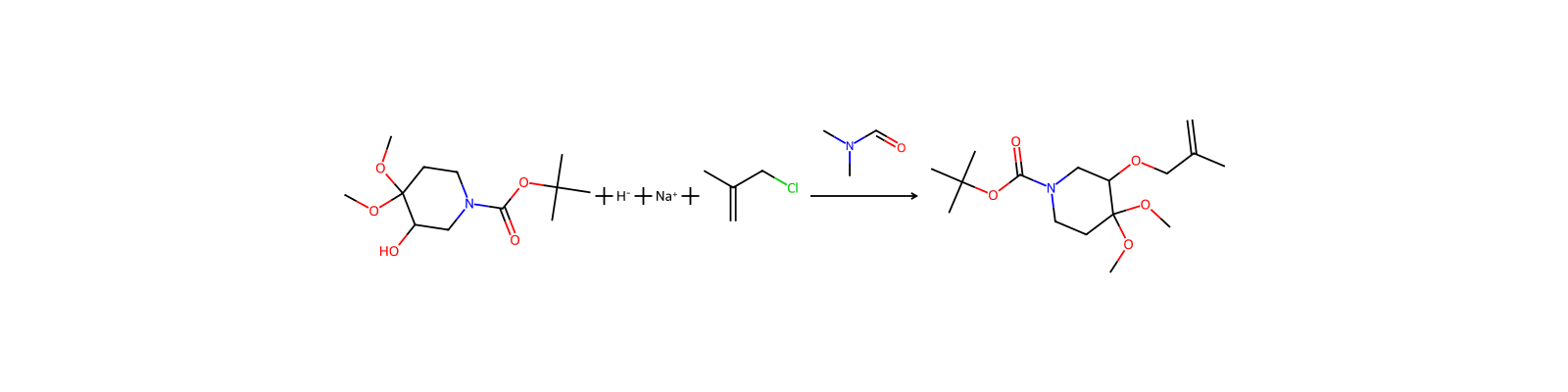
関連反応
351 件



関連ノート
読み込み中…