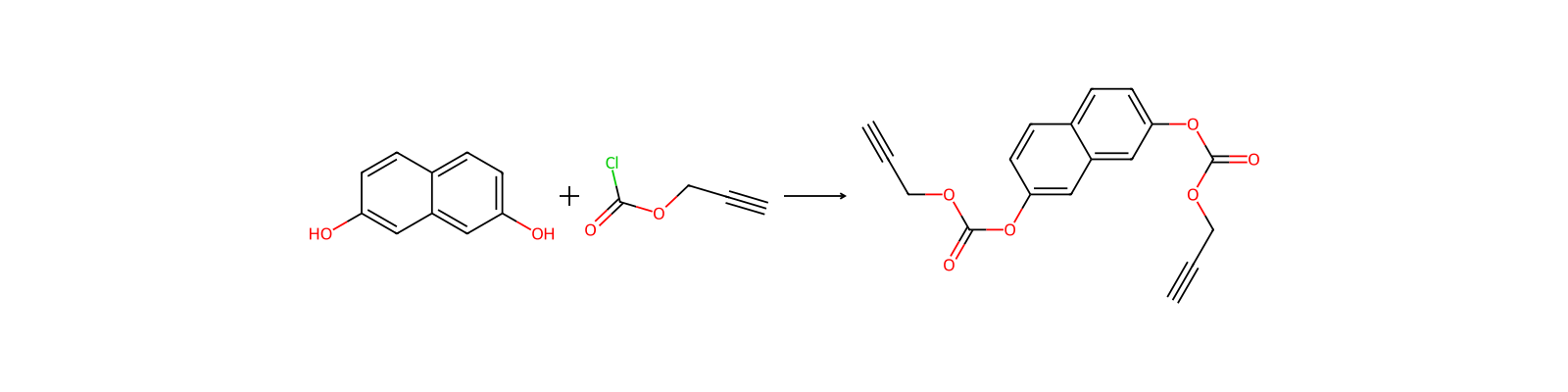
HRID 64499反応物として
2,7-Naphthalenediol

582-17-2Oc1ccc2ccc(O)cc2c1DFQICHCWIIJABH-UHFFFAOYSA-N2,7-naphthalenediol has been reported in Magnolia liliiflora with data available.
582-17-2DTXSID2060387CHEMBL205165化学的特性Light yellow to grey needle crystal
安全情報は参考情報です。供給元の安全データシート(SDS)、適用法令、専門家による評価に代わるものではありません。
This chemical does not meet GHS hazard criteria for 1.2% (1 of 81) of reports.
Danger
H302 (14.8%): Harmful if swallowed [Warning Acute toxicity, oral]
P261, P264, P264+P265, P270, P271, P272, P273, P280, P301+P317, P302+P352, P304+P340, P305+P351+P338, P305+P354+P338, P317, P319, P321, P330, P332+P317, P333+P317, P337+P317, P362+P364, P391, P403+P233, P405, and P501 (click each P-code to see the statement)
Aggregated GHS information provided per 81 reports by companies from 14 notifications to the ECHA C&L Inventory. Each notification may be associated with multiple companies.
Danger
Chemical: 2,7-Naphthalenediol
REACH registered substance: Naphthalene-2,7-diol (EC: 209-478-7)
2,7-Naphthalene diol: Does not have an individual approval but may be used under an appropriate group standard
Not irritating to rabbit skin; Highly irritating and corrosive to rabbit eyes; A moderate skin sensitizer using the mouse local lymph node assay (LLNA); Changes in hematology (reduced hemoglobin in males and higher MCV and MCH values in females), clinical chemistry (increased GGT in males and ALT in females), and histopathological changes in liver and kidney observed in 90-day oral study of rats; Hematological changes and histopathology of liver and kidney reversed within four week recovery period; No evidence of teratogenicity in rats; Not likely to have mutagenic potential in vivo; [EC: SCCP] A skin and strong eye irritant; [Alfa Aesar MSDS] See 1-Napththol and 2-Naphthol.
Acute Tox. 4 (14.8%)
Eye damage - category 1
Used in oxidative hair dye formulations; [EC: SCCP]
Dressing Hair [Category: Other]
用途有機合成原料。
使用2,7-Dihydroxynaphthalene can be used as starting material for the synthesis of sulfonic acids and divinylnaphthalenes.