ホームMCPワークベンチSkills
ホームワークベンチ通知マイページ
llms.txt · MCPガイドプライバシーポリシー · 利用規約 · サポートv1.8.0
  1. ホーム
  2. /化合物

ブロモアセトニトリル

Bromoacetonitrile
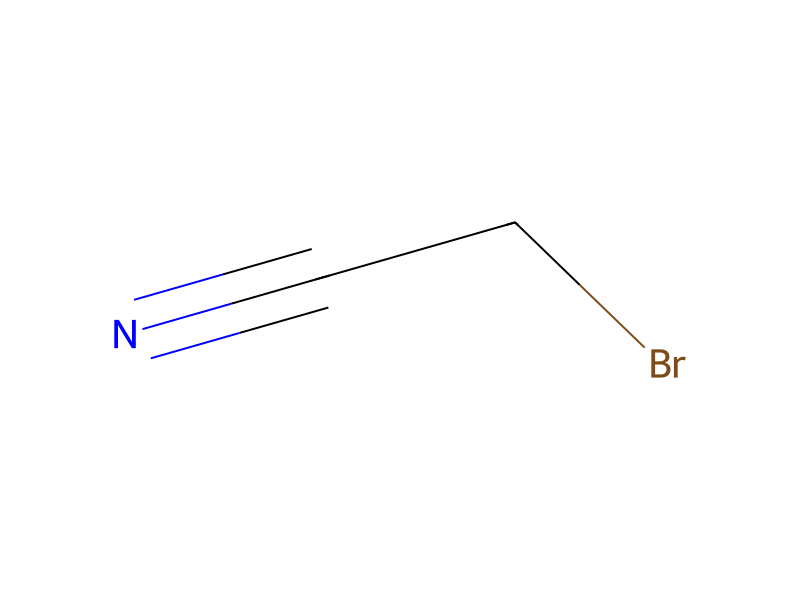
HCID 11534
ノートを作成反応を作成見積依頼を出す
印刷プレビュー
基本情報概要名称と識別子物性安全と法規制化学と産業関連反応化合物ノート
部分構造検索類似構造を探す

基本情報

CAS
590-17-0
標準SMILES
N#CCBr
InChIKey
REXUYBKPWIPONM-UHFFFAOYSA-N
分子式
C2H2BrN
平均分子量
119.95 g/mol
単同位体質量
118.93706

概要

Bromoacetonitrile is a pale yellow to light amber liquid. (NTP, 1992)

名称と識別子

優先名称
Bromoacetonitrile
IUPAC
2-bromoacetonitrile
現地名
ブロモアセトニトリル
英語名
Bromoacetonitrile
分子式
C2H2BrN
分子量
119.95

名称と別名

BROMOACETONITRILE590-17-02-bromoacetonitrileAcetonitrile, bromo-Cyanomethyl bromideBromomethyl cyanideDTXSID202149607K08J16VKDTXCID001496RefChem:570321209-672-1C2H2BrN
名称をさらに表示
ブロモアセトニトリルα-ブロモアセトニトリル2-ブロモアセトニトリルブロモアセトニトリル標準原液ブロモアセトニトリル, 96%HALOACETONITRILESBROMOACETONIFRILEbromo-acetonitrilbromomethylcyanideBrommoacetonitrile
2-bromoethanenitrilealpha-BromoacetonitrilebromacetonitrilebromoacetonitileMFCD000018842-Bromoacetonitrile; Bromoacetonitrile; Bromomethyl cyanideCCRIS 6213bromo acetonitrile

データベース識別子

CAS
590-17-0
PubChem CID
11534
DTXSID
DTXSID2021496
ChEMBL
CHEMBL2139477
UNII
07K08J16VK
EC Number
209-672-1
Nikkaji
J446D

物性

構造計算による物性

XLogP
0.8
極性表面積
23.8 Ų
水素結合供与体数
0
水素結合受容体数
1
回転可能結合数
0
重原子数
4
形式電荷
0
複雑度
41.2

実験および物理化学的性質

Chemical ClassesNitrogen Compounds -> Nitriles
SpringerMaterials PropertiesSchoenflies notation
Density · 2 件

1.722 (NTP, 1992) - Denser than water; will sink

1.722

Color/FormPale yellow to light amber liquid
Solubility · 2 件

50 to 100 mg/mL at 70.7 °F (NTP, 1992)

In water, 50-100 mg/mL at 21.5 °C

Flash Point · 2 件

greater than 200 °F (NTP, 1992)

Flash Point > 200 °F

Boiling Point · 2 件

302 to 304 °F at 752 mmHg (NTP, 1992)

150-151 °C at 752.0 mm Hg

DecompositionWhen heated to decomposition it emits toxic vapors of /oxides of nitrogen and bromines/.
Vapor PressureVP: 24 mm Hg at 60-62 °C
Refractive IndexIndex of refraction = 1.4800 at 20 °C
Physical Description

安全と法規制

安全情報は参考情報です。供給元の安全データシート(SDS)、適用法令、専門家による評価に代わるものではありません。

GHS分類

GHS Classification · 4 件

Danger

H301 (100%): Toxic if swallowed [Danger Acute toxicity, oral]

P260, P261, P262, P264, P264+P265, P270, P271, P280, P284, P301+P316, P301+P330+P331, P302+P352, P302+P361+P354, P304+P340, P305+P351+P338, P305+P354+P338, P316, P319, P320, P321, P330, P332+P317, P337+P317, P361+P364, P362+P364, P363, P403+P233, P405, and P501 (click each P-code to see the statement)

Aggregated GHS information provided per 53 reports by companies from 12 notifications to the ECHA C&L Inventory. Each notification may be associated with multiple companies.

危険有害性情報

Regulatory InformationBromoacetonitrile: Does not have an individual approval but may be used under an appropriate group standard
DOT LabelPoison
Fire HazardsThis chemical is probably combustible. (NTP, 1992)
Health Hazards · 1 件

SYMPTOMS: Symptoms of exposure to this compound include irritation of the eyes, mucous membranes and upper respiratory tract, burning sensation, coughing, wheezing, laryngitis, shortness of breath, headache, nausea and vomiting. It is a lachrymator. It can also cause corrosion.

Hazards Summary · 1 件

A skin, eye, mucous membrane, and respiratory tract irritant; A corrosive substance that causes lacrimation; [CAMEO] Toxic by inhalation, skin contact, and ingestion; Causes burns; May cause chemical pneumonitis after inhalation of high concentrations; [MSDSonline] See NITRILES.

Reactive GroupHalogenated Organic Compounds
Reactivity ProfileBROMOACETONITRILE may be sensitive to prolonged exposure to air and light. This chemical is incompatible with strong acids, strong bases, strong oxidizing agents and strong reducing agents. (NTP, 1992)

化学と産業

薬理情報

Mechanism of Action · 3 件

Haloacetonitriles, which are water chlorination by-products, are mutagens, carcinogens and teratogens. In vitro, the reaction of the haloacetonitriles bromoacetonitrile (BAN), chloroacetonitrile (CAN), dichloroacetonitrile (DCAN) and trichloroacetonitrile (TCAN) with calf thymus DNA produced fluorescent DNA derivatives. The reactivity of haloacetonitriles towards DNA was in the order of BAN > CAN > DCAN > TCAN. ... The DNA interaction was dependent on haloacetonitrile concentration. Higher affinity of haloacetonitriles towards single-stranded DNA (SS-CT-DNA) than towards double-stranded DNA (DS-CT-DNA) was observed. ... A major fluorescent peak was detected in the enzymatic hydrolysate that was not present in unreacted DNA. In the acid hydrolysate, one fluorescent peak was detected that was not present in unreacted DNA. Authentic 7-(cyanomethyl)guanine was synthesized by the reaction of CAN with 2'-deoxyguanosine and the product was purified and characterized spectroscopically. The product, 7-(cyanomethyl)guanine, was found to be chromatographically and spectroscopically identical to the fluorescence product that was obtained following haloacetonitrile-DNA interaction. This study shows that haloacetonitriles, in vitro, are capable of alkylating DNA at the guanine moiety to form a 7-(cyanomethyl)guanine adduct.

Acetonitrile (AN) and seven of its halogenated derivatives known to be water disinfectant by-products were evaluated for their action on hepatic cytosolic glutathione S-transferase (GST) activity using 1-chloro-2,4-dinitrobenzene (CDNB) as substrate. Increasing concentrations of acetonitrile, monofluoroacetonitrile (MFAN), monochloroacetonitrile (MCAN), and monobromoacetonitrile (MBAN) up to 10 mM failed to produced 50% inhibition of the activity of GST enzyme. ...

... In vitro, the reaction of the haloacetonitriles bromoacetonitrile (BAN), chloroacetonitrile (CAN), dichloroacetonitrile (DCAN) and trichloroacetonitrile (TCAN) with calf thymus DNA produced fluorescent DNA derivatives. The reactivity of haloacetonitriles towards DNA was in the order of BAN > CAN > DCAN > TCAN. The emission fluorescence spectra of the reaction product(s) of various haloacetonitriles with DNA has a peak at 404 nm at fixed excitation wavelength (300 nm). The fluorescence intensity of the reaction product(s) was pH dependent with an optimum intensity at pH 7.4. The DNA interaction was dependent on haloacetonitrile concentration. Higher affinity of haloacetonitriles towards single-stranded DNA (SS-CT-DNA) than towards double-stranded DNA (DS-CT-DNA) was observed. To characterize the type of fluorescent product(s) formed, samples of the reaction product of SS-CT-DNA with BAN were hydrolyzed (a) enzymatically by micrococcal nuclease and spleen phosphodiesterase to nucleotides and nucleotide derivative(s) or (b) chemically by formic acid to nucleobases and nucleobase adducts. The hydrolysates were analyzed by reversed phase HPLC. A major fluorescent peak was detected in the enzymatic hydrolysate that was not present in unreacted DNA. In the acid hydrolysate, one fluorescent peak was detected that was not present in unreacted DNA. Authentic 7-(cyanomethyl)guanine was synthesized by the reaction of CAN with 2'-deoxyguanosine and the product was purified and characterized spectroscopically. The product, 7-(cyanomethyl)guanine, was found to be chromatographically and spectroscopically identical to the fluorescence product that was obtained following haloacetonitrile-DNA interaction. This study shows that haloacetonitriles, in vitro, are capable of alkylating DNA at the guanine moiety to form a 7-(cyanomethyl)guanine adduct. /haloacetonitriles/

関連反応

1,208 件
反応記録を作成
HRID 2945 の反応式
HRID 2945反応物としてuspto-grants-1998_03
HRID 4965 の反応式
HRID 4965反応物としてuspto-grants-1993_09
HRID 4972 の反応式
HRID 4972反応物としてuspto-grants-1993_09
HRID 6955 の反応式
HRID 6955反応物としてuspto-grants-2006_08
HRID 7308 の反応式
HRID 7308反応物としてuspto-grants-2006_08
HRID 7315 の反応式
HRID 7315反応物としてuspto-grants-2006_08
HRID 8096 の反応式
HRID 8096反応物としてuspto-grants-2006_08
HRID 8098 の反応式
HRID 8098反応物としてuspto-grants-2006_08
1 / 151 ページ

化合物ノート

読み込み中…

このページの内容基本情報概要名称と識別子物性安全と法規制化学と産業関連反応化合物ノート
その他の操作
ノートを作成反応を作成見積依頼を出す
· 2 件

Bromoacetonitrile is a pale yellow to light amber liquid. (NTP, 1992)

Pale yellow to light amber liquid; [CAMEO] Yellow, oily liquid; [MSDSonline]

Other Experimental PropertiesMay be sensitive to prolonged exposure to air and light; is incompatible with strong acids, strong bases, strong oxidizing agents and strong reducing agents

物理化学的性質

沸点
60 · 60-62 °C/24 mmHg (lit.)
比重(密度)
1.722 g/mL · 1.722 g/mL at 25 °C (lit.)
屈折率
20 · n20/D 1.479(lit.)
闪点
230 °F · >230 °F
貯蔵温度
2 · Keep in dark place,Sealed in dry,2-8°C
溶解性
50 · 50~100g/l
外見
液体
比重
1.8 · 1.80
色
無色透明~黄色
水溶解度
水に不溶。
BRN
956569 · 956569
Henry's Law Constant
2.8 · 2.8×100 mol/(m3Pa) at 25℃, HSDB (2015)
InChI
1S/C2H2BrN/c3-1-2-4/h1H2
InChIKey
REXUYBKPWIPONM-UHFFFAOYSA-N
SMILES
BrCC#N
CAS データベース
590 · 590-17-0(CAS DataBase Reference)
NISTの化学物質情報
Acetonitrile, bromo-(590-17-0)
EPAの化学物質情報
Bromoacetonitrile (590-17-0)

化学的性質

化学的特性clear colourless to yellowish liquid

Air and Water ReactionsMay be sensitive to prolonged exposure to air and light. Water soluble.
Hazard Classes and CategoriesAcute Tox. 3 (100%)

安全と保護具

Fire FightingFires involving this material can be controlled with a dry chemical, carbon dioxide or Halon extinguisher. A water spray may also be used. (NTP, 1992)
First Aid · 1 件

EYES: First check the victim for contact lenses and remove if present. Flush victim's eyes with water or normal saline solution for 20 to 30 minutes while simultaneously calling a hospital or poison control center. Do not put any ointments, oils, or medication in the victim's eyes without specific instructions from a physician. IMMEDIATELY transport the victim after flushing eyes to a hospital even if no symptoms (such as redness or irritation) develop.

Nonfire Spill Response · 1 件

SMALL SPILLS AND LEAKAGE: If you should spill this chemical, use absorbent paper to pick up all liquid spill material. Seal the absorbent paper, as well as any of your clothing which may be contaminated, in a vapor-tight plastic bag for eventual disposal. Wash any surfaces you may have contaminated with a soap and water solution. Do not reenter the contaminated area until the Safety Officer (or other responsible person) has verified that the area has been properly cleaned.

Disposal Methods · 1 件

SRP: The most favorable course of action is to use an alternative chemical product with less inherent propensity for occupational harm/injury/toxicity or environmental contamination. Recycle any unused portion of the material for its approved use or return it to the manufacturer or supplier. Ultimate disposal of the chemical must consider: the material's impact on air quality; potential migration in soil or water; effects on animal and plant life; and conformance with environmental and public health regulations.

Isolation and EvacuationExcerpt from ERG Guide 151 [Substances - Toxic (Non-Combustible)]:
Personal Protective Equipment (PPE)MINIMUM PROTECTIVE CLOTHING: If Tyvek-type disposable protective clothing is not worn during handling of this chemical, wear disposable Tyvek-type sleeves taped to your gloves.

毒性情報

Environmental Fate · 3 件

TERRESTRIAL FATE: Based on a classification scheme(1), an estimated Koc value of 9(SRC), determined from a structure estimation method(2), indicates that bromoacetonitrile is expected to have very high mobility in soil(SRC). Volatilization of bromoacetonitrile from moist soil surfaces is expected to occur(SRC) given an estimated Henry's Law constant of 3.52X10⁻⁶ atm-cu m/mole(SRC), using a fragment constant estimation method(2). Bromoacetonitrile is expected to volatilize from dry soil surfaces(SRC) based upon an estimated vapor pressure of 3.2 mm Hg at 25 °C(SRC), determined from a fragment constant method(2). The aqueous hydrolysis rate constant for bromoacetonitrile at 20 °C and pH 8.7 was experimentally determined to be 2.7X10⁻⁶/sec(5) which corresponds to a half-life of 2.9 days(SRC); hydrolysis rates at neutral or acidic conditions is much slower(5) by approximately one to two orders of magnitude based on observed hydrolysis rates of the nine haloacetonitriles used in the study(SRC). Therefore, hydrolysis may be an important fate process, especially in moist alkaline soils(SRC). Biodegradation data in soil were not available(SRC, 2012).

AQUATIC FATE: Based on a classification scheme(1), an estimated Koc value of 9(SRC), determined from a structure estimation method(2), indicates that bromoacetonitrile is not expected to adsorb to suspended solids and sediment(SRC). Volatilization from water surfaces is expected to occur(3) based upon an estimated Henry's Law constant of 3.52X10⁻⁶ atm-cu m/mole(SRC), developed using a fragment constant estimation method(2). Using this Henry's Law constant and an estimation method(3), volatilization half-lives for a model river and model lake are 12 and 87 days, respectively(SRC). According to a classification scheme(4), an estimated BCF of 3(SRC), from an estimated log Kow of 0.20(2) and a regression-derived equation(2), suggests the potential for bioconcentration in aquatic organisms is low(SRC). Biodegradation data were not available. The aqueous hydrolysis rate constant for bromoacetonitrile at 20 °C and pH 8.7 was experimentally determined to be 2.7X10⁻⁶/sec(5) which corresponds to a half-life of 2.9 days(SRC); hydrolysis rates at neutral or acidic conditions is much slower(5) by approximately one to two orders of magnitude based on observed hydrolysis rates of the nine haloacetonitriles used in the study(SRC). Biodegradation data in water were not available(SRC, 2012).

ATMOSPHERIC FATE: According to a model of gas/particle partitioning of semivolatile organic compounds in the atmosphere(1), bromoacetonitrile, which has an estimated vapor pressure of 3.2 mm Hg at 25 °C(SRC), determined from a fragment constant method(2), is expected to exist solely as a vapor in the ambient atmosphere. Vapor-phase bromoacetonitrile is degraded in the atmosphere by reaction with photochemically-produced hydroxyl radicals(SRC); the half-life for this reaction in air is estimated to be 323 days(SRC), calculated from its rate constant of 5X10-14 cu cm/molecule-sec at 25 °C(SRC) that was derived using a structure estimation method(2). Bromoacetonitrile may be sensitive to prolonged exposure to light(3); therefore, bromoacetonitrile may be susceptible to direct photolysis by sunlight(SRC).

Adverse EffectsOther Poison - Chemical Asphyxiant
Ongoing Test Status · 1 件

The following link will take the user to the National Toxicology Program (NTP) Test Agent Search Results page, which tabulates all of the "Standard Toxicology & Carcinogenesis Studies", "Developmental Studies", and "Genetic Toxicity Studies" performed with this chemical. Clicking on the "Testing Status" link will take the user to the status (i.e., in review, in progress, in preparation, on test, completed, etc.) and results of all the studies that the NTP has done on this chemical.[Available from, as of June 21, 2012: http://ntp-apps.niehs.nih.gov/ntp_tox/index.cfm?fuseaction=ntpsearch.searchresults&searchterm=590-17-0]

Soil Adsorption/Mobility · 1 件

Using a structure estimation method based on molecular connectivity indices(1), the Koc of bromoacetonitrile can be estimated to be 9(SRC). According to a classification scheme(2), this estimated Koc value suggests that bromoacetonitrile is expected to have very high mobility in soil.

Human Toxicity Excerpts · 3 件

/CASE REPORTS/ A 28-year-old chemist,with no history of skin disease,working in a pharmaceutical laboratory, presented with eczema on the hands,with scaling and fissuring of the fingers. She was occupationally exposed to numerous chemicals and generally wore protective gloves in her work. She was patch tested with the GEIDC standard series and with 26 different compounds that she was using at that moment in the laboratory. At D2 and D4, there were positive reactions (++) to ethyl bromoacetate (1% pet.) and bromoacetonitrile (1% pet.), but no reactions to any other substance. Patch tests in 25 controls were negative. After she was instructed to avoid further contact with ethyl bromoacetate and bromoacetonitrile, her eczema subsided within a few weeks. No recurrence was observed during 2-year follow-up.

/GENOTOXICITY/ HAN produced DNA strand breaks in cultured human lymphoblastic (CCRF-CEM) cells, bound to the nucleophilic trapping agent 4-(p-nitrobenzyl)pyridine and formed a covalent bond to polyadenylic acid in a cell-free reaction system. Thus, we have demonstrated that these chemicals are genotoxic, which would indicate a potential for carcinogenic activity and for human health hazard. /haloacetonitriles/

/ALTERNATIVE and IN VITRO TESTS/ The present studies were initiated to measure the permeation coefficients (K(p) ) for haloacetonitriles (HANs) and chloral hydrate (CH), important cytotoxic DBPs. The K(p) values measured using fully hydrated dermatomed torso skin at 37 °C for the HANs ranged from 0.099 to 0.17 cm h(-1) , and was 0.0039 cm h(-1) for CH. Of the HANs, dibromoacetonitrile had the highest permeability while chloroacetonitrile had the lowest permeability and a direct relationship was observed between their K(p) and their octanol/water partition coefficients (K(ow) ). The K(p) values of the HANs were also approximately 30 times that of CH. The monthly dermal and ingestion doses of HANs and CH of an average American population were estimated using Monte Carlo simulations. The dermal doses of HANs from showering and bathing ranged from 0.39 to 0.78 times their ingestion doses but only approximately 0.02 times their ingestion doses for CH, assuming that the K(p) values determined are applicable to shorter water contact times. However, that ratio can vary markedly with chlorinated swimming pool exposures, with a range of 0.30-2.3 for HANs and 0.19-0.25 for CH. Dermal exposure to HANs and CH seems to be a significant route of exposure and should be considered when evaluating their total exposure during the routine usage of water for bathing and swimming. /haloacetonitriles/

Artificial Pollution Sources · 1 件

Bromoacetonitrile's production and use as an intermediate in organic synthesis(1) may result in its release to the environment through various waste streams(SRC). Bromoacetonitrile is a water disinfection byproduct of chlorination treatments(2-5).

Environmental Bioconcentration · 1 件

An estimated BCF of 3 was calculated in fish for bromoacetonitrile(SRC), using an estimated log Kow of 0.20(1) and a regression-derived equation(1). According to a classification scheme(1), this BCF suggests the potential for bioconcentration in aquatic organisms is low(SRC).

Volatilization from Water/Soil · 1 件

The Henry's Law constant for bromoacetonitrile is estimated as 3.52X10⁻⁶ atm-cu m/mole(SRC) using a fragment constant estimation method(1). This Henry's Law constant indicates that bromoacetonitrile is expected to volatilize slowly from water surfaces(2). Based on this Henry's Law constant, the volatilization half-life from a model river (1 m deep, flowing 1 m/sec, wind velocity of 3 m/sec)(2) is estimated as 12 days(SRC). The volatilization half-life from a model lake (1 m deep, flowing 0.05 m/sec, wind velocity of 0.5 m/sec)(2) is estimated as 87 days(SRC). Bromoacetonitrile's Henry's Law constant(1) indicates that volatilization from moist soil surfaces may occur(SRC). Bromoacetonitrile is expected to volatilize from dry soil surfaces(SRC) based upon an estimated vapor pressure of 3.2 mm Hg at 25 °C(SRC), determined from a fragment constant method(1).

Non-Human Toxicity Excerpts · 3 件

/GENOTOXICITY/ Three short-term assays (the SOS chromotest, the Ames-fluctuation test and the newt micronucleus test) were carried out to evaluate the genotoxicity of six halogenated acetonitriles identified in chlorinated waters (monochloro-, dichloro-, trichloro-, monobromo-, dibromo- and bromochloroacetonitrile). ... In the Ames-fluctuation test, all the compounds except dibromoacetonitrile showed mutagenic activity on Salmonella typhimurium strain TA100. The newt micronucleus assay detected a clastogenic effect on the peripheral blood erythrocytes of Pleurodeles waltl larvae for all the six haloacetonitriles studied. Moreover, two structure-activity relationships were noted: (1) the genotoxic activity of haloacetonitriles containing bromine substituents appeared higher than the corresponding chlorinated acetonitriles and (2) the clastogenic activity of the chlorinated acetonitriles increased with the number of chlorine substituents.

/GENOTOXICITY/ Using microplate-based Chinese hamster ovary (CHO) cell assays for chronic cytotoxicity and acute genotoxicity, /investigators/ analyzed 7 HANs: iodoacetonitrile (IAN), bromoacetonitrile (BAN), dibromoacetonitrile (DBAN), bromochloroacetonitrile (BCAN), chloroacetonitrile (CAN), dichloroacetonitrile (DCAN), and trichloroacetonitrile (TCAN). The cytotoxic potency (%C1/2 values) ranged from 2.8 uM (DBAN) to 0.16 mM (TCAN), with a descending rank order of DBAN > IAN approximately BAN > BCAN > DCAN > CAN > TCAN. HANs induced acute genomic DNA damage; the single cell gel electrophoresis (SCGE) genotoxicity potency ranged from 37 uM (IAN) to 2.7 mM (DCAN). The rank order of declining genotoxicity was IAN > BAN approximately DBAN > BCAN > CAN > TCAN > DCAN. The accompanying structure-activity analysis of these HANs was in general agreement with the genotoxicity rank order. ... As a chemical class, the HANs are more toxic than regulated carbon-based DBPs, such as the haloacetic acids. ... /haloacetonitriles/

/GENOTOXICITY/ ... In this study, the ability of /haloacetonitiriles (HAN)/ to induce single-strand breaks on the DNA of HeLa S3 cells was investigated using the single-cell gel electrophoresis (SCGE) assay, which could be a good tool with which to evaluate the genotoxicity of chlorinated water. The results were compared to those obtained in the Ames fluctuation test using the Salmonella typhimurium TA 100 strain without activation. With the Ames fluctuation test, a mutagenic effect was observed for chloroacetonitrile (MCAN), dichloroacetonitrile (DCAN), and trichloroacetonitrile (TCAN). ... In the SCGE assay, all five HANs induced DNA damage in HeLa S3 cells, increasing the mean tail moment significantly. For each compound, a dose-effect relation was observed. This study shows that the SCGE assay has greater sensitivity for assessing the genotoxicity of HAN than does the Ames-fluctuation test. Brominated acetonitriles were more genotoxic than chlorinated acetonitriles in the SCGE assay, and the genotoxicity increased with the number of halogenated atoms of the compound. .../haloacetonitriles/

Environmental Abiotic Degradation · 1 件

The rate constant for the vapor-phase reaction of bromoacetonitrile with photochemically-produced hydroxyl radicals has been estimated as 5X10-14 cu cm/molecule-sec at 25 °C(SRC) using a structure estimation method(1). This corresponds to an atmospheric half-life of about 323 days at an atmospheric concentration of 5X10+5 hydroxyl radicals per cu cm(1). The aqueous hydrolysis rate constant for bromoacetonitrile at 20 °C and pH 8.7 was experimentally determined to be 2.7X10⁻⁶/sec(2) which corresponds to a half-life of 2.9 days(SRC). Hydrolysis rates at neutral or acidic conditions is much slower(2) by approximately one to two orders of magnitude based on observed hydrolysis rates of the nine haloacetonitriles used in the study(SRC). Under basic conditions, aqueous hydrolysis of bromoacetonitrile yields the corresponding acetamide, which in basic media can be further hydrolyzed to the corresponding acid(2). Bromoacetonitrile may be sensitive to prolonged exposure to light(3); therefore, bromoacetonitrile may be susceptible to direct photolysis by sunlight(SRC).

Probable Routes of Human Exposure · 1 件

Occupational exposure to bromoacetonitrile may occur through inhalation and dermal contact with this compound at workplaces where bromoacetonitrile is produced or used(SRC). Bromoacetonitrile is reported to be a disinfectant by-product of drinking water chlorination via chlorine, chloramine or chlorine dioxide treatment(1-4); therefore, the general population may be exposed to bromoacetonitrile through tap water containing this by-product(SRC).

Environmental Water Concentrations · 1 件

DRINKING WATER: Bromoacetonitrile was selected as a priority disinfection by-product to be included in a US nantionwide occurrence study(1,2). Based on a study of 35 water utilities across the US by the EPA and State of California Department of Health Services, the quarterly median concentrations of haloacetoniriles were 2.8, 2.5, 3.5 and 4.0 ug/L from the spring of 1988 through the winter of 1989(3). Specific concentrations of bromoacetonitrile were not reported, but may have been detected(3). Bromoacetonitrile was qualitatively detected in drinking water collected in Israel that had undergone disinfection treatment via chlorination and chlorine dioxide(3); the source waters were high in bromide content(4).

安全データ

F
19
wgk
3
rtecs
AL7970000
ridadr
UN 3276 6.1/PG 3
hs_code
29269090
risk_code
23/24/25-36/37/38
消防法
危-4-3-III
hazard_code
T,C
safety_code
26-36-45-24/25
hazard_class
8
packing_group
II
毒劇物取締法
劇物
Hazard Classifications
Acute Tox. 3 DermalAcute Tox. 3 InhalationAcute Tox. 3 Oral
ストレージクラス
6.1C - Combustible acute toxic Cat.3toxic compounds or compounds which causing chronic effects
有毒物質データの
590-17-0(Hazardous Substances Data)

用途と製造

Uses · 3 件

HTS (High Throughput Screening) initiative chemical

Intermediate in organic synthesis

Pharmaceutical intermediates

General Manufacturing InformationWater disinfection byproduct
応用分野 · 3 件

用途有機合成原料。

使用Bromoacetonitrile was used in the synthesis of 1-cyanomethyl-1,1-dimethylhydrazinium bromide. It is used as an alkalyting agent for the nitrogen phosphorus detector.

一般的な説明Pale yellow to light amber liquid.

上流・下流製品情報

上流原料

N-ブロモこはく酸イミド

下流製品

L-アゼチジン-2-カルボン酸アゼチジン-2-カルボン酸2-(But-3-ynyloxy)ethanamine(4-フルオロフェニルチオ)アセトニトリル2-フロイルアセトニトリル3,5-ジブロモ-1-メチルピラジン-2(1H)-オン2-(Phenylmethoxy)-acetonitrilep-トルエンスルホニルアセトニトリルヨードアセトニトリル2-クロロベンゾイルアセトニトリル 塩化物チオフェン-2-アセトニトリル2,2'-ジメチルビフェニルジエチルアミノアセトニトリル2-Naphthyloxyethanenitrile[(4-メトキシフェニル)アミノ]アセトニトリル2-ブロモフェノキシアセトニトリルAcetonitrile, (2-benzothiazolylthio)- (8CI,9CI)