Dimethylmercury
HCID 11645
データを補完しています。しばらくしてからページを更新すると最新の内容を表示できます
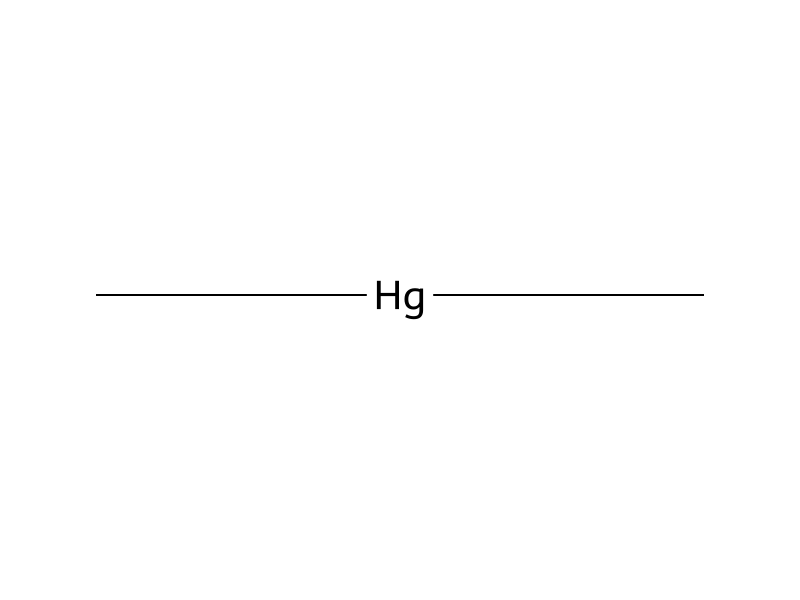
基本情報
- CAS
593-74-8- 標準SMILES
[CH3][Hg][CH3]- InChIKey
ATZBPOVXVPIOMR-UHFFFAOYSA-N- 分子式
- C2H6Hg
- 平均分子量
- 230.66 g/mol
- 単同位体質量
- 232.01759319
概要
Dimethylmercury is a methylmercury compound. It has a role as a NMR chemical shift reference compound.
名称と識別子
- 優先名称
- Dimethylmercury
- IUPAC
- dimethylmercury
- 英語名
- Dimethylmercury
- 分子式
- C2H6Hg
- 分子量
- 0
名称と別名
DimethylmercuryMercury, dimethyl-593-74-8DIMETHYL MERCURYMercury, dimethylC60TQU15XYDTXSID5047742MERCURIUS METHYLENUSCHEBI:30786(HgMe2)[HgMe2]RefChem:588573
名称をさらに表示
DTXCID5027726209-805-3CCRIS 7176EINECS 209-805-3UNII-C60TQU15XYBRN 3600205QuecksilbercarbidDimethylmercury, 95%
データベース識別子
- CAS
593-74-8- PubChem CID
- 11645
- DTXSID
DTXSID5047742- ChEBI
CHEBI:30786- UNII
- C60TQU15XY
- EC Number
- 209-805-3
- Nikkaji
- J458H
物性
構造計算による物性補完中
- 極性表面積
- 0 Ų
- 水素結合供与体数
- 0
- 水素結合受容体数
- 0
- 回転可能結合数
- 0
- 重原子数
- 3
- 形式電荷
- 0
- 複雑度
- 2.8
実験および物理化学的性質
Chemical Classes
Metals -> Metals, Organic Compounds
Carcinogens
LogP2.59
Density
Density (at 20 °C): 3.05 g/cm³
Relative density of the vapour/air-mixture at 20 °C (air = 1): 1.5
3.17 @25 °C
SolubilitySolubility in water: none
Flash Point5 °C
Boiling Point
92 °C
93 °C @760 [mm Hg]
Melting Point-42 °C
Vapor DensityRelative vapor density (air = 1): 7.96
Vapor Pressure
62.3 [mmHg]
Vapor pressure, kPa at 20 °C: 8.8
75 [mm Hg] @29 °C
Physical Description
Clear liquid with a mild sweet odor; [Olson, p. 622] Flammable liquid, insoluble in water; [Sullivan, p. 979]
COLOURLESS LIQUID.
安全と法規制
安全情報は参考情報です。供給元の安全データシート(SDS)、適用法令、専門家による評価に代わるものではありません。
GHS分類
GHS Classification
Danger
H300: Fatal if swallowed [Danger Acute toxicity, oral]
P260, P262, P264, P270, P271, P273, P280, P284, P301+P316, P302+P352, P304+P340, P316, P319, P320, P321, P330, P361+P364, P391, P403+P233, P405, and P501 (click each P-code to see the statement)
Danger
H300 (100%): Fatal if swallowed [Danger Acute toxicity, oral]
P260, P262, P264, P270, P271, P273, P280, P284, P301+P316, P302+P352, P304+P340, P316, P319, P320, P321, P330, P361+P364, P391, P403+P233, P405, and P501 (click each P-code to see the statement)
危険有害性情報
Regulatory Information
Chemical: Mercury, dimethyl-
The New Jersey Worker and Community Right to Know Act requires public and private employers to provide information about hazardous substances at their workplaces. (N.J.S.A. 34:5A-1 et. seq.)
Other Safety InformationIMAP assessments - Mercury, dimethyl-: Human health tier I assessment
Fire HazardsHighly flammable. Gives off irritating or toxic fumes (or gases) in a fire. Vapour/air mixtures are explosive. Heating will cause rise in pressure with risk of bursting.
Hazards Summary
1-2 drops on a latex glove caused CNS damage (ataxia, dysarthria, auditory and visual effects) and death of a research chemist; [Olson, p. 701] A skin, eye, and respiratory tract irritant; May cause severe effects on the CNS; A reproductive toxin; [ICSC] The methyl mercury ion (CH3Hg+) is conjugated with thiol-containing molecules in the body and is not found free and unbound. [Nordberg, p. 1046] Symptoms of chronic methylmercury poisoning (Minamata disease) include incoordination, paralysis, and abnormal reflexes. [Sullivan, p. 980] See Mercury, alkyl compounds and linked occupational diseases.
EC Classification
化学と産業
薬理情報
Metabolism/Metabolites
Organic mercury is absorbed mainly by the gastrointestinal tract, then distributed throughout the body via the bloodstream. Organic mercury complexes with free cysteine and the cysteine and sulfhydryl groups on proteins such as haemoglobin. These complexes are able to mimic methionine and thus be transported throughout the body, including through the blood-brain barrier and placenta. Organic mercury is metabolized into inorganic mercury, which is eventually excreted in the urine and faeces. (T11)
用途と製造
Uses
Used as a chemical reagent; Along with monomethyl mercury, it is found as an environmental contaminant in birds and fish. [Merck Index]
Dimethylmercury is most often used in toxicology experiments as a fixed point of reference due to its extreme toxicity. It has also been used to calibrate NMR instruments for detection of mercury. (L261)
General Manufacturing InformationMercury, dimethyl-: ACTIVE
関連反応
0 件
関連する反応はまだありません